



Matthew Berry Can Fix Your Fantasy Roster
Dive into the strangely wonderful world of fantasy football, with expert Matthew Berry.
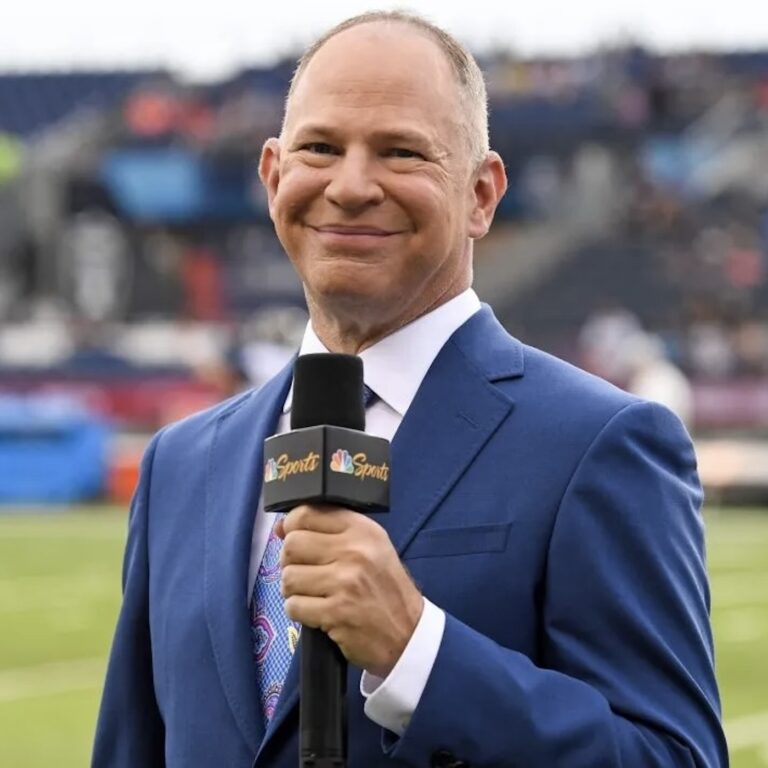
The MLB season is almost ending, but a new investigation will keep us talking way into the offseason. We’ll hear from Gus Garcia-Roberts, a national reporter from ProPublica who’s been investigating the business surrounding baseball academies in the Dominican Republic. He’ll tell us how MLB teams circumvent recruiting rules, how money is taken from young players and families, and how some of our favorite baseball stars are connected to the system.
Then, we’ll dive into the strangely wonderful world of fantasy football, with expert Matthew Berry.
Matthew started his career as a writer, working on shows like Married…with Children and Desperate Housewives. But he traded a ticket to Hollywood for a chance to chase his real dream: fantasy football. We’ll see all the places this leap of faith took him, and how his obsession with fantasy became a career, community, and now, his own company.
Show Notes
- The Dominican Baseball Factory | ProPublica
- Fantasy Life: The Outrageous, Uplifting, and Heartwarming World of Fantasy Sports fron The Guy Who Lived It | Matthew Berry
- What Is Rotisserie Baseball? Your Beginner’s Guide to the Roto Format in Fantasy Baseball | Yahoo Sports
- Fantasy Football In The Age of Sports Betting | FantasyPros
- Want to dive into the world of fantasy football? Check out Matthew Berry’s Fantasy Life
-
Episode Transcript
DAVID GREENE, HOST: All right, so in Major League Baseball, many of you know that there are all these young stars who emerge, who grew up playing in the Dominican Republic. But the question is, were they part of a recruiting system that is predatory, that takes advantage of vulnerable families that even has some elements of human trafficking? These are some of the really important questions we’re asking about Major League Baseball this week on sports in America, and we have investigative sports reporter. Gus García Roberts with us. He’s done some incredible reporting with ProPublica trying to answer these very questions. And Gus, thank you. This is really important stuff for everyone who loves and watches baseball and I think everyone else in general.
GUS GARCÍA ROBERTS: Thanks for having me on.
DG: So what got you interested in exploring kind of the system that brings so many young stars into the majors from the DR?
GGR: Well, I think like, you know, I’ve covered baseball professionally for years as an investigative reporter, but I’m also just a baseball fan, you know, since I was a kid. And so if you’re a baseball, fan, you’re just well aware of the contributions to the sport that you know Dominican players have made and just, they’re the most exciting players in the sport often. And Major League Baseball really relies on their sort of star power and talents, and 10% of the major leagues is currently Dominican players, which is pretty wild given that it’s a small country. And then, as a reporter, I started to hear more and more about just ways that Dominican players were taken advantage of. You know, kind of sophisticated financial instruments that were being used against unsophisticated, you know, young Dominican prospects and their families. And this is something that you’re kind of vaguely aware of, I think, as a baseball fan, that things are probably a little dirty in the Dominican, right? There’s headlines every so often, but you know there hasn’t really been like, you know, systematic kind of like expose of what goes on there, I felt. And so as I was learning more and more about it, I sort of started to learn the sort of root causes of a giant problem there. And that was these early agreements that are being made between teams and trainers who control the Dominican players. And as a result, the rise of a, you know, certain type of business person, which is the high interest money lender and the ramifications of that for Dominican families.
DG: Taking advantage of vulnerable Dominican families. It sounds like, well, let’s really dig into how this system that you’ve called a baseball factory can actually work. I mean, you said something about early agreements. This is something that happens where teenagers who are really young, right? I mean baseball franchises from Major League Baseball can come in and get some sort of commitment or make commitments to young players at a very early stage. And this is actually something that’s not supposed to happen legally with Major League Baseball, but it sounds like it is.
GGR: Right. So by Major League Baseball rules, teams can sign international players like those from the Dominican Republic when they are over 16. Which already is…
DG: Young.
GGR: Pretty young to be professionalized, right? But in reality, I found, especially over the last decade, Major League Baseball teams in trying to compete with each other have reached agreements with trainers. Who again are like the surrogate parents, the instructors, the agents for these Dominican players who are often underage prospects. And the teams will reach agreements with those trainers two, three, four years before they’re of that age.
DG: So it’s skirting the system kind of, it’s not directly saying that we’re giving committing money to a player, but it’s saying you trainer. If you train this young kid, we’re committing to you to bring this kid into our system.
GGR: Yeah, it’s saying when this kid is of age, we will give them X amount, spelling out exactly how much of a signing bonus they will give those trainers. And the trainers take 35 to 50% of that signing bonus. And so what I found is all 30 teams do this. It’s the norm at this point. You know, if you’re a player of any significance, you’re most likely subject to one of these early agreements years before you are of age and it has a lot of unintended consequences.
DG: Well, and, and you told the story and I think it’d be helpful to kind of dig into one person’s life to really help people understand that the story of Belfi Rivera, a young kid who was offered through a trainer, one of these early agreements. Tell us about who he is and what was committed to him and how, you know, the kind of cut that his trainer was getting.
GGR: Yeah, so Belfi Rivera is an extremely talented, young Dominican baseball player. He was first kind of scouted at age seven, which is actually kind of late in the DR to be scouted.
DG: Seven?
GGR: Yes, scouted by like the local coach who, you know, according to the family and Belfi and the coach himself would hit him on the head and force him to go to play ball because he was so talented and he didn’t want Belfi to go just play with his friends. And from there, Belfi goes to a training academy at age 10. He’s sent off to a trainee academy at age 10, away from his family, and baseball just becomes his life through no choice of his own. And at age 14, the Arizona Diamondbacks take an interest in Belfi, and they make an early agreement, according to his family and his trainer, for Belfi’s services. They say they’re going to pay him $128 million once he is old enough to be signed, which would be in two years. And so the parents, you know, Belfi comes from extreme poverty. He described to me how when he was a kid, sometimes he would just eat a piece of bread all day or he would eat just sugary cornmeal. His parents are uneducated and this was a really— this was like a mind-warping event because they now knew that, you know, in two years they were gonna have much more money than they had ever imagined. But for the time being, they still had to figure out where their next meal was coming from. And so they are approached by this money lender named Santo Caraballo, who offers them a series of loans and other sort of financial offerings that get more and more sophisticated and more and more kind of difficult to follow and understand, especially for the family. He does not give them the contracts. He pays them the amounts from the loans in very small amounts over the course of years. And so the family just is in his thrall, mostly because he has a very famous business partner, which is David Ortiz, the the Red Sox legend who’s from the Dominican Republic.
DG: Big Papi was his nickname playing in Boston and so respected, but obviously you’ve raised a lot of questions about his relationships to this whole Dominican recruiting system.
GGR: Yeah, he’s somebody who has, he has a reputation, I don’t think wrongfully as a philanthropist, somebody who really kind of cares about, you know, kids who are, who he used to be, which is a young kid coming from poverty in the DR, trying to bring up their family through baseball, but he has had this previously unreported stake in the Dominican baseball industry that’s sort of reliance on these early deals. So it’s kind of reliant on this corruption within the system. And his business partner is Caraballo, who’s, as I found, one of the most, if not the most notorious money lenders in the Dominican Republic for his tactics with families like that of Belfi.
DG: Well, I want to do my due diligence as, as I know that you did trying to get answers from as many people involved in this as possible. What did Caraballo tell you when you were able to talk to him about what you were pursuing here?
GGR: So I made several attempts to reach Caraballo, when I would reach him on the phone, he would either hang up or, or just say he wasn’t interested. I also sent him sort of a detailed list of things that would be in the story. He never responded. I did see, I did run into him one day. I was in the neighborhood in Santo Domingo where his office is. And, and he was on, he was outside, eating lunch, outside of a liquor store, and I came up to him and asked him about his business, and what he said is that he’s not the biggest lender in baseball, that it’s not a very lucrative practice because there’s a lot of risk. You don’t know which players are going to be ultimately signed or not. Worth noting that as he was telling me how not lucrative it was, he was covered in Diamond Jewelry spelling his name…
DG: Sounds pretty lucrative.
GGR: And next to him was his tricked out Mercedes Benz SUV. And so, you know, that it was a very brief conversation and he did not want to speak. He said he would set up an interview with me and then did not respond again.
DG: And what about Major League Baseball, lastly? I mean, you write about how every single team has like what sounds like a fortress in the Dominican Republic to be actively recruiting Dominican players. What is MLB saying about all this?
GGR: Yes. You know, it’s the stories about Santo Caraballo to some extent and lenders like him, but those lenders really could not exist in their powerful and lucrative kind of stature if it wasn’t for the machine that Major League Baseball has allowed to exist there. And that primarily means, you know, the early agreements that all 30 teams engage in. Major League Baseball hasn’t taken any steps to stamp that out, even basic ones, according to a former executive I spoke with that worked for Major League baseball, such as like sending a memo to the 30 teams saying, you’re not allowed to reach these early agreements in the Dominican Republic and you will be disciplined if you do. And there’s a lot of complicated, you know, rationale for why they haven’t taken a firm stance on these issues in the Dominican Republic. But if you ask Major League Baseball, they think that it’s too difficult to police and that you can’t enforce away these problems. And that the only answer is an international draft, which would be a complete overhaul of how Dominican players are signed.
DG: And lastly, Gus, has this changed your relationship with baseball as a fan, knowing that this kind of stuff is happening?
GGR: You know, I have so much respect for the players in the major leagues that are from the Dominican Republic now and also Venezuela, which is run basically by the same system. When I see them and I realize all the sort of cutthroat hurdles that they went through to arrive to where they are and the fact that their signing bonuses were siphoned away and, and that they had savvy financiers circling them and not only those in the major leagues but I have a lot of respect also for or just really more awareness for, you know, how each major league baseball player you know represents hundreds if not thousands of Dominican and Venezuelan players who gave up their childhood and were faced with these kind of like predatory challenges and only to not make the cut. And so I just have a lot more kind of appreciation and respect for what these players of Dominican and Venezuelan descent go through that is just not something that’s at all a reality for example, American players.
[MUSIC]
DG: Well, I know everyone can find your reporting in ProPublica. Also, the great ProPubblica podcast did an episode with you. Their podcast is “Paper Trail,” and they dig deeply into this story in an episode with you, and what is next? What is your process now as you keep going with the reporting?
GGR: We still have a, I feel like we just skimmed the surface and there’s a lot more issues to explore in how Dominican baseball players are recruited. And so, you know, I would ask, we actually have a WhatsApp line. WhatsApp is very popular throughout Latin America. And if any listener out there wants to just get in contact with me or even just keep updated on the series. Send a text to 917-207-6447.
DG: Awesome. Glad you shared that and thanks for all this reporting. Investigative sports reporter, Gus GarcÍa Roberts, who’s been doing some amazing work with ProPublica, digging into a lot of these questions with Major League Baseball recruiting. Gus, thanks a lot.
GGR: Thanks a lot DAvid, appreciate it.
[MUSIC]
ESPN HOST: All right, Matthew, it’s time for F Marry Chill, where of course the F stands for friend. Let’s start with the running backs that scored two touchdowns in Week 2. We got Isaiah Crowell, Carlos Hyde, and Adrian Peterson. Who you gonna F, who you gonna marry, who you’re gonna chill?
MATTHEW BERRY ON ESPN: Thanks, coach. I’m going to F, friend, of course, Adrian Peterson. Volume key in fantasy football. Peterson’s obviously getting it. Third in the NFL in rushes.
DAVID GREENE, HOST: Before fantasy football was everywhere, there was The Talented Mr. Roto. Roto is, of course, short for rotisserie, and what does cooking meat have to do with fantasy? Well, maybe I’ll just let Matthew Barry explain. This is a guy who somehow managed to turn an overheard conversation that piqued his interest into an obsession with fantasy sports, then into a career, then a business, and a pretty extraordinary life. He happened upon a version of fantasy baseball at age 14. He then went to Hollywood, wrote for “Married…with Children,” worked for George Carlin, built websites before websites were a thing, and eventually walked away from Hollywood to chase something that made him happier. Why do fantasy sports specifically make Matthew Barry happier? The raw math is part of it. But for Matthew, fantasy has always been about the people on the other side of the draft board and the connections that last long after the season ends. Today, after serving as Senior Fantasy Sports Analyst for 15 years at ESPN and a run at NBC Sports, Matthew has left the networks behind to build his own company, Fantasy Life, where he writes, broadcasts, and helps millions of people try to win their leagues. He is, in other words, still doing exactly what he was doing as a kid, just at a much bigger scale. And today, he’s gonna try to make a fantasy player out of me.
Here’s my big confession, Matthew. I’m not a fantasy guy, yet. And so I would love, as we chat for you to win me over. I tried it. I’m totally open to it and I love the social aspect of it, but being a Pittsburgh Steelers fan, you know, I tried some fantasy. I just, I was picking Steelers players and just packing my roster with players I already loved. I don’t think I was able to do the important thing, like differentiate the fantasy experience from the sports fandom experience. And so that’s my challenge to you to leave this time that we have together with me running and trying to get on a fantasy team before the season starts.
MATTHEW BERRY: Well, let’s start with this, David. Do you like to have fun?
DG: I love to have fun.
MB: Are you pro-fun or are you anti-fun?
DG: I am very pro fun and especially with sports. I mean, I dream of nothing more than being at my Pittsburgh Steelers bar with my people, watching on a Sunday afternoon, drinking IC Light and like loving life. It is up there in the, it might be number one in the fun activities that I crave.
MB: So, that’s the biggest thing. I get interviewed all the time and one of those questions I always get asked is like, you know, fantasy football, why is it so popular, blah, blah blah, what’s the secret to its success? And I’m just like, well, it’s fun. We’re a country of people that like to do fun things. It’s not, I mean, it’s a fairly simple answer. And so, what it does is like you are David, you are a Steelers fan. You will always root for the Steelers.
DG: Yeah.
MB: But you’re also a sports fan. And so there are a number of NFL games that will not involve the Steelers. You know, in any given week, 15, in a week in which every team plays, 15 of the games of the 16 that’ll play won’t involve your Steelers.
DG: Sadly, yes.
MB: And what fantasy football does is it gives you a rooting interest in all 15 of those games. So if you know, assuming you like to root for stuff, you obviously like to root for your Steelers, it’s going to give you a rooting interest in games that you might not otherwise care about. It’s going expose you to players. The other thing is, as you mentioned, the social aspect. So you gather in a bar and you draft with your buddies, you have a lot of fun, and then, you know it keeps you together. I’m in a league with a lot of guys that I went to college with and you know we all went to Syracuse University and I went over 30 years ago and I would have lost touch with almost all of them by now. We are all spread out. I live in Connecticut you know I live in small town Connecticut because you know ESPN brought me here and then I you know I left ESPN, I went NBC and I’m doing my own thing but all in the state of Connecticut. And only one person that I went to school with lives in the state of Connecticut. A lot of them are in Los Angeles, one’s in Chicago, another’s in Florida. We’re all over the place. But because we’re in this fantasy football league, you know, we’re on text chains all the time, we’re on email threads all the time, we’ve stayed in touch. And so I’ve seen, you know I’ve seen marriages and kids and career changes and you know I’ve been able to stay in touch with my friends because of fantasy football. It is something that has brought me closer to my coworkers. It has helped me in business. There’s just a camaraderie there, and for you, David, I think it’s another connection point. And so assuming you enjoy a group of friends, and it sounds like you love going to a bar, having an IC Light, and watching football, well, this is now going to give you a rooting interest. And in a world in which your Steelers disappoint you, because David that is going to happen this year.
DG: (Laughs) Never, never. Well, that, okay, put a pin in that because I do want to come back to why you think my Steelers are going to disappoint me.
MB: So when your steelers disappoint you again, again, this year, you will have your fantasy team to root for. We’re going to talk in a year from now and you’re going say to me, you’re gonna say thank you, Matthew.
[MUSIC]
DG: All right, Matthew, we’ll see about that. So for Matthew, that connection, it goes way back and it started by chance, way before the apps, the rankings, the trash talk and the group chats. He was 14 years old, obsessed with sports and about to discover a game called Rotisserie League Baseball.
Well, let me ask you about Syracuse. I mean, when you were in college, fantasy was not your goal in life. I mean you were an aspiring television writer. You had dreams of Hollywood, right? What’s that is the first memory of of fantasy in your life?
MB: 14 years old.
DG: 14.
MB: So in 1983, in the winter of 1983, a book came out. And I was a nerdy kid, sports obsessed, read every single book I could get my hand on, read box scores, like just sports obsessed. I played tennis as a kid. I was a pretty good tennis player. I was ranked in the, I was good enough to play Division 1 tennis. That’s about the level I was. I wasn’t good enough to be a pro, but I could have played y Division 1 tennis on a scholarship. That was my level. And I read this book, so I mean, I read every sports book, like a new sports book. I was just a voracious reader as a kid. And a book came out called “Rotisserie League Baseball.” And it was a book about, in essence, fantasy baseball. And so I read the book, and it was really well-written. It was written by these guys, Glenn Waggoner and Daniel Okrent, the founding fathers, and it was group of New York-based magazine writers and editors. And they used to have lunch every Thursday at a restaurant called La Rotisserie, which is now defunct. And they came up with this game, and so they would meet every Thursday to have a lunch and talk about their, what is in essence fantasy baseball, but they called it Rotisserie League Baseball.
DG: That’s a great name.
MB: And they wrote a book about it. They wrote a books called “Rotisserie League Baseball: The Greatest Game for Baseball Fans Since Baseball.”
DG: I love that, that’s a great title.
MB: And they’re really good writers. And so the book just made it sound so fun and interesting. And they all had team names and logos and all this trash talk and just a bunch— It was great. And so, again, this is pre-internet. This is 1983. But like I said, I was a pretty good tennis player, and so I was taking private lessons, ranked in the state of Texas the whole thing. And so show up to my private tennis lesson. I’m 14 years old. I’m a freshman in high school. And as I walk up, I see my tennis coach and a guy that I knew was like one of his close friends talking, and as I approach, they’re talking in this weird language, but sounds familiar. And I walk up to him and I said, “Are you guys talking about “Rotisserie League Baseball?” And they looked at me, again, they’re late 20s, early 30s, these guys. And they look at me and they said, “You’ve heard of it?” And I’m like, “I just read the book. You’ve heard it?” And they’re like, we did too, and we’re trying to— we’re talking about how many people, you know, could we get a league together to try this thing. And I said, “I’m in.” And so in the spring of 1984, I’m still 14 years old, the Fat Dog Rotisserie League of College Station Texas had its annual draft. It’s a league that goes on to this day. And it was me and a bunch of adults, but no one had ever heard of it. And so there was 10 of us in a national league only fantasy baseball.
DG: You’re 14 years old and you’re with a bunch of adults in this league?
MB: Yes. Yeah, yeah. Because they needed a guy. I mean, I don’t think I was their first choice, but I think it was just like, no one had heard of this. I mean like.
DG: Yeah, if this kid has heard of this thing, he gets an automatic entry.
MB: Yeah, I mean it was just trying to explain what this game is, you know, now it’s everyone knows it but back then pre internet, pre computers, no one had heard of it and just the book had come out and there’d been some magazine articles and stuff and later in my life— and then there was like a— you know in the book they tried to make a little money and so if you wanted to they would fax you your standings.
DG: Love the fax.
MB: Like you could subscribe to Rotisserie League Baseball and they would once a week because the box scores didn’t come out, it’s all whole thing, but because of the internet, they would fax you your standings once a week. And so we paid whatever the 50 bucks or whatever it was to have that service. And later in life, because of my success at ESPN, I was able to meet Daniel Okrent.
DG: Oh that’s cool.
MB: The founding father, the guy that invented it, and we talked about this. And he’s like, “I remember the Fat Dogs.” And it turns out he went and looked up whatever records he had and turns out the Fat Dogs were one of the first 50 fantasy baseball leagues in America.
DG: Wow. You were really into fantasy before it was cool, like really.
MB: Oh, yes. And so that was—
DG: Did you win as the 14-year-old in the room or?
MB: I think I finished eighth. I didn’t know what I was doing.
DG: Yeah, I mean, that’s fair, you’re 14.
MB: Yeah, but I beat somebody, I didn’t finish last at least.
DG: The rudimentary fantasy he was playing remained a constant companion through college, but Matthew had a bit of a performer’s itch to scratch. He wanted to move to Hollywood, write for TV, and somehow make a living doing the things he loved. Even early on, he had this potent mix of ambition and a willingness to bet on himself.
Then you get to Hollywood. I mean, you’re writing, you like doing serious work. You’re like writing for “Married…with Children.” You worked on the “George Carlin Show.” How are you balancing? Like you’re also writing about fantasy on the side. Did anyone tell you you were crazy? Like, this is a waste of time. Just focus on Hollywood. This sports thing is strange.
MB: So it’s always like, I’ve had this crazy career. I’ve the weirdest career path of all time. So I go out there, I managed to get a job as George Carlin’s assistant. I do that for about two years and then I wanna become a writer. So I get a a job, you know, after I was working as a production assistant, I ended up getting a job as a writer for sitcoms and movies. So I’m doing that. All along my hobby is fantasy football, fantasy basketball, I’m just in a ton of leagues. And in 1999, there’s a website called Rotor World, which still exists to this day, rotorworld.com. It’s now owned by NBC. And they’re advert, and this is 1999, just to set the scene for your listeners, is a, this is back in the days of dial-up.
[DIAL UP SOUND]
MB: You had to dial- up to get to the internet. AOL and CompuServe, you’ve got mail. Like that was a novel thing. You’d be like, oh, I’ve got an email. How interesting, I wonder what it said.
DG: We all have the dial up sound like in our in our minds probably if we are of a certain age It’s all still there like yeah .
MB: For sure. I was on this website, it was a low traffic site, but I was on it on the time because they had fantasy player news, and I was just like, and they had a thing that said, you know, we’re looking for writers. So I write them a note.
[MUSIC]
DG: And this is where Matthew’s two worlds started to overlap. He wasn’t looking to leave Hollywood, he wasn’t plotting some grand reinvention, he just couldn’t seem to shake his love for fantasy. And eventually that stubborn interest started to bear fruit.
This is such a human thing by the way, like can I turn my hobby into a job? Like I feel like so many people hit moments in their lives where it’s like, could it be possible that I could turn my hobby into like actual work?
MB: But the truth is, David, that’s not the thought process at the time. It doesn’t even occur to me. I’m working to try to become a Hollywood writer. I want to make movies and TV shows. And I want be well-paid because it’s a lucrative career. And so I see this ad, and again, no one’s making money on the internet, it’s 1999. The internet is barely a thing. And so, I sent him a note. And I said, hey, listen, I’m a professional writer living out in Hollywood. But I love fantasy sports. It’s my passion, it’s my big hobby. And I think it’d be just a lot of fun to write a column on the side for you guys. Could I try out? Could I send you a sample? And they wrote me back the next day and they said, we looked you up on IMDB. “Married…with Children” is our favorite show of all time. You’re hired.
DG: Well, didn’t you become The Talented Mr. Roto? Like you became like the well-known columnist for this small fantasy scene.
MB: Oh, sure. Sure. I mean, so you know, I was trying to come up with a nickname that made me sound like I was an expert, but didn’t take himself too seriously. And again, we talked about Rotisserie League Baseball. So the website was called Roto World, short for rotisserie. And, you know what I was trying to think of, like, you know, add all these terrible names, Dr. Fantasy, Mr. Roto, you know, Dr. Roto, you know, the Roto Lord, the Roto King, all terrible names awful. Awful, awful.
DG: Too serious, yeah.
MB: And my then girlfriend, or my then wife at the time, now my ex-wife, but we had just seen “The Talented Mr. Ripley,” the Matt Damon movie.
DG: Sure.
MB: And so I’m coming up with all those names and she just turns to me and says, what about The Talented Mr. Roto? And I’m like, oh my God, that’s hilarious, because it’s so over the top, but it makes me sound like an expert, but it’s over the top, I’m clearly not taking myself seriously. So The Talents of Mr Roto, nickname was born, and so I wrote on the website just for free, just for fun, and I’m a pretty good writer. There’s not a lot that I’m good at, but I’m pretty good writer. And I developed a following, I developed a nice following. Flash forward to 2004 and people were, the dot com bubble had burst and they’d come back and now people were actually starting to make real money on the internet. Not crazy money the way we today but like in 2004 like there was actually, potentially, people were starting to advertise on the internet.
DG: Yeah. Becoming a thing.
MB: People were starting to trust buying subscriptions on the Internet. They’d be willing to do that. So in 2004, I thought I should, maybe I can make a few bucks on the side. I felt like I’d developed enough of a following. And I decided to start my own website. I left Roto World and I started TalentedMrRoto.com, which is a terrible URL in hindsight.
DG: Works. I mean it works. It’s clearly worked.
MB: Yeah. I mean, it did end up working out. And so what I realized David is, and this is where I was saying, where you’re like, you know, making a career of your hobby. Like I fell into it because it was never the intention. The idea was, that I wanted to make a few bucks on the side, but I’m making my living as a Hollywood writer.
DG: Coming up we will have more from our conversation with Matthew Berry.
Welcome back to Sports in America and let’s dive right back into our conversation with fantasy football guru Matthew Berry.
Matthew thought he was building a business, but maybe it was more of an escape pod. His bold approach raised a bigger question for me about how we throw ourselves into things when other areas of our lives just aren’t working.
What is the lesson about whether entrepreneurship that brings you joy should or can be an escape from sort of other life things? Is that, is it okay? Is it dangerous in a way to follow that path, that energy?
MB: I think it’s both. I think in my particular case, it was both. It both saved my life because I was, you know, I’m being overly dramatic there, but I mean, I was just, I was massively depressed. You know, and the only thing that made me happy was this, you know sort of fake football thing and fake sports. And you know nothing bad to say about my ex wife. We are friends to this day. We had a very amicable divorce. There was no third person, there was no drama. We just… we got together when I was 25 and she was 23. And this time of my life that I’m describing, I was 35 and she’s 33, and we were just very different people. If you think about what you were like when you were 25 versus what you’re like when we were like at 35, you know, and just, we just got married too young. And she’s an awesome human being. And I’m, you know, se’s terrific. Like I said, we, we had a very chemical divorce. It was just sort of like, we sort of turned to each other and we’re just like, we shouldn’t be married. Like we, you know, like we’re just, like if we met each other right now, we wouldn’t even go on a date. We’re just such different people. And so anyway, she was very encouraging of me pursuing this thing that she’s like, this is what makes you happy.
DG: Wow, that’s amazing. I mean, she didn’t have to do that.
MB: No, she did not. And luckily, she had a very good job. And we were able to sort of take that chance. So I owe a lot to her. But basically, what ended up happening was, so I started Talented Mr. Roto in 2004. And over the next three years, I just killed myself. I threw myself into it. I wasn’t enjoying Hollywood as well. I was successful, but it turned me into a person I didn’t like. Hollywood is one of those things where it’s so subjective right that like you know, if you said hey, you know Matthew I want to be a doctor. Okay, well, then you need to you know if you go to this school and you do this residency and you pass this test, you’re a doctor. You know what I mean? I want be a mechanic. Okay, if you do this this this yeah, you’re a mechanic Get this certification might go a better school or a worse school or you know there’s different areas of expertise, but you know, again, most careers, I want to do this. Okay, well, if you do this, this, this and this, you are that. And a creative career is unlike that. So you could be the best writer in the world, but you need somebody else to say, “I will pay for that script.” And then you need someone else to say, “I will make that script,” and then you somebody else say, “I will star in that script” or whatever it is, right? You need so many other people that it’s their subjective taste. And so what would happen is, is that, you know, Variety and The Hollywood Reporter used to come out as magazines back then. And so every day I would open it up and I’d see some writer that I knew, you know, and he sold some spec script for $250,000. I’m like, “That hack?” “You gotta be kidding me.” “How am I not?” Wait.
DG: “How am I not getting that 250k?”
MB: That’s right! “That guy got that show and I didn’t, I read that script, it was terrible!” And it just, it turned me into a petty, jealous, angry person, and that’s not who I am. But this, you know, fantasy football was an escape. Fantasy sports was an escape. And so, along with the fact that—
DG: You never felt that kind of resentment, like this person is getting something out of fantasy that I’m not. It was kind of your, it was your path to lay out.
MB: And it was my own thing. Not a lot of people were doing fantasy sports back then, the way they do now. And so when I was, in terms of my Hollywood career, it was like, oh, this is this thing I’m going to do over here. And the issues with my wife and I, it was just like, well, this going to be my thing over here, and so when you start at, when you’re looking for promotion in the world of sports, ESPN is obviously one of the first places you turn. I was very lucky that a guy named Steve Mason, who does his radio show in LA to this day, Mason & Ireland, they’re legends, over 20 years they’ve been at ESPN radio in LA. Steve was a fan of my column and read it and invited me to come on the air and one segment led to two, led to why don’t you do the hour, why don’t you guest host and you know, hey why don’t we do a, you know they hired me to do a show, Fantasy Football Friday Night, it was a two-hour show, on the radio and…
DG: It’s led to a 15 year career at ESPN, right? I mean, you went deeper and deeper.
MB: That’s exactly right. Yeah, in 2005, my wife and I split up. And I basically said to my writing partner, you know, hey, let’s write one last movie, bank the money, because I’m out. And then people you asked earlier was, you know, did people think I was crazy. At that time, yes, I was just like, I know this sounds insane, because we’re making a lot of money, writing movies, but I am going to, I want to quit show business and I’m going to try to make a career at fantasy sports. I’m gonna chase happiness.
DG: How scary was that?
MB: Super scary because it’s like at that time this is 2005. This is over 20 years ago. You know the idea that you could make a living talking and writing about you know this hobby seemed very silly right. We’re a much different society now where you can make a leaving off your niche off of your hobby off of your passion, but over 20 years ago that was not the case. It was not considered that. Again this is— social media is just barely starting like there’s there wasn’t any way to monetize your passion. Podcasts didn’t exist, YouTube didn’t exists, like you know, that was the issue. There was just no way to really monetize your passion or there were very narrow ways to monetized your passion back then. But I said to my writing partner and I said to my soon to be ex-wife and my friends and family, I will probably make $10,000 a year and I’ll have to get a real job and whatever it is, but I’m just— the only thing that makes me happy right now is this, and I want to chase happiness.
[MUSIC]
DG: I love that. I mean, I love, I don’t wanna jump around too much, but I mean I think about you now and your post ESPN life and having gone to NBC, but also like hung on to your place in the world as an entrepreneur. Like Fantasy Life, I believe, you tell me if I’m wrong, got like $7 million in 2025 in investments and you have people like LeBron James and Joe Burrow and others. I mean, these massive stars who not only believe in fantasy, but believe in you and want to invest in you as like, the guy. And given everything you’re describing, like the, you know, a marriage that became difficult and just realizing that Hollywood wasn’t your place. It’s just extraordinary.
MB: I appreciate that. And you know, like I said, I would love to tell you that I had this great grand design and I all saw it. But that’s not the truth is, I realized as I said that like I was the only person that could support my site. And so like in 2005, I’m like, I’m gonna go for it. You know, I’m going to bank the money. I’m going to save it and do one last gig and then bank the money. I’m gonna try to go for and I went on air for like I worked basically for free for two years to build this asset. But a couple things happen. Fantasy football started to get more popular, and I got comfortable doing this, speaking in front of a microphone. There weren’t very many people that could talk this nerd language, this fantasy football nerd language in a way that was, you know, helpful and entertaining to consumers, and fun.
DG: And fun! I mean fun and humor has always been part why is that important like why is it important to have that fun humor when you’re writing or talking about fantasy?
MB: I think because there’s so many statistics involved. Like you don’t want it to be homework. You don’t wanna it to feel like you’re back in algebra class. It needs to be, and that’s always been a hallmark of my success is that I’m able to take fairly complex ideas or fairly dense data and make it very easy to digest, understand, consume, and do it with humor and pop culture and in a way that’s relatable.
DG: And maybe that’s the secret to Matthew’s staying power. He didn’t want to come down from the mountain and hand out fantasy commandments. He wanted to be the smart, collegial guy on the stool next to you. But fantasy has changed a lot since those early days. In many leagues, there can be real money on the line. And as sports gambling has exploded, it raises a pretty obvious question. What happens to fantasy when betting becomes part of the experience?
Well, let me ask you about a little bit the future of fantasy. Are you concerned that the prevalence and the legalization of sports gambling is going to change fantasy? Because we now have this other totally available opportunity to engage with sports in a different way that can involve making a lot of money. Could this sort of ruin this beautiful fantasy story in any way?
MB: No. No, I got asked that question, you know, when PASPA was overturned and sports betting first became legal in America. I got asked that question a lot. I did a lot of interviews around that time where it’s just like, oh, is this the end of fantasy football? And I was just like well, your question basically has the premise that no one has ever bet on sports prior to this moment. I mean sports betting has been around forever and it’s a multi-billion dollar industry. It was a multi billion dollar industry in America.
DG: Okay, I’m going to do something that we’ve become really good at doing on this show, give you a simple and clear PASPA refresher. So PASPA stands for the Professional and Amateur Sports Protection Act. This was a federal law that basically said states cannot legalize sports betting. But in 2018, the Supreme Court threw the law out and suddenly states could decide for themselves if they wanted to legalize sports betting, which is when the sports betting boom exploded.
MB: Prior to PASPA being overturned, it just was being done illegally and offshore and with local bookies. But people have been betting on sports since the beginning of time, but the question was basically, am I worried about the good times of fantasy ending? And I’m not because, I mean, fantasy is more popular. I’m a big believer that the rising tide lifts all boats and the value proposition of the community of fantasy football is always gonna be there. It’s not betting or anything else isn’t replacing that. And the book that I wrote, “Fantasy Life,” is literally and entirely about that, about the community of fantasy football.
[MUSIC]
DG: And that really is the thing Matthew has been chasing all along, the community that grows around the millions of leagues in the United States alone. His book, “Fantasy Life,” is essentially a love letter to that idea, the rivalries, the traditions, and the people who keep showing up for each other every Sunday. Because for all the talk about stats and projections and whether you should start your flex, fantasy is ultimately a pretty simple excuse to stay connected. And maybe that’s why Matthew Berry has spent more than four decades playing. He just figured out how to make a living at it too.
What does it mean to you when you have people writing to you and telling you like your story or your prediction, you, Matthew were involved in like the tie that bonds me to my uncle or my aunt or my spouse. Like you’re playing a role in our relationship staying tight.
MB: It’s meaningful and it’s something that I take seriously and I try to foster and do what I can to help it, right? I mean, I’m very blessed in that so many people associate fantasy football, this thing they love, with me. I mean you and I are part of the same community and if we we’re both in Pittsburgh right now or whatever, you know, I’d be like, all right, you know, we grab a beer, we wound up drinking all night. You and I clearly have a shared language and history. I’m you know thrilled and honored and humbled to be that for you know the people that enjoy fantasy football.
DG: All right, I have to finish by asking you why I’m going to have a miserable year as a Steelers fan, because I’ve been, I’ve been messing with the idea of being optimistic with Mike McCarthy as our coach and Aaron Rodgers, and long term, I feel like Drew Allar might be our guy, our quarterback of the future. But you’re telling me this is going to be a miserable year and you know, a lot of stuff.
MB: Yeah, I mean, look, first off, I have Drew Allar in my dynasty league, so I really hope he is the quarterback of the future. It was an impressive debut in pre-season. I hope I’m wrong.
DG: Me too.
MB: But the problem with the Steelers, I think, is that, I feel like, and I’m not saying you specifically, but I feel the Steeler’s fans just sort of ran Mike Tomlin out of town. And they were just like, “We’re sick of 9-8. We’re sick losing the first round of playoffs.” And then you go out and you get Mike McCarthy, Who like, listen, if you were annoyed with Mike Tomlin, wait till you see McCarthy, right? Like, it’s just, it’s—
DG: You’re preaching the choir here! I was a Tomlin guy and thought we had it pretty good.
MB: Yeah, I think he’s going to be 9-8. My belief on Mike McCarthy is a good football coach. He’s a good offensive mind. He’ll call a good offense. He’ll call a good offense, but I’m also the belief that no one has done less with more talent in his NFL career than Mike McCarthy. He had, you know, he had peak Aaron Rodgers, not the 42-year-old version of Aaron Rodgers who has one of the lowest average depth of targets last year in the NFL. It’s a bunch of dink and dunk stuff, but you know he had like, first-ballot Hall of Famer, possibly the greatest quarterback to ever play the game Aaron Rodgers. And you know and they disappointed a lot and and then he had Dak Prescott, you know, who was you know for four years in Dallas and they always underachieved. Given the amount of talent like Dak Prescot and Micah Parsons and could never get anywhere and so I just think you know you’re in a division with, I think the Ravens are going are loaded for bear. I think the Bengals are gonna be really good this year.
[MUSIC]
MB: They got their, you know, as long as Burrows stays healthy, that offense is gonna be one of the best in the NFL. And the Bengal’s very quietly had a, you know, at least on paper, had a very good off season with their defense. And while the Browns, you know, were gonna be a struggle overall, they’re gonna be tough out. It’s still a very good defense. Like, you know, you guys are gonna have to, you know, grind out wins against those two guys. And so it’s a very tough defense. Got a 42 year-old quarterback. I just, you know what I mean? It just, you look around the AFC and you’re sitting here like, you know, do you think, again, this is why they play the games, but you know do we think the Steelers are better than the Ravens, the Bills, the Broncos, the Patriots, the Chiefs, maybe?
DG: But we hear this every year and then we go 9-8. We’ll probably go 9-8 again, right? I mean, we’ll probably…
MB: That’s what I’m saying, and so that’s why I’m saying it’s frustrating because what will happen is and maybe Drew Allar’s the answer but the argument is is that the reason you guys brought back Rogers or whatever is because it’s just it’s tough to find a quarterback and you guys are not going to be bad enough where you’re getting a pick where you can get a franchise guy. But you’re not gonna be good enough where you get anywhere you’re gonna be stuck in this middle, you know purgatory of you know mediocrity.
DG: You got me into fantasy by kind of telling me your story and talking about the social aspect of it, but also reminding me that that’ll give me something to enjoy this football season instead of my, what did you say? Steeler’s the purgatory of mediocrity.
MB: Yes, the purgatory of mediocrity.
DG: Yeah.
MB: Exactly. The towel truly will be terrible.
DG: (Laughs) Well, on that note, Matthew, thank you. This has been really fun.
MB: Thanks, David. I appreciate it.
[MUSIC]
DG: All right, next time on Sports in America, we’re going to talk about something pretty taboo in the world of sports. Quitting.
LAEL WILCOX: I mean, they were worried I was going to have a heart attack and die out there. And I felt like almost responsible to ride until I passed out.
DG: Lael Wilcox is an ultra distance cyclist and in 2024, she became the fastest woman to ride her bike around the world. She tried to do it again earlier this summer and even faster until a historic heat wave in Europe made it unsafe for her to keep going.
LW: My skin felt like it was on fire. I felt like I was gonna throw up all the time. And then eventually I was throwing up.
DG: No athlete wants to give up in any competition, but Lael has learned a lot from the experience.
LW: Sometimes when things don’t work out, we just keep going back to it because we’re trying to prove it to other people that we’re capable. And in fact, that’s not that motivating.
DG: That’s next on Sports in America.
[THEME MUSIC]
DG:This is Sports in America. I’m your host, David Greene.
Our executive producers are Joan Isabella and Tom Grahsler. Our senior producer is Michael Olcott. Our producer is Michaela Winberg, and our associate producer is Bibiana Correa.
Our engineer is Mike Villers. Our theme music is composed by Emma Munger. Our talent booker is Britt Kahn. Our tile artwork was created by Bea Walling.
Sports in America is a production of WHYY in Philadelphia and is distributed by PRX. Some of our interviews were originally created by Religion of Sports with special thanks to Adam Schlossman. You can find Sports in America on Apple Podcasts, Spotify, Amazon Music, the iHeartRadio app, wherever you get your podcasts.
And we also wanna hear from you. How about you drop us a line? You can write us at sportsinamerica@whyy.org. That’s sportsinamerica@whyy.org. Thanks, everyone. And we will see you next time for Sports in America.
collapse -
Show Credits
Host: David Greene
collapse
Executive Producers: Joan Isabella, Tom Grahsler
Senior Producer: Michael Olcott
Producer: Michaela Winberg
Associate Producer: Bibiana Correa
Talent Booker: Britt Kahn
Engineers: Mike Villers
Tile Art: Bea Walling
Theme Song: Emma Munger
Sports in America is a production of WHYY, distributed by PRX, and part of the NPR podcast network.
WHYY is your source for fact-based, in-depth journalism and information. As a nonprofit organization, we rely on financial support from readers like you. Please give today.
Brought to you by Sports In America


Oksana Masters Went From Chernobyl to the Paralympic Podium
Oksana Masters sustained a handful of permanent birth defects as a result of the Chernobyl nuclear disaster. But that didn’t stop her from becoming a powerful athlete.
Air Date: October 9, 2026 2:00 pm
Listen 53:24
6 Burning Questions We Have About the Phillies
John Stolnis, Justin Klugh and Liz Roscher discuss what the Phils need to do this off-season.
Air Date: October 5, 2026
Listen 01:12:42
The Philadelphia Phillies 2026 Season Ends at the Hands of the Braves
The Phillies were eliminated from the postseason in the NL Wild Card round.
Air Date: October 2, 2026
Listen 01:03:24