



As more seniors get diagnosed with ADHD, it often comes with regret — but also relief
ADHD in older adults can often go unnoticed and symptoms can appear similar to signs of aging, memory problems, or dementia.
Listen 9:05
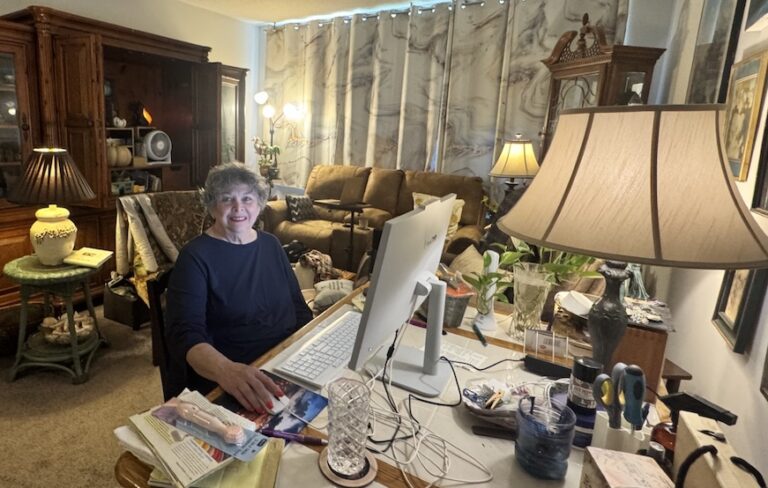
Vicki Armel was diagnosed with attention deficit hyperactivity disorder at age 77, shortly after her daughter and granddaughter were diagnosed with the same condition. (Courtesy of Jami Shapiro)
This story is from The Pulse, a weekly health and science podcast. Subscribe on Apple Podcasts, Spotify, or wherever you get your podcasts.
Find our full episode on adult ADHD here.
For decades, Jami Shapiro had a strained relationship with her mother.
When Shapiro was growing up, she often saw her mother quitting jobs, not finishing school, and taking on new projects. After college, she returned home to live with her mother, but moved out because she found the house too cluttered.
The tension in the relationship came to a head when Shapiro was 30, pregnant with her first child, and attending a family wedding with her mother. They got into an argument, and Shapiro said she got really mad at her mom: “in the middle of the reception, in front of everybody, I just yelled, ‘You’re pathetic.'”
Shapiro’s mother, Vicki Armel, said the moment was like “somebody had slapped me in the face.”
“It really hurt,” Armel said. “I don’t know how many people heard, but it was just such an inappropriate thing to say to your mother.”
However about 10 years ago, their relationship began to change for the better when Shapiro’s oldest child was evaluated for ADHD — Attention Deficit Hyperactivity Disorder.
Shapiro said she was skeptical, but took her child to a specialist.
“As the psychiatrist was actually asking questions, I looked at him and I said, ‘I’m answering more yeses for me. Do I have ADHD?’ And both my child and I walked out with a diagnosis. I was 45.”
Shapiro’s diagnosis made her realize some of her behavior is connected to ADHD: losing words or her train of thought, forgetting names, and struggling to deal with negative feedback. She also learned that ADHD runs in families, and suspected that her mother also has ADHD.
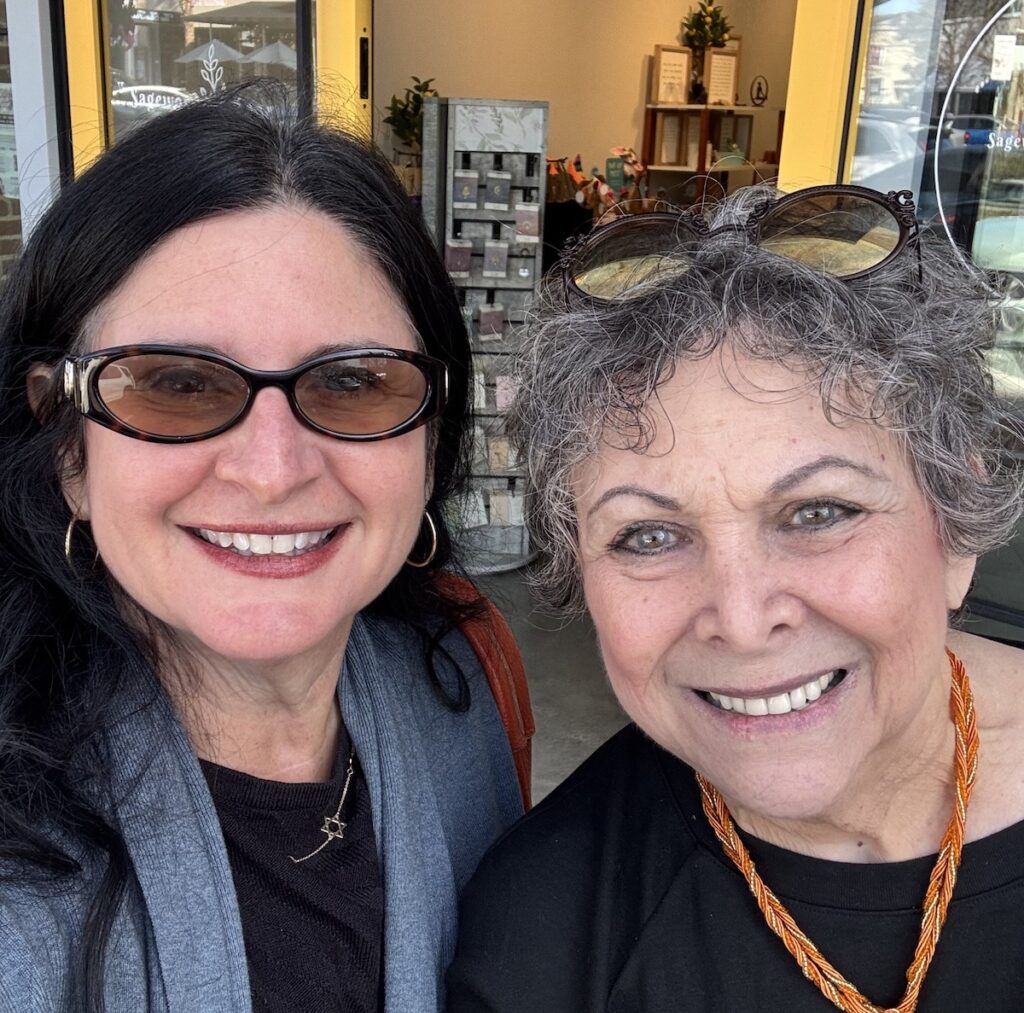
Armel was diagnosed at age 77, and Shapiro says the diagnosis made her see her mother in a completely new light.
“It wasn’t that she kept quitting things. It was not that she was not motivated or lazy; it was that she had a brain that was wired differently. And now we have an understanding of each other.”
She recalled that shortly after her mother got diagnosed, Armel came to visit and saw Shapiro leaving all the kitchen cabinets open, and remarked that she does the same thing.
“Once Jamie realized that I had ADHD also, she just started treating me differently,” Armel said. “She realized that all these years she had been punishing me because I wasn’t the mother she thought I should be, told me I was a terrible mother.”
And now, she says they all get along better.
“We can talk, we can laugh, and the few disagreements that we have are nothing like they used to be. They’re not fights, they’re disagreements,” she said. “It’s been the daughter I always wanted to have, and the relationship I always wanted to have with my daughter. She was here for my birthday in January. We had a wonderful time together.
“That’s all I ever wanted, was that kind of relationship with her, and to have it finally was just sheer joy. I mean, I enjoyed every minute of it, and she did too. If that’s what it took for Jami and I to get on the same wavelength, it’s worth it.”
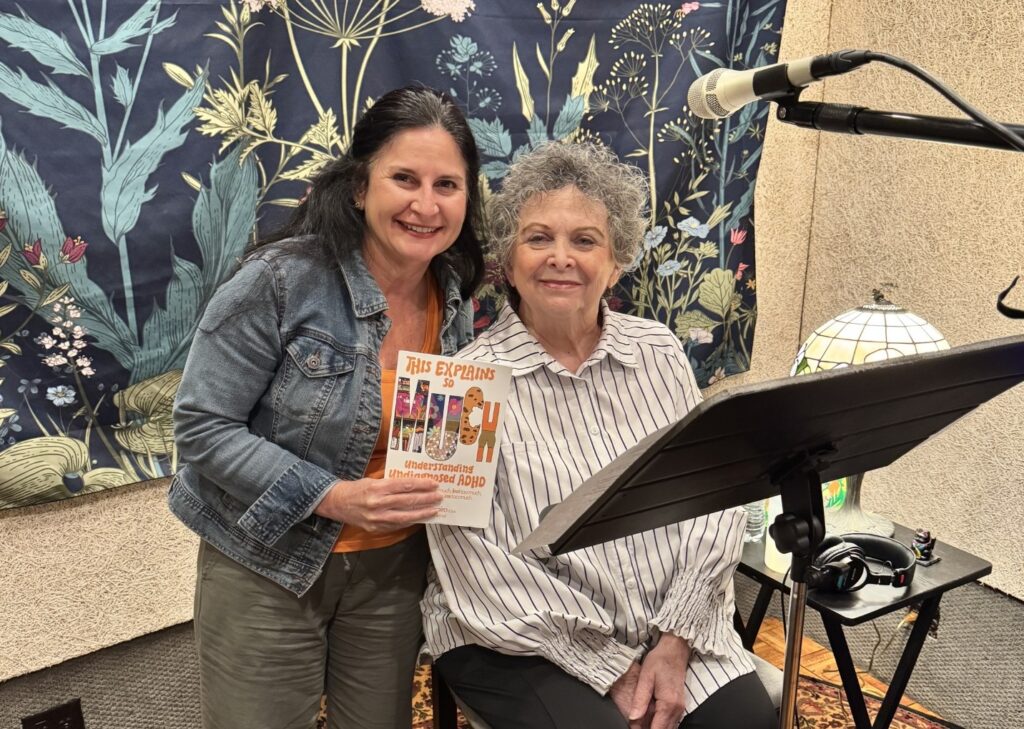
Shapiro started a podcast called Grandma has ADHD. She and Armel wrote a book together, called “This Explains So Much, Understanding Undiagnosed ADHD.”
‘You got your ADHD lenses now’
Susan Richardson was diagnosed at age 63, after she happened to come across book about ADHD while she was going working on an art project.
“It’s like you got your ADHD lenses now, that you see things in a different way: You see the past, you see the future,” Richardson said. “You’re sort of sad because you think you’ve lost all those years, I mean you have, but now you see things differently, you see things clearly, you see who you are, so you get to live the way you’re supposed to for the first time.”
Richardson said had she gotten her diagnosis when she was younger, she would have written more poetry, which she now enjoys, and not have struggled so much to live up to societal standards of being a “great wife and mother with a beautiful house and wonderful meals and everything washed and put away, that doesn’t happen so much with me.”
ADHD in older people can often go unnoticed, said clinical psychologist Kathleen Nadeau, who has specialized in ADHD for more than 40 years.
“In many cases, it is just ignorance on the part of the medical community,” Nadeau said. For example, she said one of her clients, who is in his 70s, heard from his doctor that, “ADHD doesn’t exist after age 65.”

Subscribe to The Pulse
The issue is that the symptoms of ADHD can be similar to signs of aging, so she said some medical providers just write off things like memory problems as people getting older, or dementia.
She said what makes matters worse is that people with ADHD can benefit from something to give their lives structure and creates routine, like work or school. That is important to having an active social life, but all that is harder for people after retirement.
Nadeau said despite more awareness of adult ADHD, there is still a need for more research. For instance, she believes group psychotherapy for senior ADHD patients could be helpful, but researchers should study the best ways to do that.
An ADHD diagnosis can help someone put their life into perspective, even if it comes later in life, said Nadeau.
“There’s often a sense of regret, but also a sense of relief, like, ‘I’ve blamed myself. All my life, I just thought I was flaky. I was a screw-up. I just was awkward. And now I know that there was a condition I was born with that could have been treated. And I could have learned skills and learned ways to manage my ADHD had I only known that that’s what was going on.'”
WHYY is your source for fact-based, in-depth journalism and information. As a nonprofit organization, we rely on financial support from readers like you. Please give today.
Brought to you by The Pulse


Patients without family or health care proxies face overtreatment or limbo in hospitals
A program matches unrepresented patients with volunteers who can make care decisions for them during health care crises.
2 years ago
Listen 7:16
As the U.S. ages, dementia is on the rise. Here are ways to reduce your risk
About 40% of dementia cases could be prevented or delayed by healthy lifestyle choices and preventive medicine. Here's a tool to gauge your brain care and track your progress.
2 years ago
For those with sensory issues, ‘fitting in’ at school can be a huge challenge
Growing up in the early 2000s, Rebecca Kaplan faced challenges fitting in due to autism-related sensory issues — but on a whim, she hoped buying a pair of jeans would help.
2 years ago
Listen 10:20