

Vernon Ray found freedom through creativity. Now he’s helping others find their own path
Vernon Ray founded Creative Mind Productions while incarcerated. Today, he uses photography to create opportunities, mentor young people and help his community.
Listen 05:28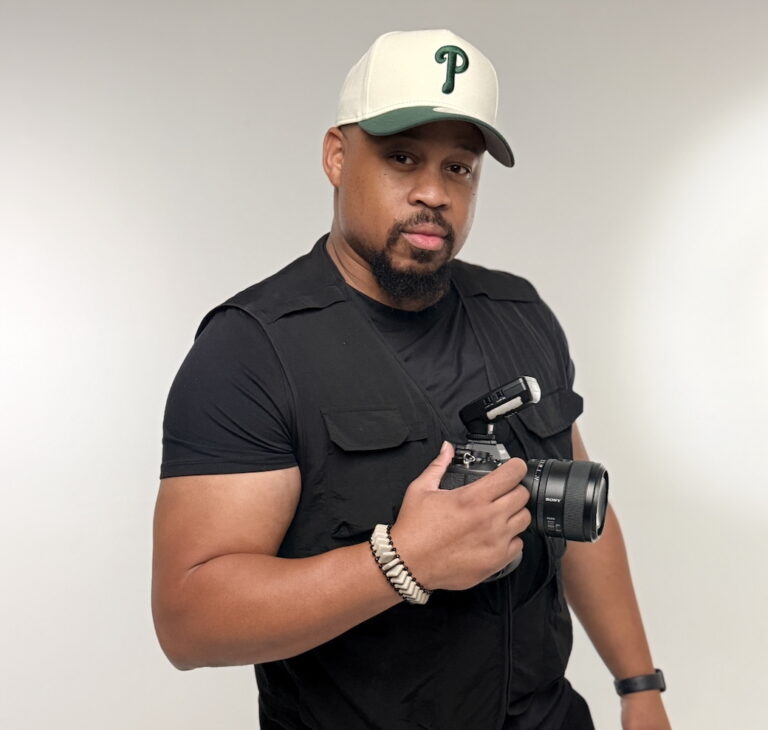
Vernon Ray is founder, owner and operator of Creative Mind Productions. The company runs several programs designed to reach out to young people, including Shoot Cameras, Not Guns. (Credit: Stephania Humphrey)
Long before Vernon Ray made his living behind a camera, he was an artist.
He drew. He painted. As a young man, he participated in Philadelphia’s Mural Arts program and won art competitions.
But it was during one of the hardest periods of his life — while incarcerated — that creativity became something more.
“I started doing portraits and letters and different types of creative things that the other inmates were able to send home to their families,” Ray said. “And it went from one dope portrait to now, I can’t stop having people knocking on myself for me to draw more for them.”
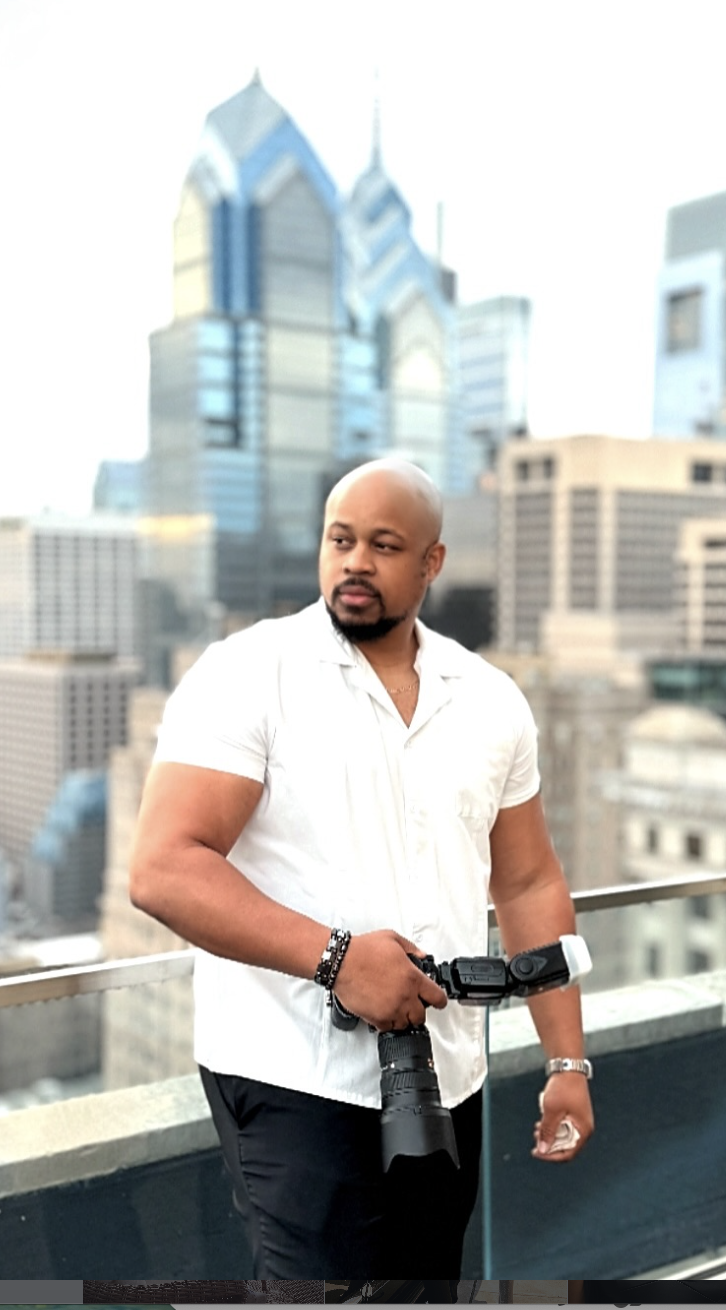
Creative Mind Productions was born during that period.
Ray, now 43, says he was looking for a way to express himself. When he returned home, he wasn’t sure what the company — or his future — would become.
“Photography was the last thing from my mind,” he said. “But in the pursuit of really figuring out how to continue to express myself and find an opportunity. Photography became that thing.”
‘I had to go my own direction’
Not everyone thought photography was a viable plan.
Ray remembers telling family and friends what he wanted to do and hearing that he needed to find a “real job.”
“‘You need to take life seriously, man,’ and ‘Focus on getting a real job because you can’t sustain a family taking photos,’” Ray recalled being told.
He didn’t listen.
“I really had a deep feeling that this was a path that was definitely for me,” he said.
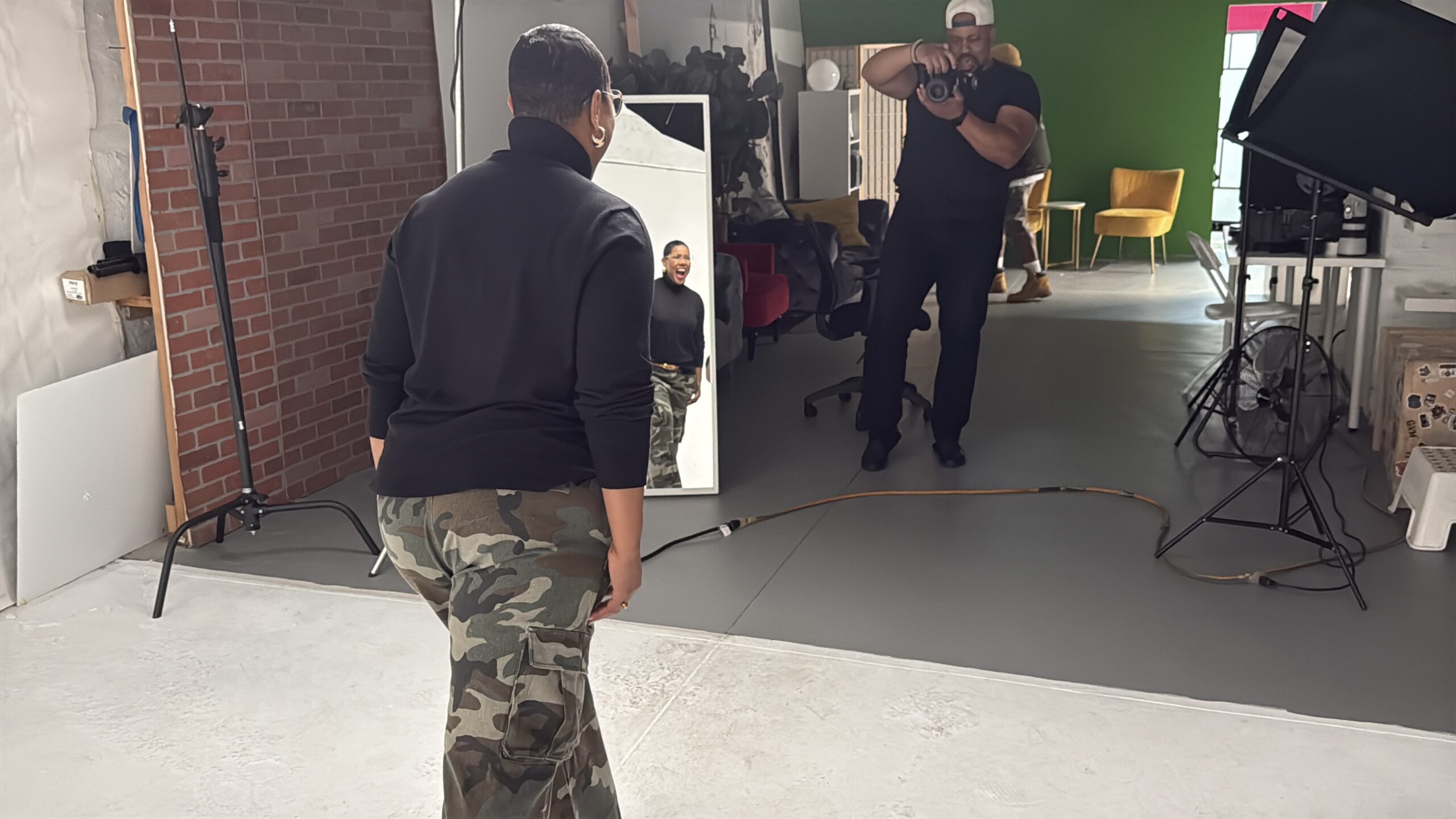
Ed Mickle, who has known Ray for more than 30 years, remembers his artistic ability long before photography became his profession.
“He was like a super dope artist, and he would teach people techniques,” Mickle said. “He wasn’t stingy with his craft.”
That willingness to share his gift would eventually become central to Ray’s work.
Shoot cameras, not guns
After losing two younger cousins to gun violence, Ray began thinking about how photography could provide young people with another outlet.
The loss became particularly real as Ray stood at one cousin’s casket with his son.
“It felt really, really heavy,” Ray said.
He remembers telling his son: “I’m not gonna ever let this be you. I said, ‘I’m going do everything in my power to make sure this isn’t you.’”
Ray and his brother went on to create Shoot Cameras Not Guns.
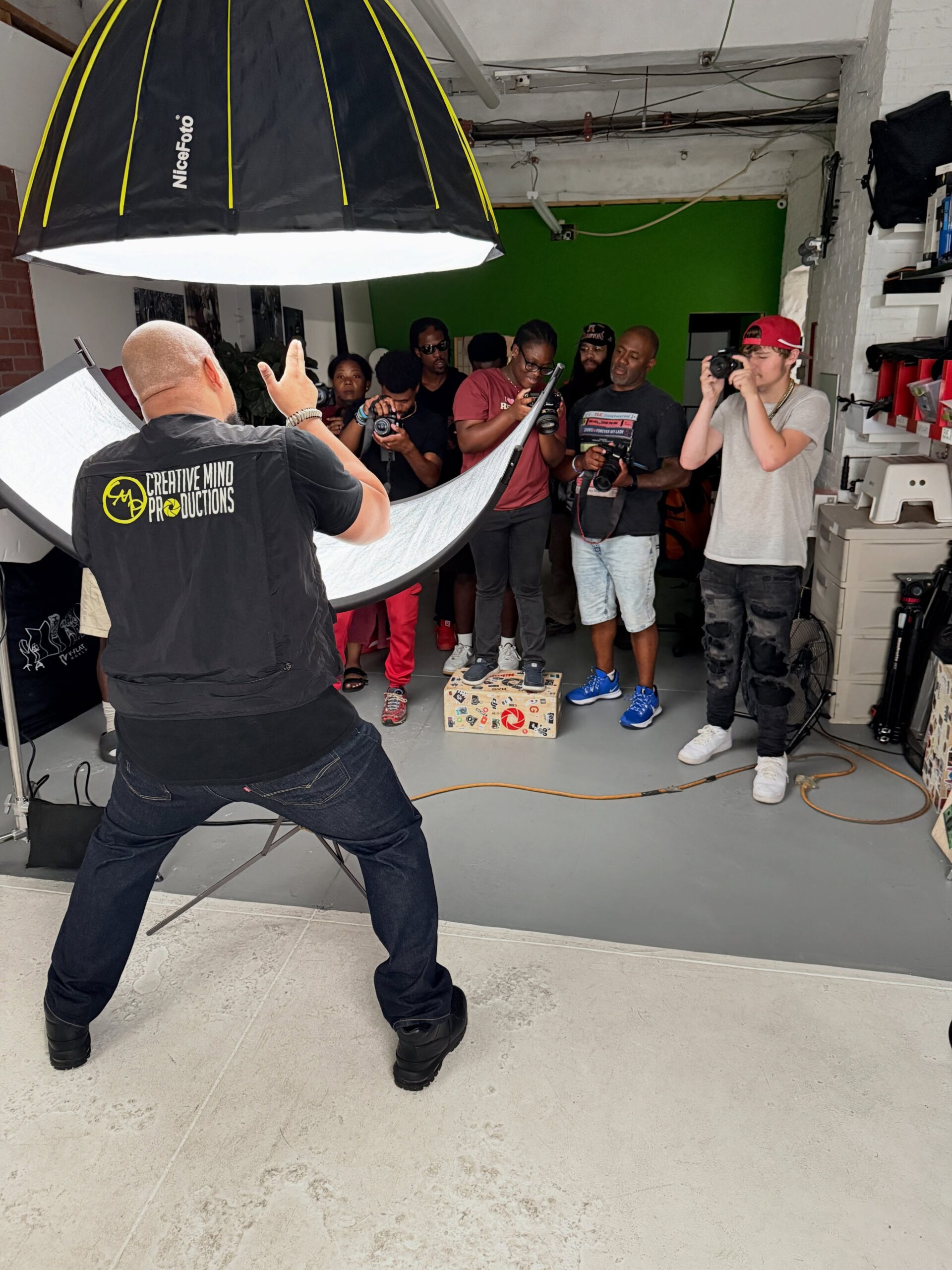
The program started with photography, but Ray said the camera was a way to get young people into the room for deeper conversations.
“We started with a small class and made it directly to help folks understand that they had options, that they have an alternative,” he said.
The program incorporated mental health and conflict resolution. Ray said that was important because he understood what it meant to struggle to express difficult emotions.
“I was an angry young man at one point and didn’t know how to find my words,” he said.
Eventually, Shoot Cameras Not Guns became more than a class. Young people learned photography skills and were given opportunities to put those skills to work.
Making professional photography accessible
Ray has continued finding ways to connect his business with his community.
One is Creative Mind Productions’ 40 Shots for $40 initiative, better known as “40 for 40.” The community service program offers a professional photography session for $40 — a service Ray says would typically cost hundreds.
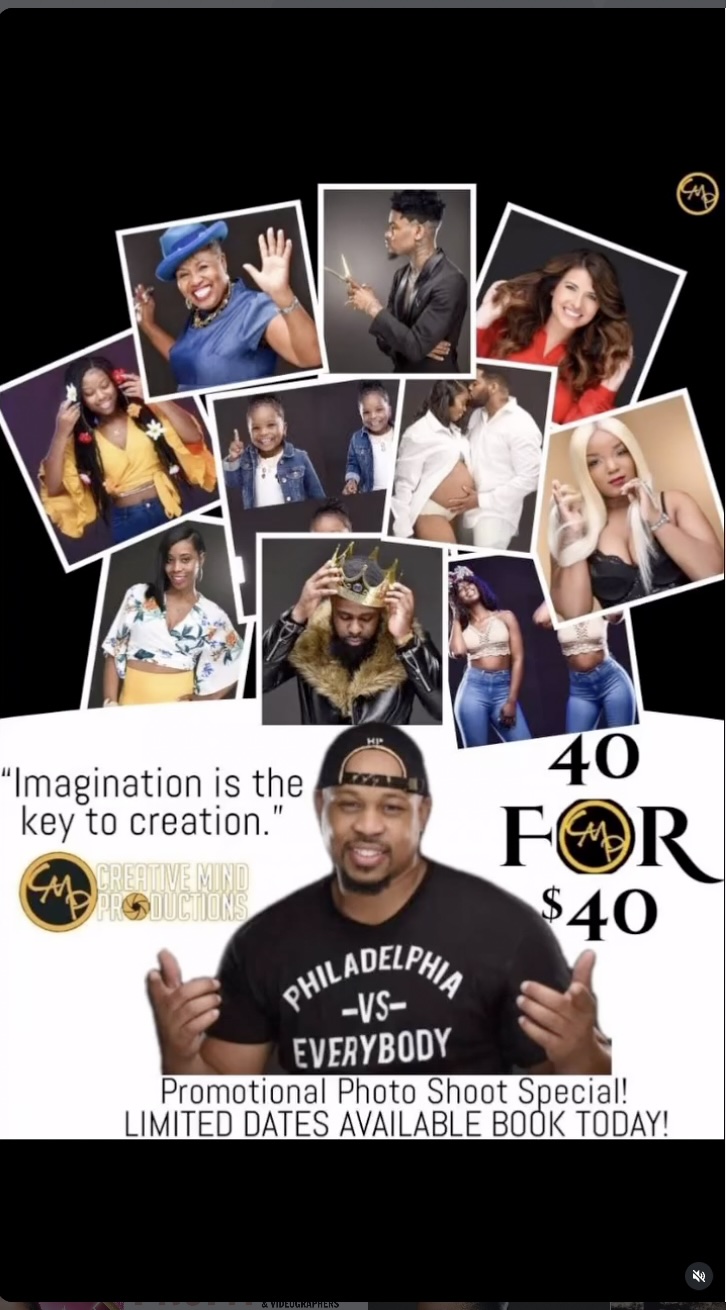
“We make it something that’s very expensive, accessible, right?” he said.
The events can also provide free vending opportunities to entrepreneurs. And young people who come through Shoot Cameras Not Guns can learn the photography process and then be hired to work the events.
“We teach them that exact same process through the program, and then we hire them,” Ray said. “We bring them in and allow them to work.”
For Ray, photography is about more than producing an attractive image.
“Capturing the moment is not just about just a still shot of what happened,” he said. “Capturing a moment should be a story being told.”
‘Vernon always shows up’
That ability to tell a story stood out to Malika Rahman, who nominated Ray for Good Souls.
Rahman first encountered Ray while he was photographing an event. Years later, she asked him to photograph community work she was involved in.
He agreed.
“One thing that really stood out to me about Vernon is [he][ has the ability to pull personality out of people,” Rahman said. “He makes getting photographed fun.”
But Rahman says what Ray does extends beyond photography.
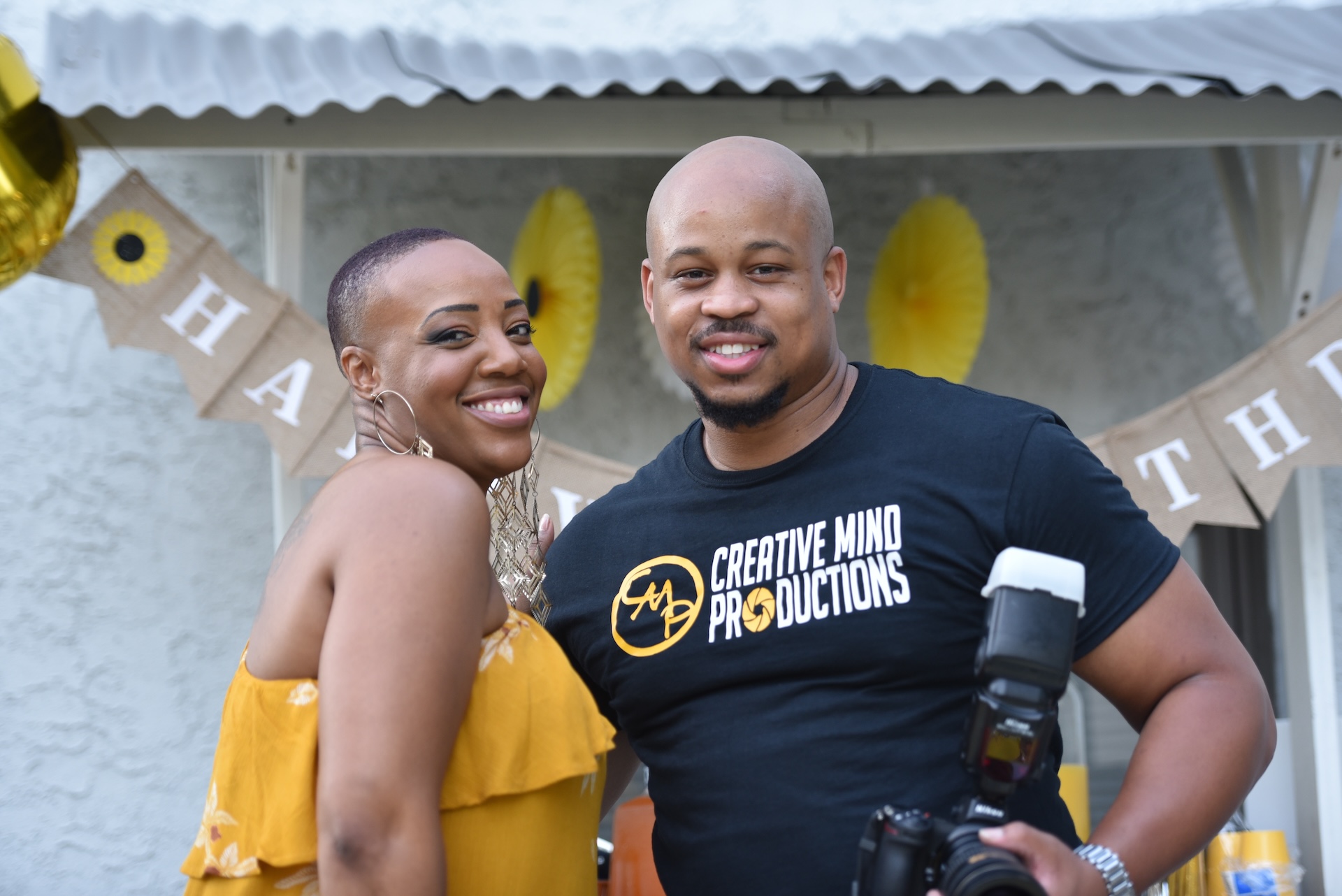
“He wasn’t just a photographer; to me, Vernon is a storyteller,” she said. “He has the ability to use photos and videos to tell a story, and he allows that story to be written by the people that he works with.”
Mickle sees the same quality.
“He doesn’t just tell people to stand there and take pictures, charge them and say, ‘okay, go about your day,’” he said. He really tries to bring out the best in people.”
For Rahman, Ray’s willingness to consistently show up for others is central to who he is.
“I think a good soul is a person who emulates in their thinking, in their speaking, and in their actions, goodness- not perfection,” she said. “And one thing I can say is Vernon always shows up authentically and is a good person.”
Creativity as purpose
Creative Mind Productions has taken Ray well beyond Philadelphia. He said his photography and video work now includes travel to Ghana to tell stories there.
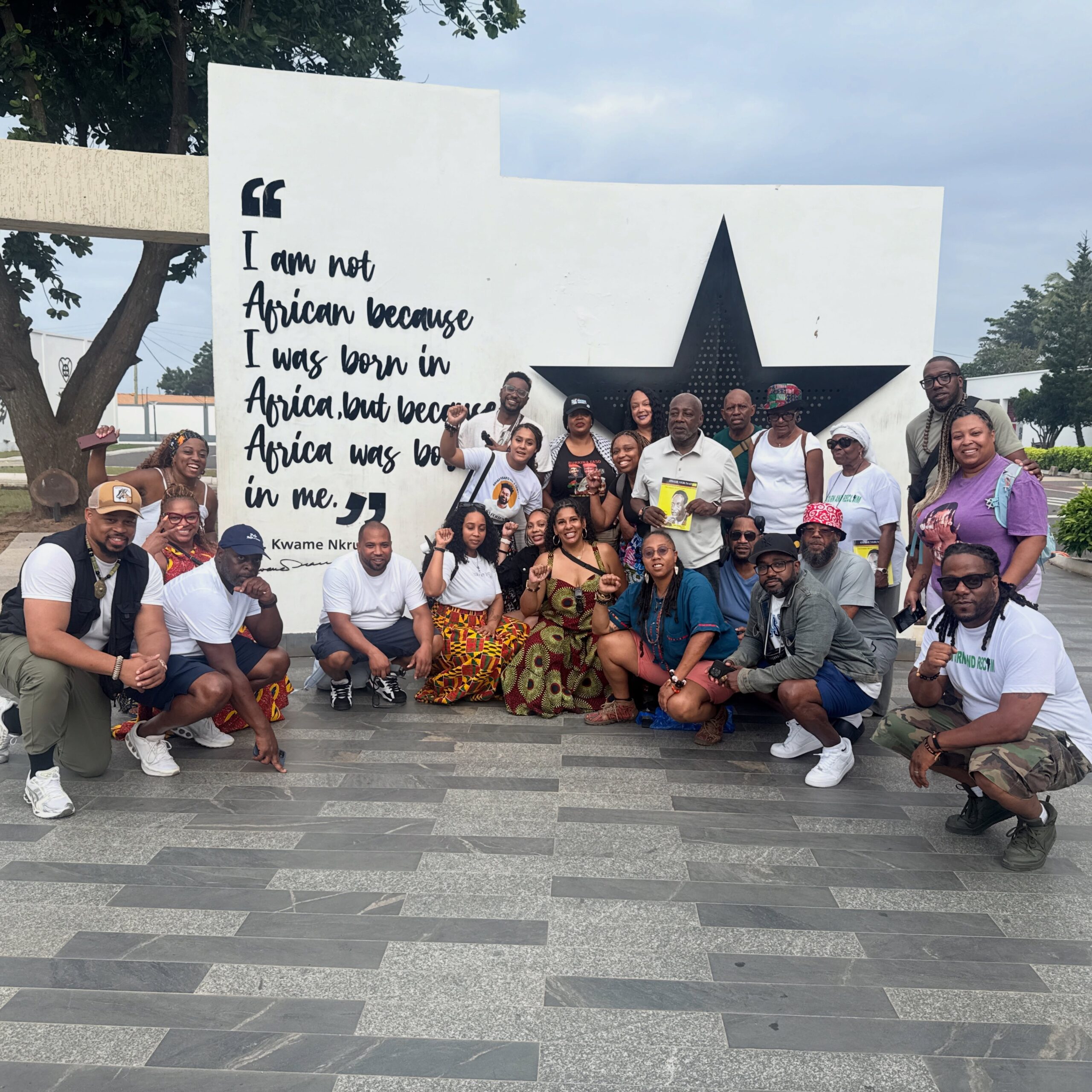
Yet the philosophy behind his work remains remarkably simple.
“There’s no wrong way to be creative,” Ray said.
It is a philosophy reflected in a life in which creativity has served many purposes: expression during incarceration, a career after returning home, an alternative for young people confronting violence, a source of employment and a way to help people see themselves differently.
For Ray, those pieces no longer feel accidental.
“I feel like where I am, I’m meant to be here,” he said. “This was part of my purpose.”
WHYY is your source for fact-based, in-depth journalism and information. As a nonprofit organization, we rely on financial support from readers like you. Please give today.