



Vernon Davis Got Called Out, Then Turned His Career Around
We hear from former NFL tight end Vernon Davis to learn how a moment of tough love became the catalyst that changed his career.
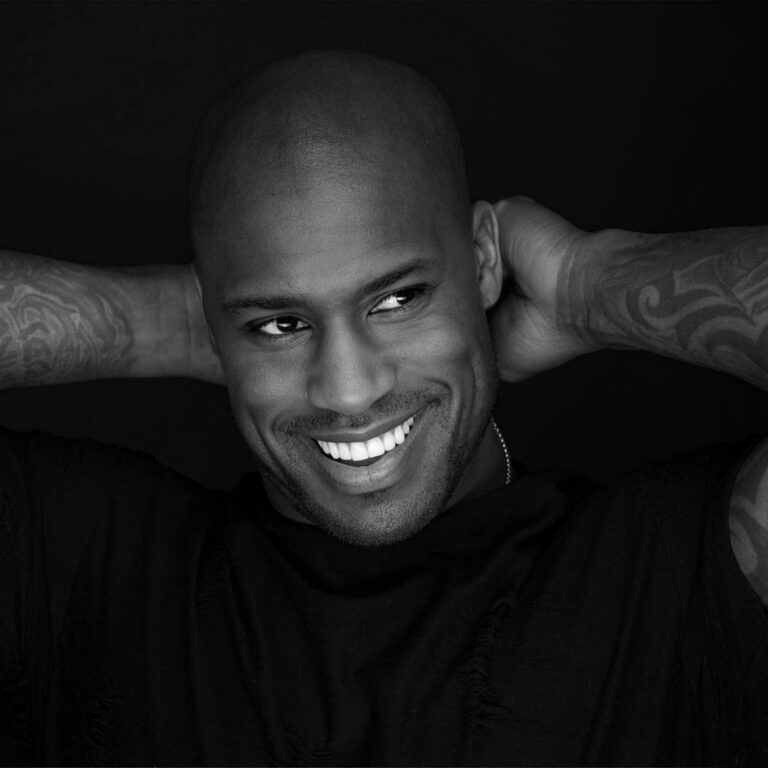
We’re in Week Four of the college football season, so we’re sitting down tailgate-style with Jessica Smetana and Lucy Rohden, hosts of the College Football Happy Hour podcast. They’re filling us in on all the Lane Kiffin and Ole Miss drama, recapping that vicious hit in the USC-Oregon game, and breaking down what it means when we crave violence in a football game.
And then we’ll hear from former NFL tight end Vernon Davis to learn how a moment of tough love became the catalyst that changed his career. You might recall when 49ers coach Mike Singletary publicly called him out in an infamous post-game speech, but you might not realize just how much being taken to task changed Davis’ trajectory in the league and beyond. He’d go on to be a two-time Pro Bowler, Super Bowl champion, and Hollywood actor. We’ll gain insight into his childhood, learn how his passion for the arts off the field fueled the creation of his foundation, and understand how some of his success can be traced back to that one moment of clarity.
Show Notes
- A look back at his epic postgame 49ers rant | SF Niners
- Alex Smith To Vernon Davis Game Winning Touchdown | 49erFaithfulDotNet
- Support the Vontae Davis Foundation
- Playing Ball | Vernon Davis
- Hear More from Jessica and Lucy on the College Football Happy Hour Podcast
-
Episode Transcript
DAVID GREENE, HOST: Hey everybody, welcome to Sports in America. I love the chance to bring on new voices onto our show and that is exactly what we’re doing today. The hosts of College Football Happy Hour, Lucy Rohden and Jessica Smetana are here. And Jessica, I just want to say, I lived in Russia for three years and every time I said “Smetana,” it was because I was asking for sour cream.
JESSICA SMETANA: (Laughs)
DG: That is the Russian word for sour cream.
JS: I know, I know, people tell me that all the time, but I, yeah, my grandfather was Czech, and there’s a famous composer, Bedřich Smetana, who I maybe am a cousin of, I don’t know, but that’s the only word I know in Russian.
LUCY ROHDEN: Dude, it’s insane we don’t have a sour cream sponsor yet. It feels like we’ve really dropped the ball on this.
DG: That’s what we’re really going for here. That’s why I’m asking you about this. Well, tell our listeners just a little bit about your show and how you two came together and why college football and happy hour, because I like both. I’m here for both of those things.
LR: Go for it, sour cream.
JS: Yeah, well, Lucy and I worked together on the Dan LeBatard show for a few years, and she really loves college football. I’ve always been a big college football fan. She does a ton of awesome college football videos on her TikTok. And I host a Notre Dame show, but neither of us really had anywhere where we were regularly talking about just the whole college football landscape and picture. And, you know, we both kind of have our own gripes about sometimes how college football is covered. It’s a little bit, people take their takes very seriously. You know, they cover a lot of the more nitty gritty stuff going on right now with different legislation that’s been trying to get passed and we really wanted to do like a fun take on it and just kind of have fun, have the kind of show that we’re talking about topics that you talk about at a tailgate with your friends and having fun with just how absurd and ridiculous the sport is. So that’s kind of how we came up with it and you know, we both love happy hour. So it felt like let’s make the show an hour, let’s be happy and let’s just try to enjoy this weird sport.
DG: I love that. It feels very Dan LeBatard-like. We had him on our show some weeks ago, and I feel like just bringing that sort of joy and whimsy to thinking about sports, there’s so much to that, because you can get so serious, and it can be so annoying. Like, it’s sports at the end of the day. Like, we’re enjoying a game, and enjoying a lot of the crazy stories and narratives around the game. Like, just embrace that.
JS: Yeah, absolutely.
DG: Well, I do want to say, like, our three college football teams are all undefeated and are coming out of some impressive wins. Lucy, I think your Iowa Hawkeyes just won an insane game in the last moments. I have to say my brother-in-law and nephew, both diehard Michigan fans, were literally in the stadium where you scored that touchdown at the end. So thank you for devastating them, but that was a huge win. Then Jessica, Notre Dame you take down Purdue. But I think the most impressive, my Pitt Panthers, like literally destroying Bucknell. Like that’s a big victory. I feel like Pitt is actually the team that everyone should be watching right now coming out of that game.
JS: And they have a big game coming up this weekend.
LR: They do.
DG: Yeah, Virginia Tech.
JS: Looking forward to that, yeah, old former PA foe, James Franklin.
DG: Yeah, no, seriously. And you’re your whole family’s Steeler’s fans, Jessica, is that right?
JS: Correct. I’m also a Steelers fan. Most of my family went to Pitt. So a lot of Pitt fans in my family, my parents both went to Notre Dame though. So I think I’ve been to every Notre Dame-Pitt game since I was born. It’s always a big rivalry in my Family.
DG: It’s a great rivalry.
JS: It is, yeah.
DG: Well, one of the narratives I wanted to ask you both about, I know you’ve been following a little bit, it’s Lane Kiffin, all the drama, wondering whether loyalty means anything in college football because here’s a guy who went from coaching Ole Miss to coaching a bitter rival, LSU, and then he has to go up against his former team. One or both of you, tell our listeners who don’t follow college football that closely who he is and why he’s been so full of drama this season.
LR: Yeah, so Lane is like the biggest diva in college football. I say undiagnosed narcissist, some people just say diagnosed narcissist, which we don’t know. That’s HIPA.
DG: (Laughs) Transparently narcissistic.
LR: Yeah, he, everywhere he’s gone since he was a player, he has gone with this energy, this aura about him that is, it’s in your face. It’s loud. He will make jokes about you. He will do anything he can to get under your skin. And that’s just how he has always operated from when he was a quarterback at Fresno State to when he at the Raiders to, you know, abandoning Tennessee, and then getting left on a tarmac after getting fired by USC. He has never done anything casually in his life. So he goes to Ole Miss, a program that historically did not really have much success at all until Hugh Freeze got there, and then he called an escort on a university phone, and they had to fire him.
DG: Crazy
LR: And so like still, Lane’s not even the craziest coach they’ve had at Ole Miss. And so Lane Kiffin ends up getting the Ole Miss job, And just resurrects that program and makes them a national contender. And every, year jobs would open up and Lane Kiffin’s name was in every single conversation. There was even a couple of years ago, he was going to take the Auburn job, but his daughter, who was a student at Ole Miss, convinced him to stay. And so it was just this will he, won’t he, for years. And then finally, last year, Ole Miss with Trinidad Chambliss, who was a player they picked up in the portal from Ferris State that no one had ever heard about before. Austin Simmons gets injured, he comes in and then just like changes college football forever. Ole Miss makes it to the playoff, but by the end of the season, everyone knew there were the most open jobs there had ever been. And it was coming down to, is Lane Kiffin gonna stay at Ole Miss, go to LSU or go to Florida? Auburn was out of that, but they were in the beginning. And so they do this like kind of, the whole thing was very like LeBron, the decision of like, “Where’s Lane gonna go?” And he takes the job at LSU, which is a rival at Ole Miss. And then Lane was like, well, you know, this is how it ended. I’d still like to coach the game in the playoffs. And they were like, what do you mean? You are leaving and going to coach our arch rival and you’re going to bring, we assume a lot of our players and coaches with you. No, you cannot coach this team. And he was like, I really want to though. And they’re like, yeah, that’s just like not a good enough reason. So he threw a fit. He did not coach Ole Miss in the playoff. Ole Miss ended up winning. They beat Georgia. They were super close to beating Miami, and he takes the job at LSU, brings a lot of players with him, decides that he wants to recruit NFL players to be on the LSU staff. The SEC sues him, and then they go to Ole Miss and they lose. So that is the TLDR, even if that sounded long. There’s so much more.
DG: I love that, yeah, went to his old team and lost, and that was probably the happiest day in the history of the Ole Miss college football program, getting back at him, I’m assuming, or pretty close.
LR: For sure. There was, if you like listen to the broadcast, you hear “F Lane Kiffin” throughout the entirety of the game. The crowd was just chanting it the whole time.
DG: Which is amazing. I mean, Jessica, does loyalty mean nothing in college football? Like, what do we take from the fact that that’s been the drama unfolding this season?
JS: I would say money means a lot more than loyalty in college football. And I don’t want to sound like, you know, there’s no, no one has integrity or anything like that. Like there’s loyalty amongst coaching staffs, perhaps and teammates and things of that nature. But usually when there is a situation where a coach can get a leg up and coach at a place like LSU and make, you knows, tens of millions of dollars, they’re going to take it and they’re not really going to feel that bad about it. And I think that’s kind of the ultimate lesson here is like time and time again, I’m a Notre Dame fan and what was it? I guess the last head coach at LSU, Brian Kelly, five years ago already in 2021 was coaching at Notre Dame. They were on the brink of possibly making it to the college football playoff. He decided he was leaving for LSU after being at Notre Dames for over a decade, which was very shocking. And it was the same thing. It was like, don’t you have any loyalty to this place? You probably would have gotten a statue here if you stayed, but he wanted to take the big paycheck and he got it. He ended up getting a massive buyout after they fired him last year. Even before that, when he left Cincinnati, it was the same thing. He left a very good Cincinnati team for Notre Dame. So that is sort of the way of coaching in college football and some would say that it’s probably not a good thing, but also it’s a good counter-argument to criticisms of players transferring and taking money to play at other places because the coaches do it all the time.
DG: Yeah, that’s a fair point. I want to ask you about one other kind of storyline that I’m sure is coming up at tailgates everywhere. And that’s this hard hit that we saw recently in a USC-Oregon game. This was linebacker Desmond Stephens with USC. He hit Oregon’s quarterback, Dante Moore. And for people who don’t follow football that closely, when a quarterback is on the run and slides, that’s basically the end of the play, and defenders have to stay away from them. And if you take advantage of a vulnerable quarterback and hit them hard particularly when they’re sliding, it can be like, you know, I mean, it’s horrific, it’s violent, and you get penalized for it. I guess I’m curious what you both made of this. I mean quarterbacks are so incredibly mobile these days that a lot of defensive players will say like there’s nothing I can do. Like if I stay away from them, they’re going to gain 20 more yards. You know, if they start to slide, like I can’t stop my body from moving. This was a vicious hit as Dante Moore was sliding. I think what bothered me the most though was that, you know, this USC player was celebrating afterwards. I don’t know what you both make of this. Like, was there, is there anything that an offensive player can do when they’ve started to fling themselves at a quarterback and then a quarterback slides at the last second? How can college football do a better job of protecting quarterbacks, but also honoring the fact that this is a violent sport?
LR: This is one where Dante Moore slid a little bit late. It’s very much like, there are just two objects in motion. It is very hard to stop two objects in motion, what makes this one so egregious was his reaction. They delayed that game 15 minutes. He was on the floor or on the ground. The ambulance is there and he is still dapping up his coaches and players on the sideline, which super inappropriate from all of USC. What made that so egregious was like, we see hard hits like that in football all the time. I really do think a lot of it is, you are in motion, someone else is in motion. It’s just like the laws of physics. It’s going to be hard to stop. What is so weird with that one was like Dante Moore had gotten the first down on that play. He went in for the hit and he is celebrating like it’s nobody’s business. When Dante Moore got the first down, if we’re not even acknowledging that he is on the ground. So it added this just kind of like vitriol to the whole thing. And the reaction to it, it’s very hard to like look at that hit objectively now when you have the outside of him flying around like a bird after that’s happened and just the way that USC chose to handle it. I think that is why it’s getting such a strong reaction. If this hit had happened and that, you know, he had decided to just like chill out and take a knee or whatever, I think we would have been like, God, that was a terrible hit. It would be more about the two objects in motion. It just was overshadowed just by like the worst sportsmanship I’ve ever seen in my life.
DG: Yeah.
JS: Yeah, I would agree with that. Like it’s hard to say that there wasn’t intent given the scene afterwards. And I think that is sort of the thing that a lot of coaches will hammer is like, don’t try to take someone’s head off if they’re sliding, but this is, you know, in many ways, when you’re watching it in slow motion, it looks terrible, but on the field, it is a bang bang play. Like that’s what you call it, right? So it’s hard to tell how much reaction time the player really had, but even so, like, yeah, seeing what happened afterwards. And Lucy’s right, like he didn’t even make the play behind the first down marker, so.
DG: Yeah, what are you celebrating?
JS: Right, exactly. He tackled him too late. Yeah, it just was really awful to see. I really hated that for Dante Moore. And I think, like, there’s definitely ways to make football safer. And I thing one thing that has changed around football, at least in my lifetime, has been, like the culture around hits like that, where they’re not really celebrated as much when players are getting injured. But I think when I was younger, that definitely was not the case. Like there would be injuries all the time on the field and like you know I’m old enough to remember Bounty Gate being a whole scandal in the NFL and that has sort of changed. It doesn’t mean that the sport’s any safer though and certainly if like stuff like this can happen because players are moving so quickly that might be a thing that coaching staffs need to like really look at and teach quarterbacks how to make sure that they’re protecting themselves but there’s no way to protect yourself against a player who’s trying to hurt you if that is in fact, what this defender was trying to do.
DG: Yeah, which the reaction made it sound like. And I guess that’s the lesson for me, for like young players on the defensive side of the ball who are coming up. It’s like, if you accidentally hurt someone, like, I mean, take a knee and never celebrate that. But I guess, you know, like Jessica, you and I are both Steelers fans.
[MUSIC]
DG: It’s, like, every single home game, they play Renegade and they show, like several minutes of the history of vicious hits by Steelers defenders. And I sit there waving my towel and celebrating every second of that. Like at what point is it on kind of, you know, NCAA and the NFL, you know saying, if you truly never wanna celebrate hard hits that can hurt people, you gotta stop the marketing. But then that makes it a different sport. Like this is a really tough reality of loving football.
JS: No, that’s definitely a great point about the marketing. I mean, I think that is a reason why a lot of people really love the sport, because it isn’t like it is hard and people do get hit and people like to see big hits. And we definitely celebrate them. And that is the point of tackling someone is to stop them. And you have to put a lot of force into doing that. I think, you know, of course, there’s ways to do that better and more strategically. And I think maybe there has been some improvement there. But I don’t know if you’ll ever create a full contact sport like football without the threat of violence or injury in it.
DG: Yeah, no, I totally hear you. Well, everyone should check out your show. It’s College Football Happy Hour. Jessica Smetana and Lucy Rohden. Hope you both will come back. Love chatting.
JS: Only if the Steelers keep beating AFC North teams.
DG: From your mouth to God’s ears. I love it. Thank you both so much.
JS: Thank you!
LR: Thank you!
DG: And coming up on Sports in America, we’re gonna hear a conversation with former NFL tight end, Vernon Davis.
Have you ever been absolutely chewed out after you screwed up?
[MUSIC]
DG: Like taken to task in front of your peers. And what’s worse, the person ends up being right. It is Week Eight of the 2008 NFL season. Hall of Fame linebacker Mike Singletary brings his hard-nosed old school approach to a woeful 2-5 49ers team as he takes over as interim coach. His first game at the helm is a 34-13 thrashing from the Seattle Seahawks at home. In it, his hot-headed star tight end, Vernon Davis, slaps a Seahawks defender on the helmet and gets a personal foul penalty.
BROADCASTER: Vernon Davis decent game, but gives up and gives Seattle’s defend a little love tap there on the old face mask that draws a 15-yard personal foul. It also draws the ire of his coach,
DG: Coach Singletary is absolutely livid. He immediately pulls Davis from the game and tells him to hit the showers.
BROADCASTER: 49ers lose, 34 to 13.
DG: In the post-game press conference, the coach singled Davis out and let him have it with one of the most infamous call-outs in NFL history.
MIKE SINGLATORY IN AN INTERVIEW: Vernon, just it was something that I told everybody at the very beginning of the week. I will not tolerate players that think it’s about them when it’s about the team. I want winners.
DG: Though he was stung at first, the highly regarded tight end came to see the incident as the moment he turned his career around. It was a wake-up call, a plea from a passionate coach to help him realize his full potential. Today on Sports in America, we’re gonna talk with Pro Bowler and Super Bowl champion Vernon Davis about the virtues of well-timed tough love through the lens of hindsight. We’ll go deep on his challenging childhood, the saint-like presence of his grandmother, and how, off the field, he turned a passion for the arts into a thriving foundation and Hollywood career. In some ways, his accolades, his ring, the many fruits of his post-NFL career can be traced to being called out by that furious coach.
I think so many people look at your story and your career and think of a big defining moment, which was, you know, in some of the early days with the 49ers, your coach Mike Singletary calling you out in a way that was so rare. And I think we all heard that. And there was a sense of like, oh my God. Like not just as a coach talking to a player behind the scenes, but like publicly calling you out, why he benched you, the whole thing. You look back on that was he right about you at that moment in time?
VD: Mmm. Yeah. I would say he was right, because when I got into the NFL, it was, you’re young, so you’re trying to figure things out. This is the next level, you have money now, and you’re tying to, well, for most, some people who have goals and aspirations, they want to become the best at what they do. And sometimes you don’t know how to do that. I had to learn that it wasn’t about me, it was more about the team. And that’s what Coach Singletary was there, that’s where he was trying to tell me. He was like, look, he wanted to help me navigate that. And I didn’t quite understand in the beginning, but I had to learn through tough love. And I believe he was definitely right about what he was saying about me. A lot of people might say he should have handled it differently, but who knows? At the end of the day, it doesn’t matter because whatever he was gonna do, whatever he did, it was gonna help no matter what, because it was meant to be, you know what I mean? So I’m just elated that he was there at the time.
DG: Have you thanked him personally for that?
VD: Oh yeah, we had— Singletary and I had many conversations. We’ve had many moments and yeah, we were able to connect after the fact. And yeah, I’m sure he’s, you know, he still thinks about it and he’s proud. I mean, he did, he helped me. I mean that’s what we’re for, man. That’s what people are for. That’s my job to help the person that needs help. It’s his job to the person that needs help, like that’s we do, that’s who we’re supposed to do.
DG: There’s always this sort of belief that you can’t change someone who doesn’t want to be changed. And I think about kind of the Singletary moment, like did you change because you wanted to change or because you were forced or pressured to somehow?
VD: No, I think things have to be brought to your attention. You may not be aware of how you’re acting or maybe the way you’re acting is causing this to happen. May not make sense to you, but there’s someone who can bring it to your attention and explain it to you in a way that it makes sense. And that’s what happened for me. It made sense. I’m like, okay, this is not the guy I am. I’m a high character guy. I’m a leader. I want to be a leader, but only way I can be a leader is if I do things the way this mentor of mine is telling me. So it’s just like anything else. It’s like maybe it’s, just like me growing up in the hood and my grandmother trying to educate me and give me some of her discernment. I either listen or I don’t. Same way in NFL, you either listen or you don’t, it can go one or two ways.
DG: To some extent, Vernon’s high character can be derived from overcoming the difficult circumstances of his childhood.
[MUSIC]
DG: He grew up in what he describes as a rough neighborhood in Washington DC. He only saw his dad on rare occasions. His mom battled severe addiction. As the eldest of six siblings, one of whom was future NFL quarterback Vontae Davis, Vernon was compelled at an early age to act as the father figure in the household. Throughout, his grandmother was the pillar of strength they needed, and sports was the outlet for the rage, the sadness, and the fear that Vernon was carrying.
Can you kind of paint me a picture of what home was for you as a kid?
VD: Yeah, I think home for me growing up, it was a lot of fun. Had a lot fun as a kid growing up. But there were a lot of obstacles that I had to face because of the environment that I grew up in. Petworth District of Washington, D.C. A lot of people who don’t know was one of the worst areas in Washington, D.C. So as you can imagine, being a kid walking out the door, there’s a liquor store on the left and there’s about 20 to 30 guys standing on the corner. There’s a lot of negative influences that I have. So I had to navigate and used a lot of discernment early on as a young kid and it was, there were some challenges but i do not regret the way i was brought up i love the way my journey was able to take me through the ebb and flows of just life and just trying to understand and navigate what’s right from what’s wrong. And it’s just, it’s a beautiful thing when you when you can look back on that and see where you are now standing today
DG: It’s an amazing thing to hear that growing up in an environment like you did, having to learn these lessons about what’s right and what’s wrong so vividly. I mean, say more about that and how that childhood shaped you.
VD: I feel like every great outcome has a lot of chaos in the midst early on because, you know, you have to be able to go through that because how can you enjoy, how can look at yourself in the mirror and say, okay, this is what I had to go though, how could you shed tears of joy if you don’t have those obstacles from the past? It’s just the way it’s supposed to be. It shapes us as a human being and it gives us character. It gives us dimension when we go through, when we have those different storms in our life. So that’s why I tell everyone, like growing up in D.C. really, really is something that I hold on to because I know, you know, I never really forget where I came from because that has got me to where I am today and where I’m standing. I’m extremely grateful for that.
DG: In all of your story, your grandmother just emerges as this kind of mythical character in your life. What did she mean to you?
VD: Oh, my grandma was everything. She was my inspiration. She was everything that I needed to be able to just get through every day. You know, day to day she was— I relied on her just her understanding, her wisdom, going to church. You imagine everything, all of the knowledge and discernment that she had as a grandmother. I was able to take that in and listen to it. You know as a kid, you’re not going to always, some of the things that an adult tells you, like especially your parents, you going to it’s just going to brush off for you, right? But for some reason, it was able to stick with me. You know, I really listen. And my grandmother used to always say, is be fast to listen, slow to speak. You know what I mean? And what that says is that open your ears and make sure that you’re understanding and paying attention, being cognizant and all those different things, because what you take in is going to be able to help you now and in the future, especially if you’re paying attention and you’re learning the lesson.
DG: Vernon had depth and range as a kid. For all his extraordinary athletic ability at the University of Maryland, he actually majored in Studio Art.
I was struck by learning how much you felt like you needed to keep inside when it came to interests and goals as a kid, stuff that you really wanted to do, but you were worried that it wasn’t cool. It wasn’t what a young man who was an athlete should do. Take me back into that kid, and what were the interests that you felt like you just— you were craving, but you couldn’t really pursue them.
VD: Popularity was basketball. Popularity was football. It was maybe baseball, but it wasn’t walking around the school with an easel in your hand or a canvas with a paintbrush and paint in your backpack. That wasn’t cool. That was something that you just didn’t want people to see. Like it wasn’t the norm, it was different. I couldn’t do that as a kid. Because I was, I always wanted to be the cool guy. I wanted to fit in. I wanted it to be a part of that group. You know what I mean? I didn’t understand that the thing that we looked at as not cool was the thing that people will be cheering and clapping for later on when you get older. Like a lot of people love artists. A lot of people love actors and [MUSIC]ians, right? But as a child and when you’re growing up in a poverty stricken neighborhood or just growing up in the hood in general. That’s not looked upon as cool.
DG: So when you think about your growing up and then football, like did football save you or is that too simple a statement?
VD: Football did save me. I think football was therapeutic for me. Football was a way for me to channel my emotions, my anger, and all of the things that I went through as a kid, because I grew up in a house with my grandparents and my six siblings. My grandmother raised all of us. My parents wasn’t around. As a kid like that’s hard to adapt to. Like everyone, every child wants their mom and dad around. I mean, you have a school play or something going on in your school. Maybe parents get to come for the day. But, you don’t have anyone. Your grandmother can’t make it, or maybe she can, but you want your mom and dad there. So all of that trauma that you’re building, that’s a lot of trauma on a kid. And the hardest part is just being able to navigate through that and knowing that that trauma’s gonna follow you. So you have to break that trauma. Some people break it through having a therapist. Some people breaking through having mentors to talk to. I broke it, well I tried to break it through playing the game of football, just sports in general. That kept my mind occupied. It gave me all the fire that I had in me, the anger. That turned into passion, and that passion was me playing football.
DG: Because of the often chaotic family dynamic Vernon navigated as a kid, he’s made it a priority to ensure he provides for his kids as an adult. He takes a lot of pride in being the kind of dad he never had.
[MUSIC]
DG: I wanna ask you about what success means because you talked about that you, part of your goal to get to the NFL was to kind of avoid falling into the traps that you faced growing up as a kids. Like, being successful and being able to give something to your family, is that mostly money and resources or does success mean something much broader than that to you?
VD: Money can do a lot of different things for people. It can put people in therapy. It can give people, it can put people in different classes. It can help your family with, find a place to live. It can help your families with bills and things of that nature. Yes, and I feel like me being able to make it allow me to have the financial freedom to be able to help my family and to give them some kind of stability, but not just give, because you can’t just keep giving, giving, giving. There has to be an understanding that, hey, I can help you and I can only give you what you need, not what you want. My grandmother used to say that all the time. You’re never getting what you wanted, but I’ll give you you what need. And giving somebody what they need is the essential things of life, like water, maybe some clothes, just things for them to be able to get through life. But you have a life of your own. So you have to learn to be self-sufficient and help yourself. My help can only go but so far, you know what I mean? So that’s just to discernment. That’s just not having the wisdom to understand and know how to be a leader. It’s just part of being a leader, you know, what I means? So it’s just, but it has afforded me the ability and just the privilege to be able to help my family and be that leader that they need.
DG: That’s included your mom, right? I mean, I know you grew up without your mom around and she had a lot of struggles with drugs, but it sounds like you were able to reconnect later in life and sounds like that was tremendously important to you.
VD: One thing you said early on, you said, you can’t help someone who don’t want to be helped. And I learned that with my mom. I learned my mom had a drug addiction. And I thought that by me having money, I can help her. Me having money did not help my mom, she didn’t want the help. So I couldn’t, I could only do so much for her. And I had to learn that. I learned that through the success that I’ve been able to have and just experience with her and just going through that whole experience pretty much.
DG: I think you described a time when you two went car shopping together. What was that like? Tell me about that day.
VD: Yeah, she was, this was when I was in Washington, I arrived in Washington D.C. She was making strides to get better. She did, she was better. She was clean and we were able to connect in ways we’ve never been able to. And so connecting with her and just being able to take her to the auction and find her a car, she was happy. She never had a car before and that was her first time owning a vehicle. So as that car was coming out, she was super excited. We got it. We took a couple bids on it, we won it, and she was just overjoyed. I mean, that was like the best moment, one of the best moments of her life. She was just so excited. That was a great feeling for me because watching her smile, watching her just be excited about that and happy was beautiful.
DG: What did she think about you being an NFL player? How does she reflect on that?
VD: Me being an NFL player? I don’t think there was really, there was never really any emotion with my mom. Cause when I got drafted, she wasn’t there. I had never had, even had a conversation with her. So I didn’t know. I can’t really tell you what her emotions meant to me because I never really saw the emotions behind me making it.
DG: Though Vernon wasn’t able to share his rise in the NFL with his mom, his talented younger brother Vontae traveled a parallel path. A two-time Pro Bowler in his own right, Vontae Davis idolized his older brother and was known for his tenacity as a lockdown corner. Without warning, in April 2024 though, Vernon lost his brother, the man he calls his best friend. Since his little brother’s passing, Vernon has tried to live in a way that honors his memory.
[MUSIC]
DG: I know your brother, also in the NFL, suffered a really devastating death that we all read about a few years ago, and I’m so sorry about that. And I wonder, like, how do you remember him, and what role does his journey kind of play in your life journey.
VD: Yeah, my brother was my brother, was like my best friend. He was like, he’s my brother. My best friend, my child. We’ve had great experiences together. We’ve been wonderful moments. I remember every last one of them from the time he was born all the way to the time, he passed away. He was just a great human, full of life. Never really upset about things. Never really saw him disappointed. Never saw him having a bad day. He was just always full of joy, great outlook on life, tons of aspirations to be better than he was yesterday. He just lived every day like it was his last. He just never had a bad day.
DG: How do you make sense of that loss?
VD: I think loss, in order for us to become who we need to be, I feel like we have to experience loss, especially the ones who are really extremely close to us. When you experience loss to loss like that, that, that does something to you. It changes you. It changes you forever. It may, it gives you more insight on what life is truly supposed to be be like. And at some point after you’re healed, you find the joy in it. It’s not like the worst thing in the world, honestly. It is when it, initially, but after you realize that you can’t bring this person back, there’s nothing you can do. So what are you gonna do? You gonna grieve for the rest of your life? You gonna dwell on the moment that they passed away and then you were totally depressed and sad and now you gotta take depression medication? Is that how you’re gonna be? No, you can be like that. Your family don’t want you to be that way. You take the joy out of it. And the joy Is being able to have this gift that they left you behind.
DG: Coming up, we will have more from our conversation with former Pro Bowl tight end Vernon Davis.
Welcome back to Sports in America. I’m David Greene.
When Vernon Davis got called out by his coach in 2008, it was really a turning point in his career. I wanted to know if Vernon saw coaches in today’s NFL who would hold their players accountable in the same way.
I mean, as you think about coaches out there in the NFL today, like, um, who would you look for to want to play for? I mean now that you’ve been through this change or there’s some coaches where you’re like, you know, that person’s no Mike Singletary or that’s not the kind of coach who I could play for given the journey that you’ve been on?
VD: Nah, I think coaching, the way the game is played nowadays is totally different than from when I was playing when I first started and the way that coaching is just totally different. I mean, everything changes over time. I mean the way you handle your players, the different systems you have in place, like everything’s different. Like coaches back in the day. You think about, like we used to go two a days. Like that’s no longer happening, right? Like it just changes. I mean, the style of coaching. Everything, no one’s coaching the style that Coach Singletary had. Like a lot of teams, they aren’t implementing that kind of structure, you know what I mean? What’s expected is different. Like it’s just different, it’s just ,different. And I think that it’s great, it’s always good to see change, it’s good to always see the game evolve.
DG: What exactly is different like when you say that there there aren’t as many Mike Singletary coaches anymore I mean is it what is it less like personal relationship with players?
VD: No, I think Singletary’s coaching style was totally different. Like he built the custom hill for guys to run it. Like he had all these different things, like maybe just the old school way. I can’t, I don’t know how I can describe the seed, but it’s just the school way of coaching. Like we got a lot of old school coaches out there who are no longer in the game anymore. But if you look at everything that Coach Singletary believed in, how he believed the team should practice, how he believe a team should train like there’s different things he’s implementing incorporating into the environment there’s maybe we have to do 300 yard shuttles, a set of three 300 yards shuttles before practice. You know what I mean? A lot of that stuff is not being done today maybe before maybe when we come back from our break and training camp starts maybe the we have to do 15 to 20 hundred yard runs and we’re being timed. That’s not happening today. That’s not happening. So that’s why I say the coaching style and what they believe in is totally different.
[MUSIC]
DG: Not every athlete gets a proper chance at redemption, but for Vernon, there was a full-circle moment that validated his growth and maturity as a player and a leader for the 49ers, four years after his coach publicly held him accountable.
BROADCASTER: From the 14th. Smith on third and three.
DG: January 14th, 2012, a trip to the NFC championship on the line. The Niners are down by three with nine seconds left.
BROADCASTER: He throws to the end zone and a catch is made by Vernon Davis for a Niners Touchdown!
DG: After the touchdown with the weight of the world lifted off his shoulders, Vernon ran to the sidelines and wept in the arms of coach Jim Harbaugh.
I want to ask you about one moment, was in January of 2012, you and the Niners were in the playoffs and down by three to the New Orleans Saints as the clock is ticking down and I think everyone was thinking about whether the Niners were going to get a field goal to tie the game and you caught a pass from your quarterback Alex Smith in the end zone and you know, Niners moved on. What did that moment mean given everything that had kind of happened up to that point?
VD: That was a special moment for us because we struggled. When Mike Singletary was there, Mike Nolan and Mike Singlettary, we struggled a lot. Like it was, it wasn’t good. I mean, looking at it, it just never really, it never got better until Harbaugh came in. So when he came in and he changed the dynamic of the team and the culture, we were able to make it. And I remember that day when we walked out on the field, I mean everyone was just like pumped, ready to go. I mean, we’ve been waiting for that moment. We had a great team, we had great skilled athletes, we had a lot of stars. I mean it was meant for us to play on that stage.
DG: Was that touchdown catch some kind of statement to yourself or to your teammates or to us as fans or to the NFL or to the world?
VD: Yeah, I think that touchdown catch was just me just being in the moment. I was just so in the moment. All I wanted to do is just help my team break through. I helped them come through and win and make it to the Super Bowl. Because that’s what we play this game for. We make it so that we can make it to that ultimate place, which is the Super Bowl Championship. And that’s all I could think about. I just, you know, that’s the only reason why it was done. It was just, me just been focused on my job. Doing what I had to do, handling my responsibility, and playing within the scheme of the team.
DG: Would that moment have happened for you without the Mike Singletary moment?
VD: I don’t think that moment— I think I feel like I honestly feel like everything like I said before I feel like everything that’s for you is for you. It was meant for Mike Singletary to be there it was meant for us to have that experience that we that we shared and that I can’t really tell you. I think that if I didn’t have any clarity on what I was doing and how I was doing it. I don’t think that moment would have never came no because I would have probably been on another team. I would probably, something else would have would have taken place. So, that’s why I said Mike Singletary being there was, it was meant for him to be there. That moment was supposed to be shared with me.
[MUSIC]
DG: After nearly 10 seasons with the Niners, a championship in his only year in Denver, and then a four-year stint playing at home in Washington, Vernon Davis has traded in the playbook for a screenplay, nurturing his deep love for the arts into a movie career. In Hollywood, his trademark range has been on full display. He has starred in action thrillers alongside A-listers like Morgan Freeman.
THE RITUAL KILLER EXCERPT: Be careful, it could be coming for you.
DG: But the practices he perfected on the field, think less, be present, let the moment flow through you. He now pours into those roles.
Post-NFL days, it sounds like you’ve really been leaning into a new chapter in Hollywood on the big screen. What has acting been like and what has it given you that feels the same as being football player or feels totally different.
VD: Acting gives you, you have to have discipline when it comes to acting. I feel like when you’re in front of the camera when it’s time to go, of course you have, you get the chance to spend time with the character. You have the script, you break down the script. Now you understand who this character actually is. You get to live with this character and then the different beats within the script, within the film. And I know what I’m going after. As long as you know what your overall objective is, then you can live truthfully in that moment and it took me some time to understand that. Once I started understand that I was able to tap into like just the I don’t know the just everything that it takes to to hone in on our character you know what I mean. So it’s a it’s just a beautiful thing it feels it feels the there’s a lot of similarities when it comes to to this and football for sure.
DG: What are some of the other similarities? Curious.
VD: I think the other similarity is just being consistent, repetitive and consistent. And I say that because you have to understand you always need a coach and when you get that coach, you got to stay consistent with that coach. So for me, I’ve been working with my coach, Robert Epstein probably since I walked away from the game of football. We work every week and we do different activities, different drills, just staying in the mix of the material and staying in the mix of just like the creativity of like character development and just reading. Whether it’s reading Shakespeare material just all that kind of stuff so you that’s how football was you got to stay in the mix of it in order to be able to grow and evolve.
DG: What’s harder, learning lines or learning a playbook?
VD: Learn a playbook for sure.
DG: (Laughs) Really? Why is that?
VD: It’s just hard because a lot of terminology— I mean if you think about it’s just it’s a lot that goes into a playbook. And I tell people this all the time like when I was in Washington I had to play every position. So if you get one word they might say one word it might say “Goat” and with goat I have to know what x y and z does. So I can be on any side of the ball he says “Goat” I gotta know where x is y z yeah and there’s like probably 25, 30 different words that I have to learn so It’s a lot that goes into the game of football.
DG: His prolific playing career was impressive enough, but Vernon says he is still not finished. These days, he finds himself trying to come up with ways to help kids like him, dreamers, with a wide variety of talents and curiosity who need support in their circumstances. Whether it’s on the field, on a stage, or on a canvas, Vernon’s dedicated to providing opportunities for young people. In 2011, he created the Vernon Davis Foundation which promotes art education and creative outlets for kids who otherwise might not have had the resources.
Do you still feel like you’re chasing something like you did for so much of your early years or are you done chasing?
VD: Oh, no. I always feel like I’m chasing something. I don’t even feel like, honestly, I don’t t even feel I played football. I don’t even see that. I don’t see football. I don t feel it. I mean, I don’t, I approach each day one day at a time and there’s always something that I’m focused on and I want. The only thing I want to do is succeed at everything that I touch, everything that i’m into, anything that I m passionate about. I want t succeed at it. So, if I want to succeed at, then I have to understand, just like acting, the overall objective. What’s my overall objective in this? Right? What am I chasing? What do I want? What do I want for myself? What I want from myself will be able to inspire people. It’ll be able to help my family. It’ll be able to, I’ll be to leave behind a legacy. You know what I mean? Like everything that comes with me, my character, integrity, everything I stand for, everything I want to do in life, I just do it. I don’t really think about what people think. I don’t think about anything other than just being in the moment and doing what I’m doing. Doing what I love. When you love what you do, success gonna follow it.
DG: I think about that kid, you know, and I mean, when you were a kid and not feeling like you could have an easel or paintbrush and be cool. And it makes me think about masculinity in today’s society. Like I feel like the, the pressure, to be a tough guy and, and be masculine for, for at least many younger people is, is stronger today than than ever before. Does that worry you that there are more and more kids out there who are kind of in your shoes but don’t feel like they can be artists or do things that might seem less cool?
VD: Yeah, I know there’s a lot of kids out there. I know, there’s kids, especially there’s still, there’s always gonna be the inner city. There’s always going to be neighborhoods where there’s poverty. There’s just a lot of negativity and there’s always gonna be a kid who grew up like me. They’re always gonna have that issue. But the thing we do, we can create notoriety. We can create awareness to it and make it better. That’s why I created the Vernon Davis Foundation for the arts to inspire kids and so that they can understand that it doesn’t matter what no one is saying or how they’re looking at you, pursue it.
DG:Art can be cool.
VD: Art can be cool, absolutely.
DG: So I’ll finish with like, I mean, I’m a lifelong NFL fan, and I feel like I obviously don’t understand nearly as much as what I could. Like, what’s one thing that we fans still don’t understand about Sundays?
VD: Maybe Sundays, you don’t really see everything. You don’t, really, the stadium’s just a blur. You don’t really see the stadium. You can feel it, but you don’t see it.
DG: As a player?
VD: Yeah, it’s just you and it’s just that moment. It’s just everything that’s on your mind, everything you know you have to do. You have to go out. You have to execute every single play. You have to be great. You can’t make a mistake. You have to be extremely perfect. But if you do make a mistake, you get up, dust yourself off and get back on it. But the hardest thing to do is when you don’t, if I go out and run around and I drop that pass, you’re just hoping that you don’t drop the next one. But once you make that next one, it’s just like, okay, I’m back. It calls you to be extra careful and to be more focused when you do make that mistake.
DG: Hmm, so it sounds like you really can mostly kind of block out the noise so to speak I feel like we all as fans think that you know we can kind of throw an offense of the opposing team off course if we’re loud and raucous. So you saying it doesn’t matter as much as we think it does?
VD: It doens’t matter. The louder you get, the more exciting it gets and the more the moment comes alive Like that’s what we feed all we feed off of those noises. We feed all off of that energy So if the stadium is loud, I know I’m super locked in. I’m focused. I’m ready to go. I gotta— I know my assignments. I gotta be on point. I gotta to execute
DG: Even though you’re telling me that I’m still going to go to my next Steelers-Ravens game and I’m going to be loud as hell to try and throw Lamar Jackson off course, even if it doesn’t matter, even it emboldens him, but I appreciate the honesty, and letting me live in my own lack of reality. Hey, Vernon Davis, it’s been such a pleasure. What a life story and I really appreciate you spending some time with us.
VD: Absolutely. Thank you for having me.
[MUSIC]
DG: Next time on Sports in America, you might have assumed Oksana Masters fate was sealed before she was even.
OKSANA MASTERS: My birth parents, when I was in the developing stages, were on vacation and they were in that wider spread of where Chernobyl was affected.
DG: Her birth mother was exposed to toxic radiation from the Chernobyl disaster, leaving Oksana with a handful of permanent birth defects. Sports helped her find power and pride in her own body.
OM: I really didn’t see myself as strong or capable or powerful or athletic whatsoever. I guess sports for me was that pathway and that bridge to learn how to love all of me, not just the parts I pick and choose.
DG: After years of competing at the highest levels, she is now the proud owner of a whopping 24 Paralympic medals in four different sports, rowing, skiing, cycling, and the biathlon.
OM: I’ve always said that competing in sports has been a way for me to scream silently.
DG: Oksana’s story is next time on Sports in America.
This is Sports in America. I’m your host, David Greene.
Our executive producers are Joan Isabella and Tom Grahsler. Our senior producer is Michael Olcott. Our producer is Michaela Winberg, and our associate producer is Bibiana Correa.
Our engineer is Mike Villers. Our theme [MUSIC] is composed by Emma Munger. Our talent booker is Britt Kahn. Our tile artwork was created by Bea Walling.
Sports in America is a production of WHYY in Philadelphia and is distributed by PRX. Some of our interviews were originally created by Religion of Sports with special thanks to Adam Schlossman. You can find Sports in America on Apple Podcasts, Spotify, Amazon Music, the iHeartRadio app, wherever you get your podcasts.
And we also wanna hear from you. How about you drop us a line? You can write us at sportsinamerica@whyy.org. That’s sportsinamerica@whyy.org. Thanks, everyone. And we will see you next time for Sports in America.
collapse -
Show Credits
Host: David Greene
collapse
Executive Producers: Joan Isabella, Tom Grahsler
Senior Producer: Michael Olcott
Producer: Michaela Winberg
Associate Producer: Bibiana Correa
Talent Booker: Britt Kahn
Engineers: Mike Villers
Tile Art: Bea Walling
Theme Song: Emma Munger
Sports in America is a production of WHYY, distributed by PRX, and part of the NPR podcast network.
WHYY is your source for fact-based, in-depth journalism and information. As a nonprofit organization, we rely on financial support from readers like you. Please give today.
Brought to you by Sports In America


6 Burning Questions We Have About the Phillies
John Stolnis, Justin Klugh and Liz Roscher discuss what the Phils need to do this off-season.
Air Date: October 5, 2026
Listen 01:12:42
The Philadelphia Phillies 2026 Season Ends at the Hands of the Braves
The Phillies were eliminated from the postseason in the NL Wild Card round.
Air Date: October 2, 2026
Listen 01:03:24
Eagles tickets are among the most expensive in the league. Are Philly fans the reason?
Seeing the Eagles away from the Linc can cost far less than catching a home game. Here’s what keeps Philadelphia ticket prices so high.
6 days ago