

Vineland residents plan to sue data center over unpermitted natural gas engines
The data center in South Jersey was fined last month for operating natural gas engines without a permit.
Listen 1:07
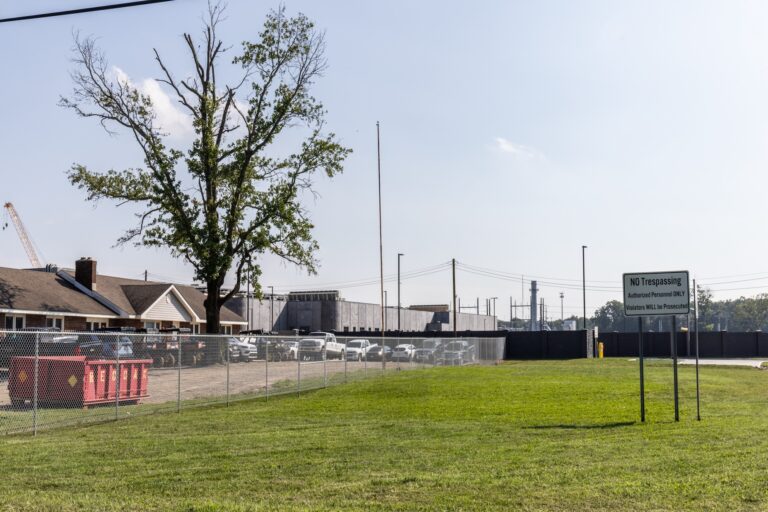
The 300-megawatt data center in Vineland, N.J., is being developed by DataOne for the Nebius Group to support infrastructure for artificial intelligence as part of a $17 billion deal with Microsoft. (Kimberly Paynter/WHYY)
This story is part of the WHYY News Climate Desk, bringing you news and solutions for our changing region.
From the Poconos to the Jersey Shore to the mouth of the Delaware Bay, what do you want to know about climate change? What would you like us to cover? Get in touch.
Some residents in Vineland, New Jersey, plan to sue a controversial data center for allegedly violating the federal Clean Air Act.
The 300-megawatt data center is being developed by DataOne for the Nebius Group to support infrastructure for artificial intelligence as part of a $17 billion deal with Microsoft.
The notice of intent to sue comes a month after New Jersey regulators fined DataOne more than $1 million for operating 62 natural gas-powered generators without a permit.
The grassroots group Sustain SJ and environmental organization EarthJustice accuse the data center of failing to obtain proper air permits required under federal law.
They claim the facility’s generators and equipment have the potential to release toxic pollutants at levels above federal limits, and allege the data center isn’t operating the necessary technology to prevent air emissions.
“Data centers like DataOne have real adverse impacts on the community,” said Matt Williams, of Sustain SJ. “Since construction began, the process has lacked transparency, leaving many community members sidelined, our voices disregarded and decisions seemingly made without any regard for the law. They should be held accountable.”
Thermal drone images of the facility using natural gas power-generating equipment were first published by the media outlet Floodlight.
The New Jersey Department of Environmental Protection told WHYY News in August that DataOne does not have a permit for power generators, nor had they submitted an application for a permit.
Related Content

EPA announces new plan to clean up arsenic contamination at Vineland chemical site
The Vineland Chemical Company produced arsenic-based herbicides and fungicides for 45 years, causing widespread contamination.
1 month ago
Listen 0:53Regulators observed natural gas power-generating equipment during an inspection of the site on July 29.
The state’s Air Pollution Control Act requires facilities installing generators with 37-kilowatt capacity or higher to obtain a preconstruction permit and valid operating certificate.
Natural gas generators can emit carbon dioxide, and toxic pollutants like nitrogen oxides, carbon monoxide and formaldehyde. Casandia Bellevue, an attorney with Earth Justice, said these emissions are exacerbated in areas like Vineland, where ground-level ozone is higher than health-based standards set by the Environmental Protection Agency.
“It’s not simply that DataOne is just an example of a company that is not following the rules. It’s that the pollution that it is creating, and will create, will have serious impacts on human health,” she said. “These impacts can range from heart to lung conditions, aggravated asthma attacks, heart attacks and even premature death.”
It’s not the first time the developers have come under fire for work on the data center. In August, DataOne received stop-work notices after it began construction to make way for a liquefied natural gas tank and fuel cell units that had yet to receive approval from the city.
DataOne did not immediately respond to a request for comment on the latest legal action. However, a spokesperson said last month that the natural gas-powered engines it received fines over were a temporary measure until fuel cells from Bloom Energy it plans to install are operational.
Fuel cells, which Bloom Energy manufactures in nearby Delaware, turn natural gas into electricity through an electrochemical reaction. Unlike natural gas generators, fuel cells don’t involve combustion. DataOne has said fuel cells emit fewer emissions than natural gas engines.
Bellevue said residents want DataOne to obtain the proper permits and install pollution control equipment necessary to protect the community.
“The main thing that we’re seeking here is accountability. That’s what the community is asking for,” she said. “We’re simply asking that this facility abide by basic federal law and the communities in Vineland deserve that much.”

Get daily updates from WHYY News!
WHYY is your source for fact-based, in-depth journalism and information. As a nonprofit organization, we rely on financial support from readers like you. Please give today.
Part of the series

State and federal environmental officials say air monitoring has “not detected elevated levels” of toxic pollutants after a pipeline was hit last week.
5 days ago
Listen 1:09
Philadelphia releases toolkit to help neighbors talk about climate change
The digital toolkit is meant to help residents get to know each other and prepare their neighborhoods for extreme heat, flooding and more.
2 weeks ago
Listen 0:58
Vineland data center accused of operating natural gas generators without permit
The 300-megawatt AI data center is being developed by DataOne for the Nebius Group.
3 months ago
Listen 1:11