

Drexel University exhibition shows video games’ potential for artistry and community in Philadelphia
“Escape->Control->Play” at the Pearlstein Gallery features independent and artist-designed games that go beyond winning and losing.

From Philly and the Pa. suburbs to South Jersey and Delaware, what would you like WHYY News to cover? Let us know!
Some video games are simple: low-resolution, arcade-style shoot ‘em ups and chase ‘em downs, the kind of old-school games a Drexel University student might gravitate to at a video parlor.
Some are much more complicated: 3D virtual worlds to explore and be challenged by.
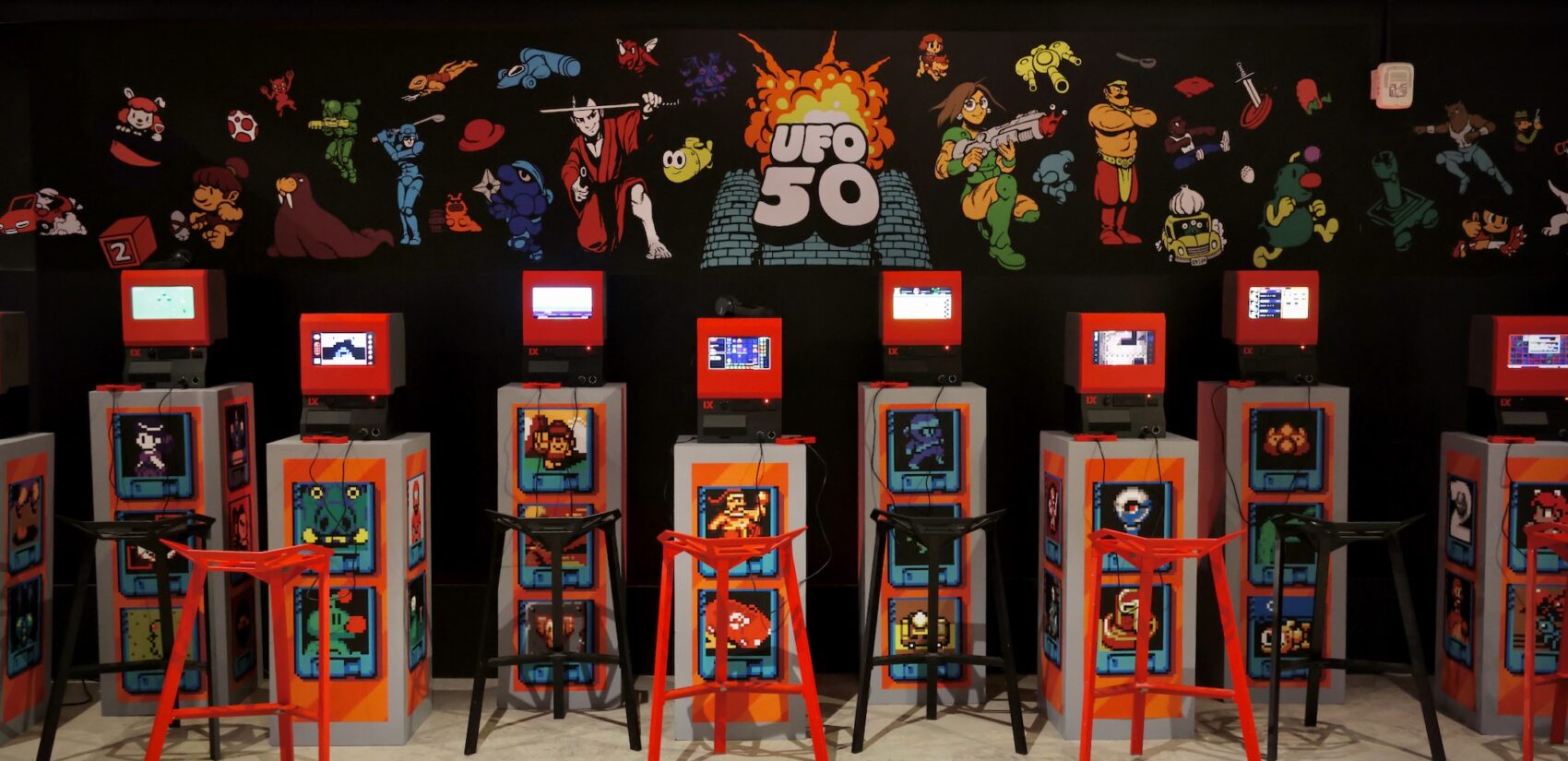
Both are central to the “Escape->Control->Play: The Art of the Video Game” exhibition now at the Pearlstein Gallery in Drexel’s URBN Annex.
The exhibition explores video games’ ability to be socially critical, culturally disruptive and catalyze alternative communities.
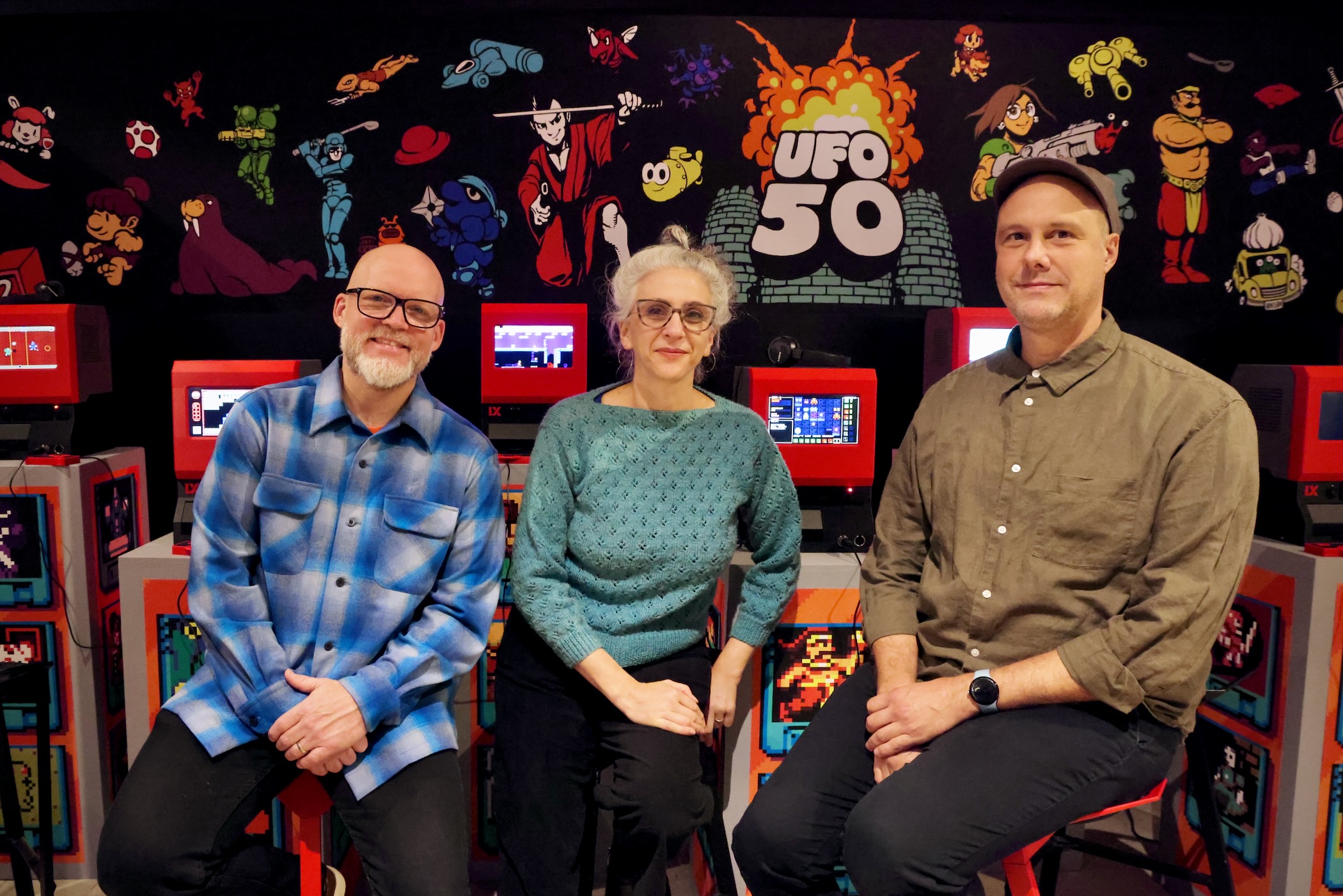
“We wanted to investigate video games as an art form but also think about the ways that people are using them for creativity, for acts of resistance, for opportunities to create community,” co-curator Talia Greene said. “To see them not just as a mass media, mass culture, corporate thing, but to dig deeper and think about what video games can do for our society.”


Building video games in the margins of the industry
The video game industry has long had its blockbusters, like Minecraft and Tetris, but “Escape->Control->Play” dips into lesser-traveled pools where artists and self-taught developers use computer games for expressive ends.
Case in point is Jeremy Couillard’s “Escape from Lavender Island,” a game occupying digital space and real space as an art installation. The player is on an urban island taken over by a corporation through debt seizures. The player wanders through an open world designed as a critique of capitalism.
“Honestly, in all of the work I’ve done in the show in the last year and a half, I don’t even remember what the object of the game is,” Greene said. “[Couillard] is using tropes that we’re all familiar with, but he’s exploring this world that’s been colonized by a corporation and just trying to figure out how to survive.”
Many games in “Escape->Control->Play” have divorced themselves from the most common aspects of gaming, with no points to earn, no level to advance to, nothing to shoot at and nothing to win.
The results can be disorienting, but ultimately rewarding.

“The Alembic Hotel” is an example. Created by the artist collective .Compost Cooperative based in Portland, Oregon, the game is a first-person adventure inside a 3D digital re-creation of the Atlanta Marriott Marquis, a 52-story Brutalist hotel that, when it opened in 1985, had the largest atrium lobby in the world. In the video game, it is abandoned and dingy. The player wanders the hotel with little understanding of what to do.
“As you explore and talk to some of the denizens, you discover it is in fact not a hotel but a website and you’re all digital beings,” the game’s co-creator Tabatha Nikola said. “You learn that there’s an unknown cataclysm from outside the hotel and data is leaking into the hotel. The people are using that data to invent a language to talk to God.”
While “The Alembic Hotel” resembles a game, it acts like interactive installation art with an arcade console set amid a menacing web of wires and tubing.
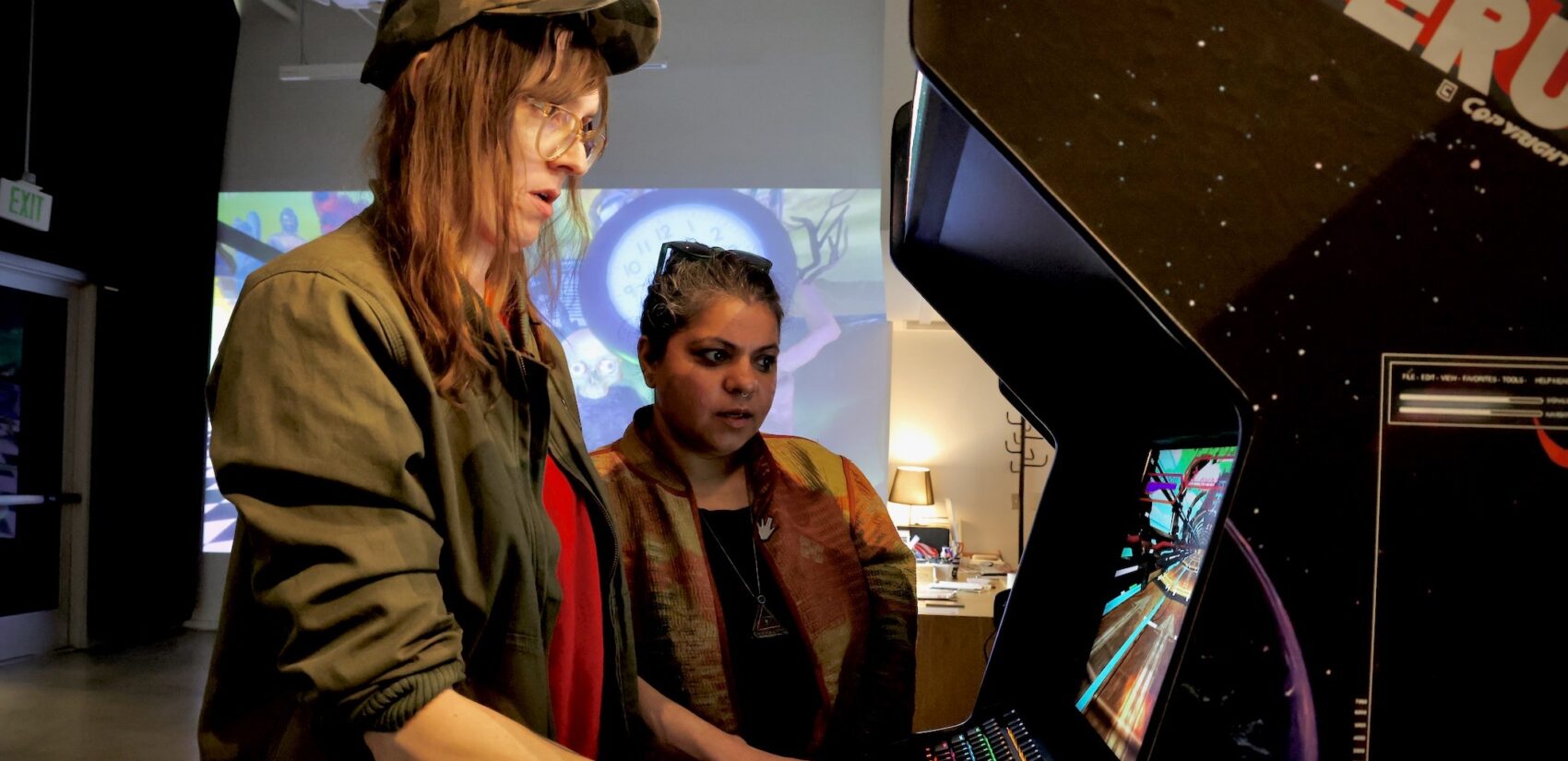
Garima Thakur, another .Compost artist who helped develop the game, said she is not a gamer.
“To me what is important about the game, as somebody who doesn’t play a lot of games, is the creativity, the exploration. How you figure it out and how do you talk to yourself within the game,” she said. “Also, the [user interface] is really confusing. The whole thing is just very disorienting, very similar to the world that we are living in.”
Related Content

Rittenhouse Chess Club turns pickup games into lasting friendships in Philadelphia
Twice a week, players gather for free games in Rittenhouse Square, where a club that started with one chessboard has grown into a community.
2 months ago
More than entertainment
Philadelphia has a small but determined community of game developers, including PHL Collective, specializing in games for children; Skyless, focusing on educational games; and Gossamer Studios, turning out indie, experimental games. Many founders of local gaming companies went through Drexel University’s game development program, ranked among the country’s top ten.
The local gaming industry has caught the attention of Councilman Isaiah Thomas, who created a task force that launched PHL Gaming, an annual conference of game developers. The next conference is Oct. 21-24. The week prior, Philadelphia Game Mechanics, a developer support organization, is hosting a quick turn game development contest, with cash prizes for the best games.
“There’s a critical mass of people making games here, but we’re quiet about it,” said Rob Lloyd, director of Drexel’s game design and production program and a member of the Thomas’ task force. “We’re going to be making more noise now.”
Part of “Escape->Control->Play” is a showcase of up-and-coming game designers from Drexel and elsewhere. Their work can be shown on a large projection screen in a lounge area.
Lloyd said many games created by artists and independent developers go beyond entertainment.
“I tend not to use the word ‘fun.’ I tend to use the word ‘compelling’ because that can encompass any number of emotional states,” he said. “Some games you want to pick up, have fun and walk away in just moments. But some games can reach deep inside your soul and affect you in significant ways that are way beyond just fun and entertainment.”
Related Content
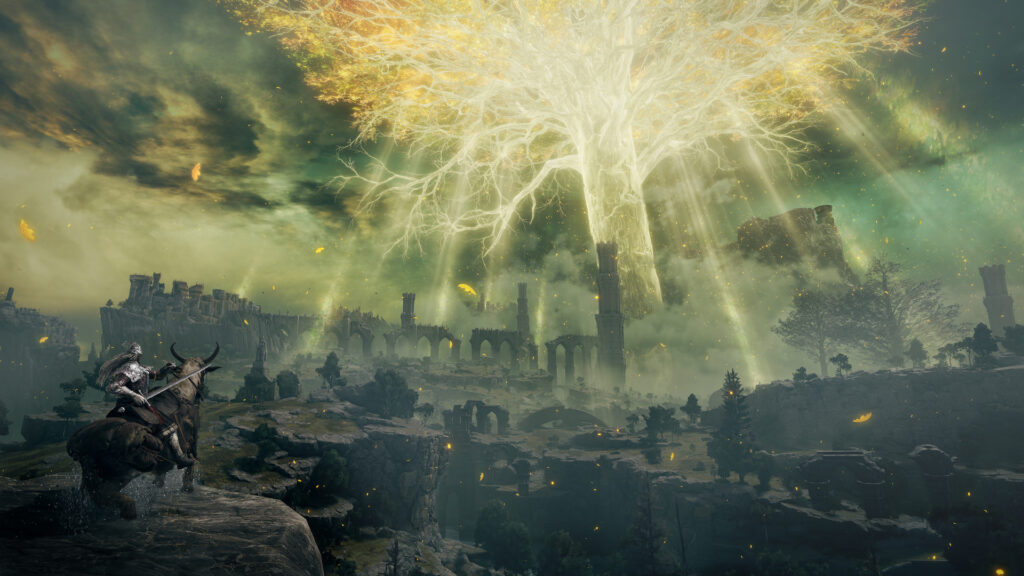
Why archaeologists study virtual worlds from video games
There’s a growing field of academic study where archaeologists study virtual worlds, or work with game developers to recreate historical sites.
3 years ago
Listen 12:11Building digital communities
“Escape->Control->Play” highlights how video games, since the earliest days of their development, have built communities. The exhibition features the LGBTQ Video Game Archive, a timeline that starts in 1983 with an advertisement for a gay-themed game printed in The Advocate magazine. By 1989, a gay game developer group called The Pink Triangle formed in Washington, D.C. The term “gaymer” was coined in 1990.

The timeline and archive are projects of Adrienne Shaw, professor of media studies at Temple University, with contributions from Ari Gass, an assistant professor of media studies at Drexel. Shaw revived “Caper in the Castro,” a crime-solving adventure game with what is believed to be the first lesbian video game protagonist. It was originally released in 1989 as Charity Ware, wherein users who downloaded the game from online community billboards were asked to donate to an AIDS charity.
Shaw worked with the original developer of “Caper,” C.M. Ralph, to update the code and make it operable on today’s computers. It is the oldest known LGBTQ video game still playable today.
Popular games like Sims and Mass Effect eventually developed characters and avatars with same-sex relationships, and independent developers created modified versions of popular games to insert LGBTQ themes, such as Robert Yang’s “Radiator,” an alteration of the narrative first-person shooter “Half-Life.”
“The extremely autobiographical games of folks like Anna Anthropy, Mattie Brice, Liz Ryerson — there’s a movement of people making games that were about their own lives to be shared with a really insular and small community of other online creators through the 2010s,” Gass said. “A lot of these games are in conversation with each other. They’re using similar tools. It’s both an artistic movement and an IRL community of creators.”
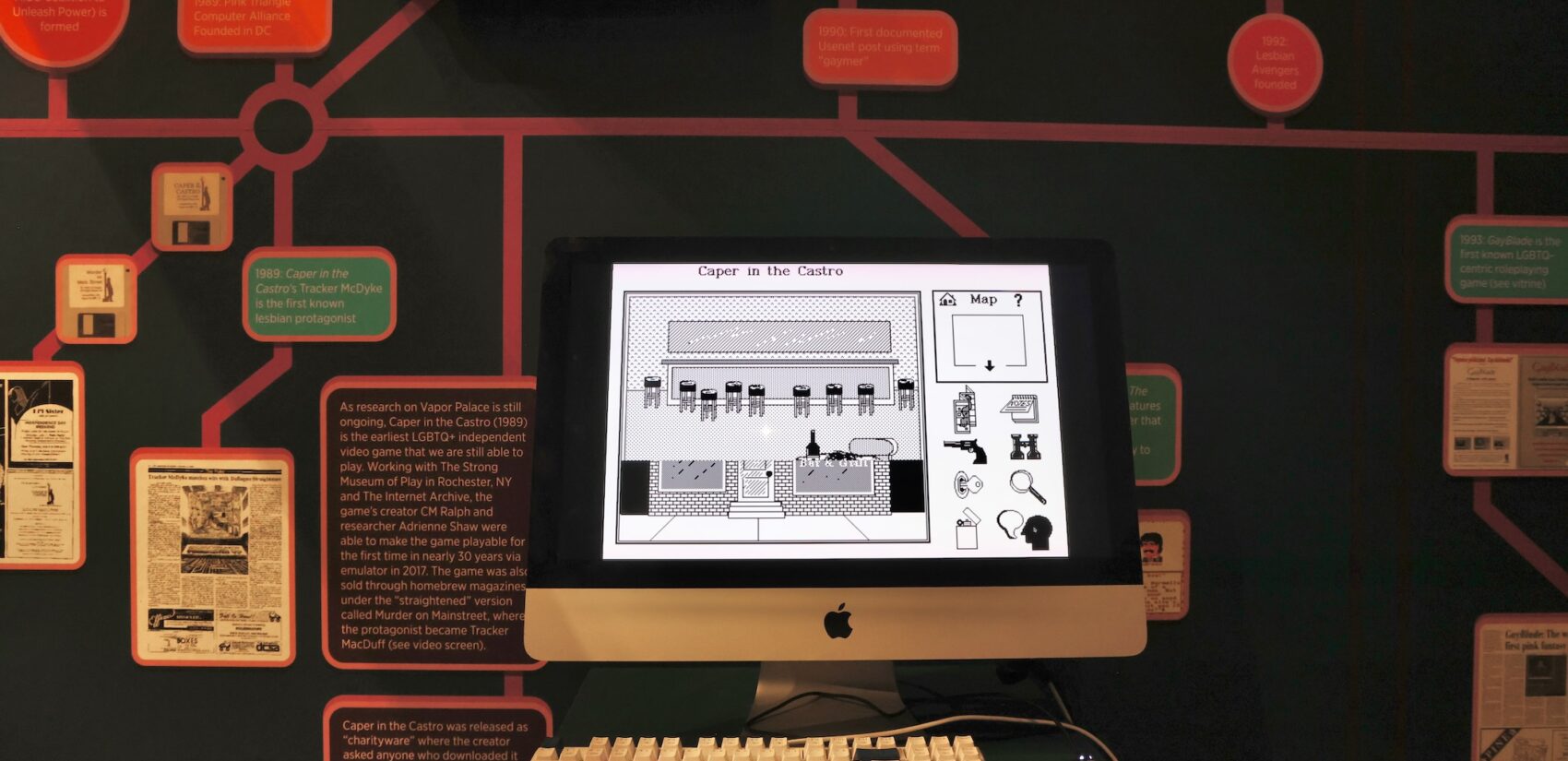
“Escape->Control->Play: The Art of the Video Game” is on view at the Pearlstein Gallery inside Drexel University’s URBN Annex until Dec. 12.
Editor’s note: An earlier version of this story misidentified Adrienne Shaw’s position at Temple University. The earlier story also misidentified the developer of the video game “Caper.”

Saturdays just got more interesting.
WHYY is your source for fact-based, in-depth journalism and information. As a nonprofit organization, we rely on financial support from readers like you. Please give today.

“Clean Up Your Mind,” featuring songs recorded by the band Choice 4 Inc. in 1972, is now available for the world to hear.
5 months ago
Listen 3:04
The seriously whimsical art of writer Kurt Vonnegut is on view at Drexel University
The novelist who died in 2007 wrote novels for more than 50 years, while also making drawings on the side. Drexel opened an exhibition of two dozen.
2 years ago
Listen 1:10
‘The arts have never been more urgent’: Philly arts leaders make case for their role in civic life
The Cultural Dynamics Summit convened hundreds of arts leaders at Drexel University to discuss the civic role arts can play in government.
2 years ago