Thomas Jefferson University leads effort to expand regional sickle cell care under new federal hub program
Nearly 4,000 people in Pennsylvania live with sickle cell disease, which can require a high level of care from specialists at certain centers.
Listen 1:17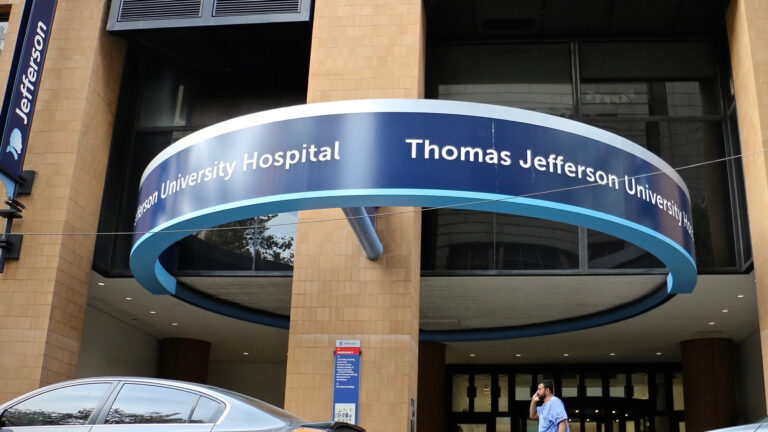
The entrance to Thomas Jefferson University Hospital on South 10th Street (Emma Lee/WHYY)
From Philly and the Pa. suburbs to South Jersey and Delaware, what would you like WHYY News to cover? Let us know!
Philadelphia is becoming a hub for making high-quality sickle cell care and services more available to more patients in the mid-Atlantic region.
The U.S. Department of Health and Human Services tapped Thomas Jefferson University and Jefferson Health to oversee one of seven new regional coordinating hubs for sickle cell disease across the country that partner with local clinical centers and community-based organizations.
It’s part of an ongoing initiative and funding program aimed at improving health care outcomes and increasing access to high-level care.
“If you’re coming to a comprehensive high-quality center, your outcomes are going to be better than if you’re going to your local hematologist. And one of the issues is, you go to a place like Erie, Pennsylvania, and there is no comprehensive center,” said Dr. Sophie Lanzkron, division director of classical hematology at Thomas Jefferson University and a sickle cell disease specialist and researcher.
An estimated 100,000 people across the country live with sickle cell disease, according to the Centers for Disease Control and Prevention. The disease disproportionately affects residents who are Black or of African descent. In Pennsylvania, nearly 4,000 people are affected, state data shows.
“Part of the work we’re doing is thinking about, how are we going to provide high-quality care to people who don’t live a mile from Jefferson or Penn [Medicine], which is another high-quality center, or University of Pittsburgh, another high-quality center? How are we going to do that?” Lanzkron asked.
Related Content
The beginning of the fall and winter respiratory illness season approaches as health experts deal with ongoing measles outbreaks.
2 months ago
Listen 1:12Sickle cell disease symptoms and treatment options
People born with sickle cell disease inherit the genetic condition from both parents, who either have the disease themselves or carry the affected gene. There are four subtypes of the disease, each with varying levels of severity and health complications.
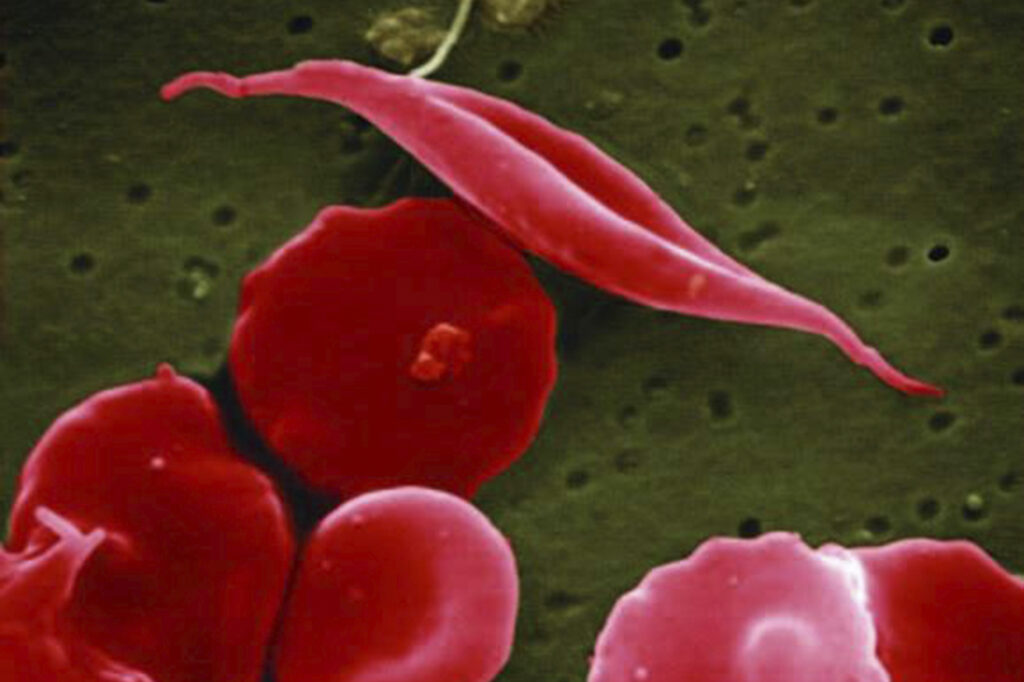
The disease impairs red blood cells’ ability to hold onto oxygen and deliver it to organs and tissues throughout the body, which can cause anemia and organ damage. Blood cells can become rigid and warped into the shape of the letter C, so when they travel through small blood vessels, they can get stuck and cause extreme pain.
There are medications that can help people manage their pain and other health complications, but the average lifespan for people with sickle cell is still about 20 years shorter than the general population, national data shows.
Early treatment and intervention can help people avoid complications and prevent or delay the disease’s long-term effects, Lanzkron said, but she added that those efforts won’t be successful if people can’t see medical specialists who have deep knowledge in treating the disease.
“The local community hematologist is a really nice human being, but they don’t do this every day of their lives,” she said. “There are certain things that we need to make sure that are happening for everybody every year — annual evaluations — to make sure that people are able to live their best lives.”
Connecting people to specialty doctors and centers also gives them access to emerging treatment options like gene therapies or stem cell transplants, which can be curative.
“There are lots of options to offer before you get to curative therapy, but if that’s what people want, they need to be evaluated and managed before they take that step,” Lanzkron said. “And that can’t happen outside of these centers.”
Related Content
Voxelotor, which was sold under the brand name Oxbryta, was suddenly pulled from the market over safety concerns from clinical trials outside the U.S.
2 years ago
Listen 4:28Using technology to expand outreach and bridge connections in communities
Lanzkron and her team have been working with health organizations and other specialists in the mid-Atlantic region to bridge gaps in care. Increasing the use of telemedicine has been one way they’ve been able to reach people in more rural areas.
They’re also investigating other ways to use technology to help identify more people with sickle cell disease and better understand where they live and where they’re seeking care, she said.
“If we know there’s a particular emergency room that lots of folks go to, we can reach out to that at [emergency department] to make sure that those folks can get referred in for care,” she said.

Get daily updates from WHYY News!
WHYY is your source for fact-based, in-depth journalism and information. As a nonprofit organization, we rely on financial support from readers like you. Please give today.
"Fashion can't just be about designing pretty clothes," said the program director.
10 months ago
Listen 3:25
Voxelotor, which was sold under the brand name Oxbryta, was suddenly pulled from the market over safety concerns from clinical trials outside the U.S.
2 years ago
Listen 4:28
Philly medical students begin their health careers with a white coat and a box of Narcan
Thomas Jefferson University was among the first programs in Philly to distribute Narcan to all incoming medical students.
2 years ago