

As flooding worsens in the Philly suburbs, water rescues are on the rise. Firefighters are having to adapt — and fast
In Coatesville, firefighters once stripped down to their shirts and shorts for water rescues. Now, they have dry suits in their lockers.
Listen 5:46
From Delco to Chesco and Montco to Bucks, what about life in Philly’s suburbs do you want WHYY News to cover? Let us know!
On the night of Sept. 1, 2021, as remnants of Hurricane Ida swept through the region, Christine Crooke kept watch while the Brandywine Creek rose up around her Downingtown townhouse.
She and her husband had been assured it occupied a “no flood zone” when they bought the property seven years before. Crooke learned how empty that assurance was when she went downstairs and opened the ground-level garage door.
“Literally a wall of water just came pouring down our driveway and into the garage,” Crooke, 68, recalled in a recent interview with WHYY News.
From then on it was just a losing race with the storm: The water rose, a nearby transformer was threatened and the Crookes were forced to evacuate.
By 10 p.m., firefighters arrived to lead the couple through cold, waist-level flood waters to safety.
“I was surprised at how high it was,” Crooke said. “I just never experienced anything like that before.”
The Crookes’ experience that night is becoming increasingly common throughout the region.
Climate change is supercharging the risk of severe flooding in the Greater Philadelphia area, and with it the threat to residents. A WHYY News analysis of limited data from Bucks, Chester, Delaware and Montgomery counties shows the number of water rescues conducted over the last two decades has increased dramatically in the suburbs of Philadelphia.
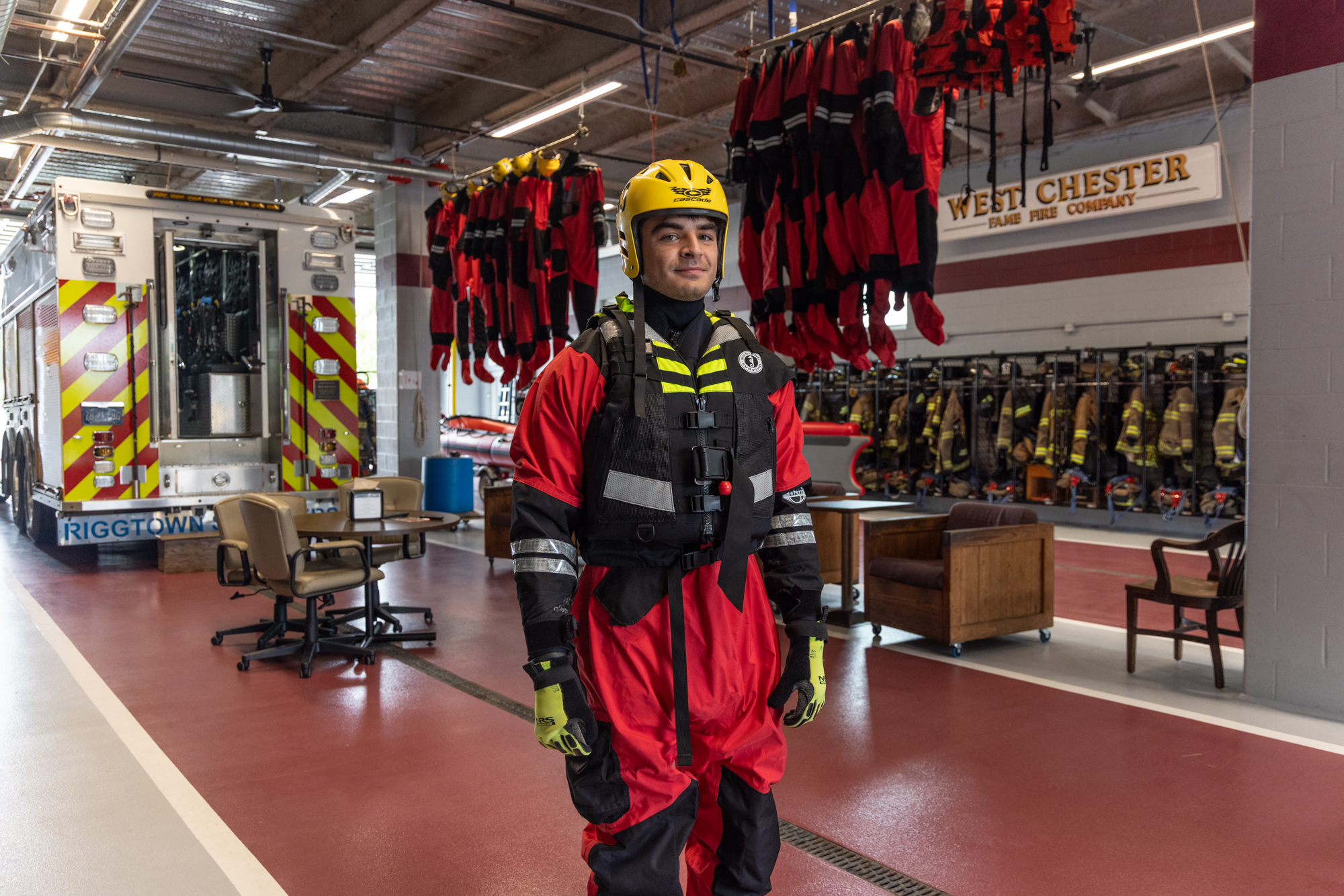
As a result, fire companies are investing big money in boats and dry suits as well as conducting rescue training on local creeks and rivers — all in an effort to keep residents afloat during the next big storm.
“What we used to know as normal is no longer normal,” said Shel Winkley, senior engagement specialist and chief meteorologist at Climate Central, a nonprofit collective of scientists who report on the changing climate. “These natural disasters have now turned more unnatural and we’re having to adapt faster.”
Flash floods, climate change and more
- What to know: WHYY News’ Climate Desk shares what to do if you’re caught in a flash flood, how you can protect yourself from increased flood risk and how climate change factors in.
- Be prepared: Philly neighbors offer tips for dealing with flooding at home.
- Finding solutions: Here’s how Philly communities and city officials are tackling climate-driven flooding.
The science behind increasingly heavy rainfall in the Philly area
Winkley’s assessment is backed by data.
Since 1970, the city of Philadelphia has seen a 10% increase in rainfall intensity. During that same time period, Allentown has experienced a 16% increase.
“We know in a warmer climate, every time it rains, it doesn’t mean that it’s going to absolutely be a disastrous type of rain, but we do understand that when it does rain on the very heaviest of days, those rain events are becoming heavier,” Winkley said.
The science is simple: Warmer air holds more water.
“For every 1 degree Fahrenheit of warming that we experience, the atmosphere can hold on to about 4% more moisture,” he said. “That doesn’t sound like a whole lot, but think about it like a bigger bucket.”
The planet is also facing record-high ocean temperatures, which allows for more evaporation and injects more moisture in the atmosphere.
“A lot of days you’re going to feel that as warmer nights or more humidity that you’re walking out to,” Winkley said. “But when the right weather system comes along and tips that bigger bucket, now not only are we seeing heavier rainfall, but we’re seeing it fall at a faster rate than we used to.”
The problem is compounded by short-sighted neighborhood planning and aging stormwater systems that leave many municipalities unable to manage the now heavier rainfalls. In the aftermath of Hurricane Ida, a combination of climate change and land use patterns, in addition to trash-clogged drains, contributed to excess flooding.
The increase in flooding has proven deadly. In 2023, a flash flood in Upper Makefield, Bucks County, claimed the lives of seven people, including two young children.
The Chester County Coroner’s Office reported at least seven deaths from flood-related events since 2000. The Montgomery County Coroner’s Office listed six drowning deaths associated with flooding during the same time period.
Limited data shows the rise of water rescues in Philly suburbs
Perhaps as telling is the rising number of people being rescued from flooding.
In Bucks County, the number of people who were rescued from either a vehicle or structure due to flood waters has steadily increased over the past 20 years.
But for one year between 2006 to 2018, there were 14 or fewer water rescues annually in Bucks County. The outlier was 2011, when Hurricane Irene triggered a spike to 79 rescues.
Since 2018, there have been at least 15 marine rescues yearly, including 84 in 2021, when Hurricane Ida’s leftovers battered the region.
Data from the other counties is more fragmentary due to different record keeping practices. But anecdotally, the evidence is there.
Coatesville firefighter Jim McFadden has been serving his community for 15 years and has seen it with his own eyes.
“Occurrences for water rescue and just weather events in general have definitely picked up in number,” McFadden said.
The city of Coatesville sits in a valley along the Brandywine Creek and has been extremely susceptible to flooding. Despite that history, its firefighters were pulling residents from flood waters without up-to-date equipment until last year. For instance, fire gear gets heavy when wet, so when confronted with flood rescues, firefighters were stripping down to shirts and shorts before leaping into the water.
Coatesville firefighter Brian Barrett knows firsthand the dangers involved in such rescues. He was among a number of first responders to receive a Valor Award for efforts during Hurricane Ida.
“It’s just a full city avenue loaded with residents in their home and you’re swimming house to house, jumping rooftop to rooftop from their front porch. It’s kind of bizarre and extraordinary all in one,” Barrett said. “It’s something that you’re not going to experience every day, but it was humbling to be a part of.”
Last year, the city moved to mitigate some of the dangers by purchasing dry suits and floatation devices with the help of Pennsylvania’s Office of the State Fire Commissioner. The red, waterproof suits have latex gaskets that fit tightly around the neck, wrists and ankles to keep out flood water, which can be tainted with sewage. The nylon floatation devices are checkered with pockets and straps for securing equipment used to free people who are trapped in the water.
“It does get costly, but you can’t put a price on people’s safety and lives,” said Peter Huf, chief of the Coatesville Fire Department.
Each dry suit costs about $2,500.
“It’s equipment designed specifically for water rescue which my job as a fire chief is to make sure that my people are safe and I believe that’s exactly what this accomplishes,” Huf said.
So far, firefighters have not yet used the suits.
“You get a new toy and you don’t get to use it for quite some time,” Barrett said. “But when time comes, it is really reassuring that we have that set up ready to go.”
Related Content
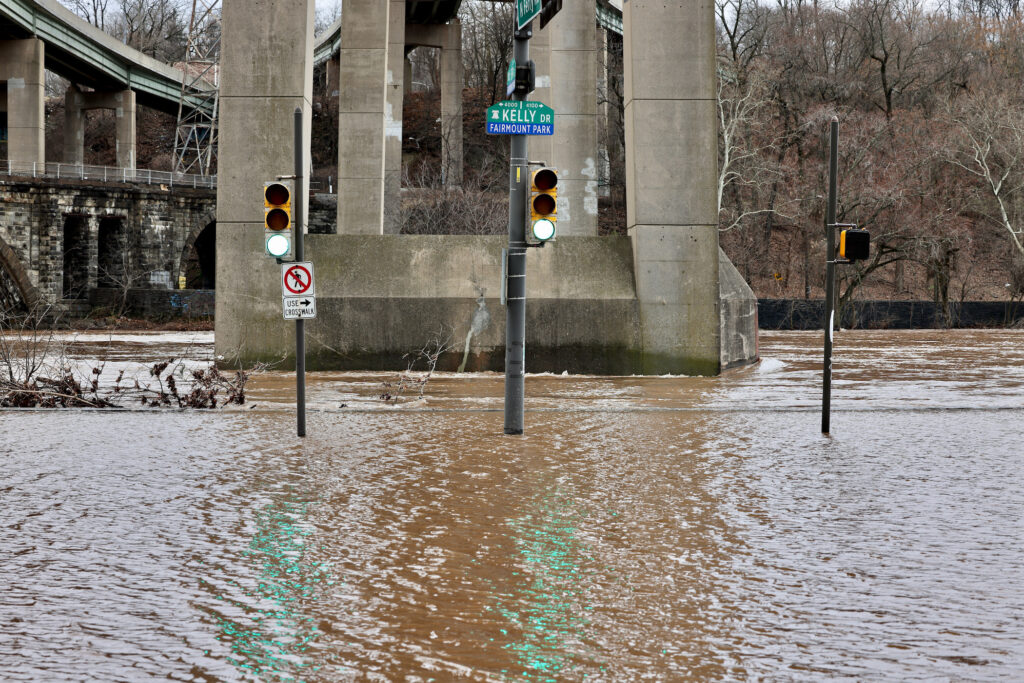
Flood risk is increasing in the Philly region. Here’s what you need to know
Here’s what to do if you’re caught in a flash flood, how you can protect yourself from increased flood risk and how climate change factors in.
2 years ago
From a ‘fishing boat’ to a fleet of inflatable rescue watercrafts
The West Chester Fire Department has also been impacted by the increase in water rescues.
Founded in 1799, the department is among the oldest continually operating volunteer companies in the United States. It consists of the three separate stations: First West Chester Fire Company, Good Will Fire Company and Fame Fire Company.
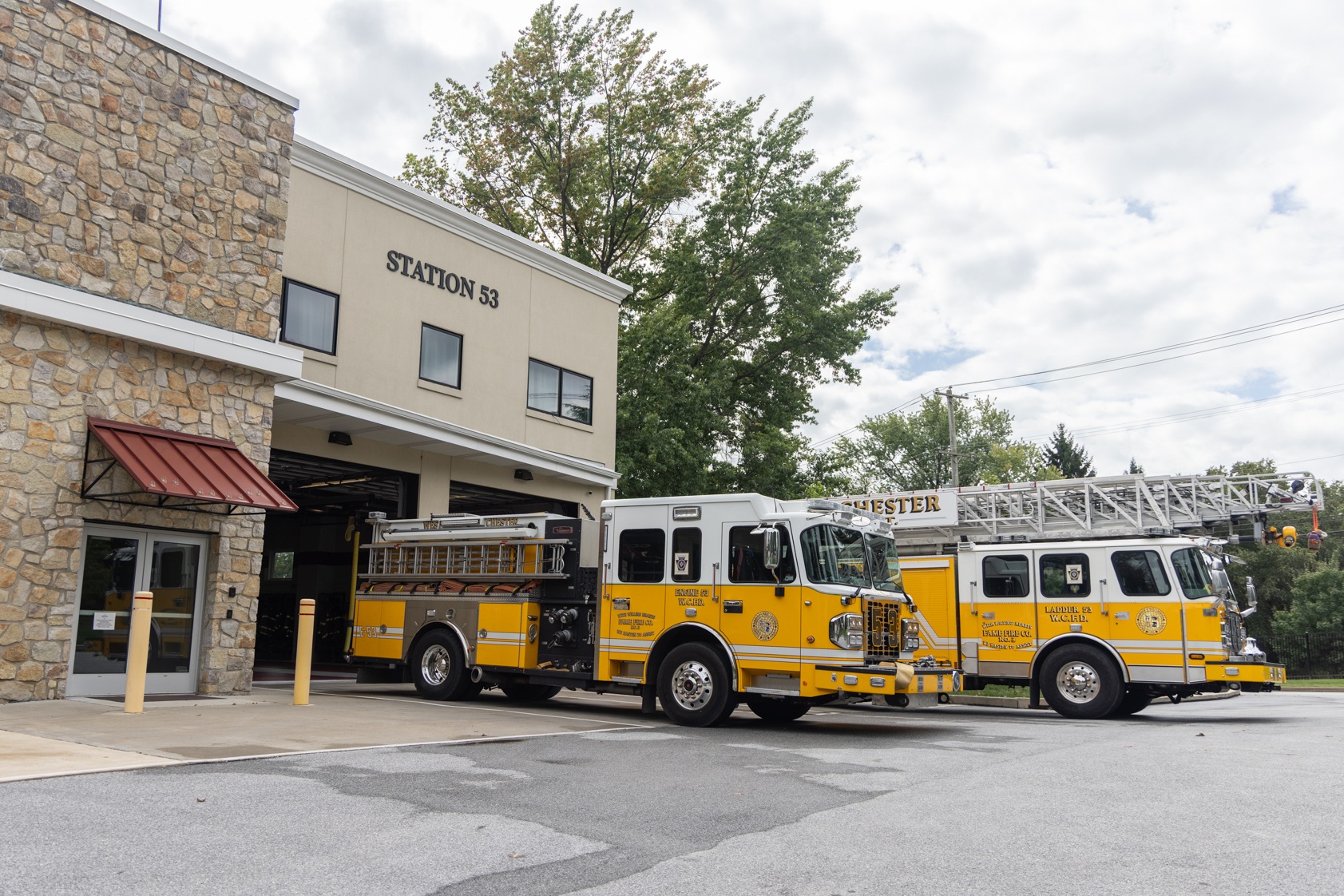
Fame Fire Company takes the lead on swiftwater rescues. Fame Fire Company did not have a boat until 1973 — just one year after Hurricane Agnes drenched the area with heavy rain.
Firefighter Steve Amway joined the company in 1974.
“It was a semi-V aluminum boat,” Amway said. “It doesn’t look much different than somebody that’d be out fishing on a weekend somewhere.”
The fire company has since acquired a fleet of inflatable rescue crafts, several of which are motorized. The motorized boats only come out during the deadliest of storms, Capt. Robert Rawley said. Because of Fame Fire Company’s stockpile of boats, it is often called on to aid other departments across the region during storms like Hurricane Ida.
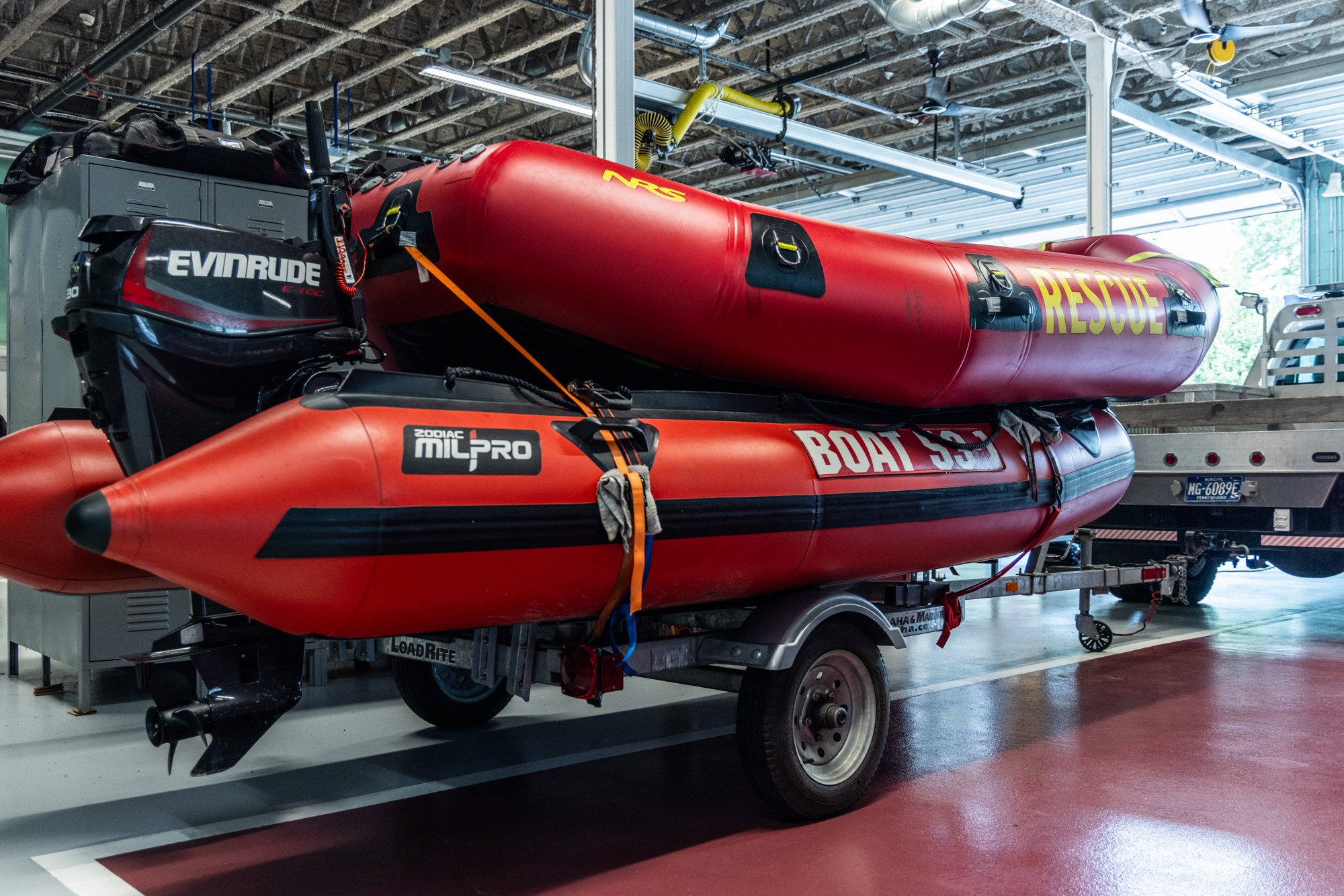
“We left the station probably about 5 p.m. for our first water rescue and then didn’t get back until 3 or 4 in the morning,” said Rawley, recalling the 2021 storm. “And then after we did get back, more calls came in in the morning and it was just absolute madness.”
From rescuing a state trooper from the top of his car to saving a driver inside of a flooded vehicle, firefighters from Fame Fire Company and other crews worked all night.
“I believe the county was calling for boats from anywhere that they could get them to assist,” Rawley said.
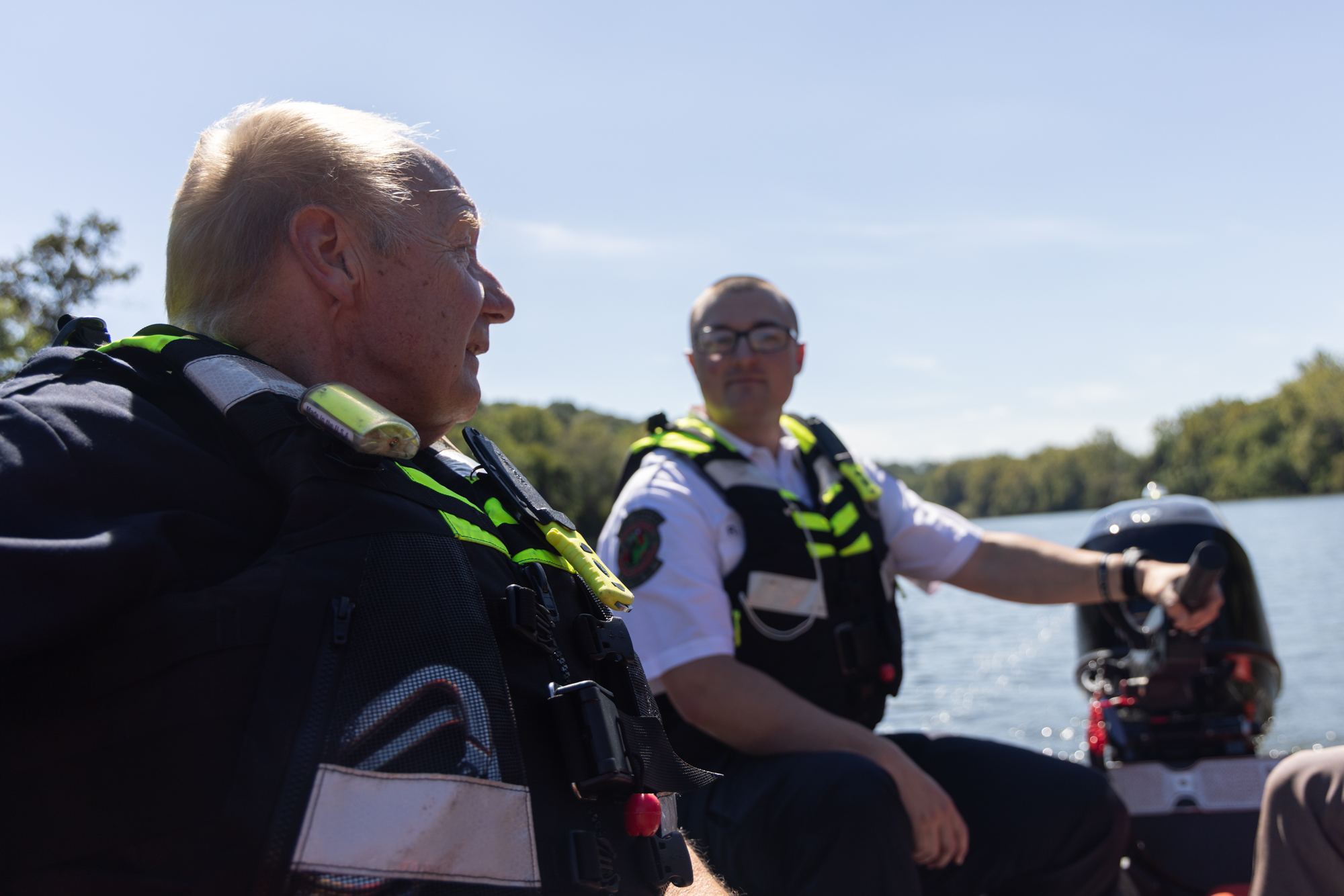
Between storms, training for the “real thing” is difficult, Rawley admitted. To that end, Fame Fire Company puts its volunteers through a series of four courses: a water rescue and emergency response, advanced line systems rescue, emergency boat operation, and ice rescue.
Fame Fire Company utilizes the Schuylkill River to conduct various boat simulations, which is helpful, but it can’t fully replicate rescue operations over flooded areas. In those situations, firefighters can face multiple threats in the water, including a number of sewage, trash, large debris and even diesel fuel and gasoline. The drysuits and personal floatation devices work, but some obstacles can threaten the entire boat.
“We’ve run into everything through the years, we’ve hit picnic tables, we’ve hit cement mixers, been over top of cars,” Amway said.
Amway and Rawley recalled a rescue in which a woman’s home next to the Brandywine had been overrun by a flash flood. They were called upon to save the woman and her dog from drowning.
“I vividly remember her propane tank was floating and you could hear it hissing in the back, leaking propane and her oven was clicking in the house,” Rawley said.
-
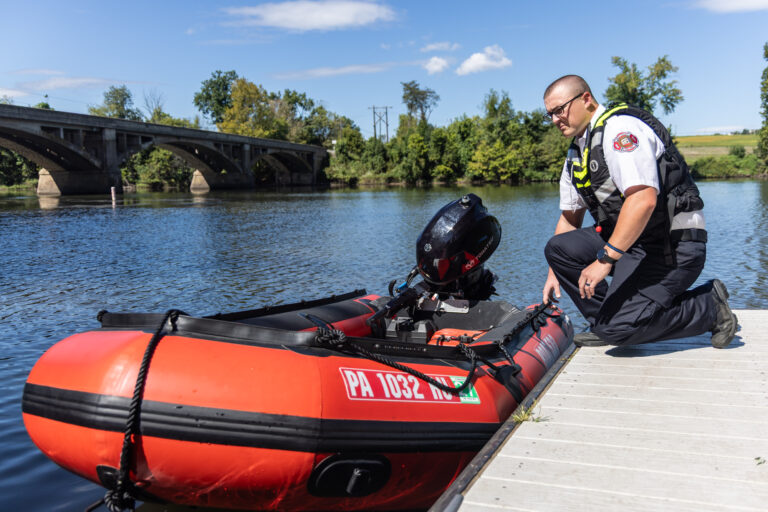
Robert Rawley, captain of the Fame Fire Company No. 3 in West Chester, Pa., prepares to launch a rescue boat into the Schuylkill River for training exercises in September 2026. (Kimberly Paynter/WHYY) -
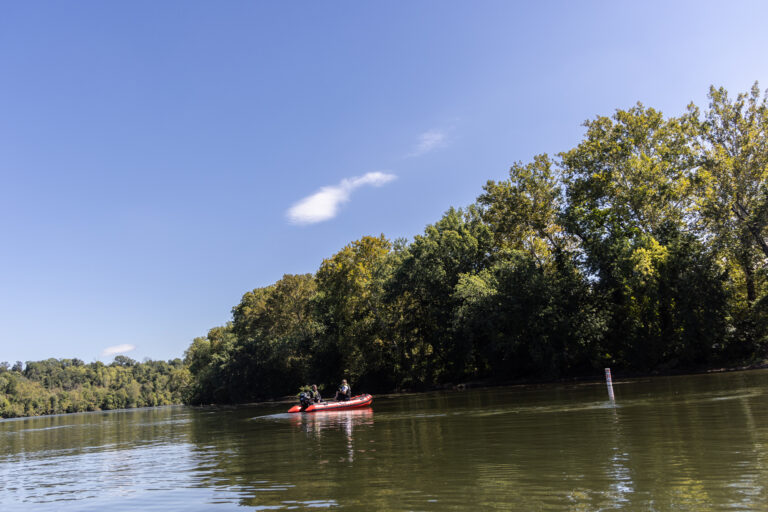
Firefighters with the Fame Fire Company No. 3 in West Chester, Pa., run water rescue training exercises in the Schuylkill River in September of 2026. (Kimberly Paynter/WHYY) -
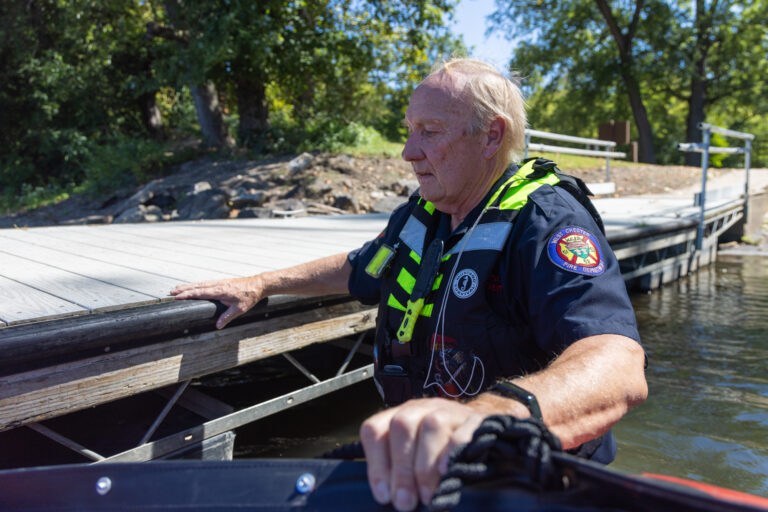
Steve Amway, a firefighter with the Fame Fire Company No. 3 in West Chester, Pa., guides a rescue boat back to the dock in the Schuylkill River after training exercises. (Kimberly Paynter/WHYY)
The water had risen so high that the power lines were buzzing and drooping just above the boat.
“On the way out, we all had to lay down in the boat to get under the power line,” Amway said.
When firefighters later returned to critique their performance, they found that they had driven the boat over top of a trampoline.
Related Content
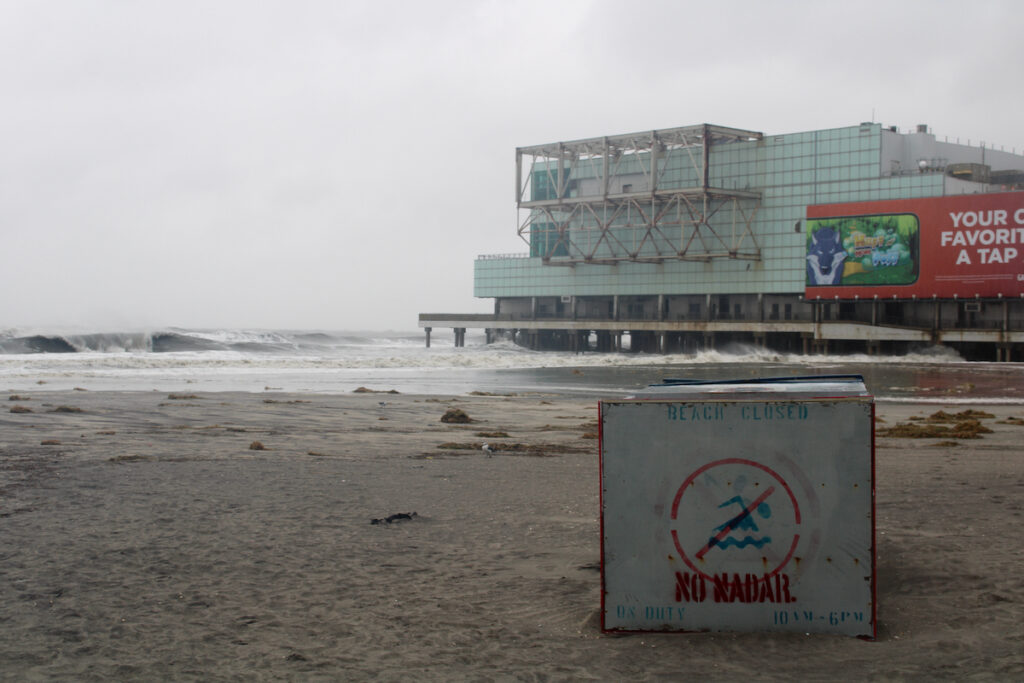
Nor’easter hits Philadelphia region, bringing high waves, coastal flooding to N.J. and Delaware
New Jersey Gov. Mikie Sherrill has issued a state of emergency for eight counties, with some shore towns issuing voluntary evacuation orders.
1 month ago
Downingtown neighbors helping neighbors
Grassroots community groups are also stepping up to fill the gaps during flood events and in their aftermath.
Kevin Zeeger, of Downingtown, said that at 8:30 p.m. during the night of Hurricane Ida, someone knocked on his door while he was watching TV.
It was then-Downingtown Police Chief Howard Holland. Holland told Zeeger that the Central Presbyterian Church was needed as an evacuation center.
Zeeger, a church member, had the key.
“We had about 125 people spend some time here during that evening and some were rescued from their home and also some were stranded because they couldn’t drive home,” Zeeger, 63, recalled.
That evening served as the catalyst for Downingtown Strong, a nonprofit created in the aftermath of the storm. Zeeger and a group of his neighbors came together to make it happen.
“Our goal is to make sure that nobody is left behind and our most vulnerable citizens get the help they need,” Zeeger, the executive director of the group, said. “A flood impacts everybody, but for folks that have a little more resources — they have insurance, they have family, they can get by and a month later — the flood is a memory.”
He said many of the people living in the lower, flood-prone areas were not getting the help they needed, nor did they feel prepared. Zeeger said the members of Downingtown Strong do not want that to happen again. The organization’s block captain program is an extension of that.
Downingtown Strong’s block captain program is designed to train neighbors in disaster preparedness and recovery.
“We see that as a benefit before, during and after a storm to really make sure people are getting to know what they need to know and they’re going to get the help that they need to get,” Zeeger said.
So far, the program spans nine blocks. Downingtown Strong has its sight set on every corner of the borough.
Crooke was among the people taken to the church that night. When she and her husband returned home, they realized they had lost both of their cars to flooding and that their entire ground floor had been submerged under 2 feet of water.
When storms pass through now, Crooke and her husband keep a close eye on the flooding. They make sure to park their cars on higher ground. But besides that, they haven’t really changed how they are living.
“I don’t really worry about it too much because it just seems like it was just one of these once in a lifetime kind of flooding,” she said. “It was just so much water that I just don’t see it happening again — I hope, anyway.”

Get daily updates from WHYY News!
WHYY is your source for fact-based, in-depth journalism and information. As a nonprofit organization, we rely on financial support from readers like you. Please give today.
Part of the series
Watershed
Preserving Our Water: How we use our Delaware Watershed.
The project is funded by The William Penn Foundation.
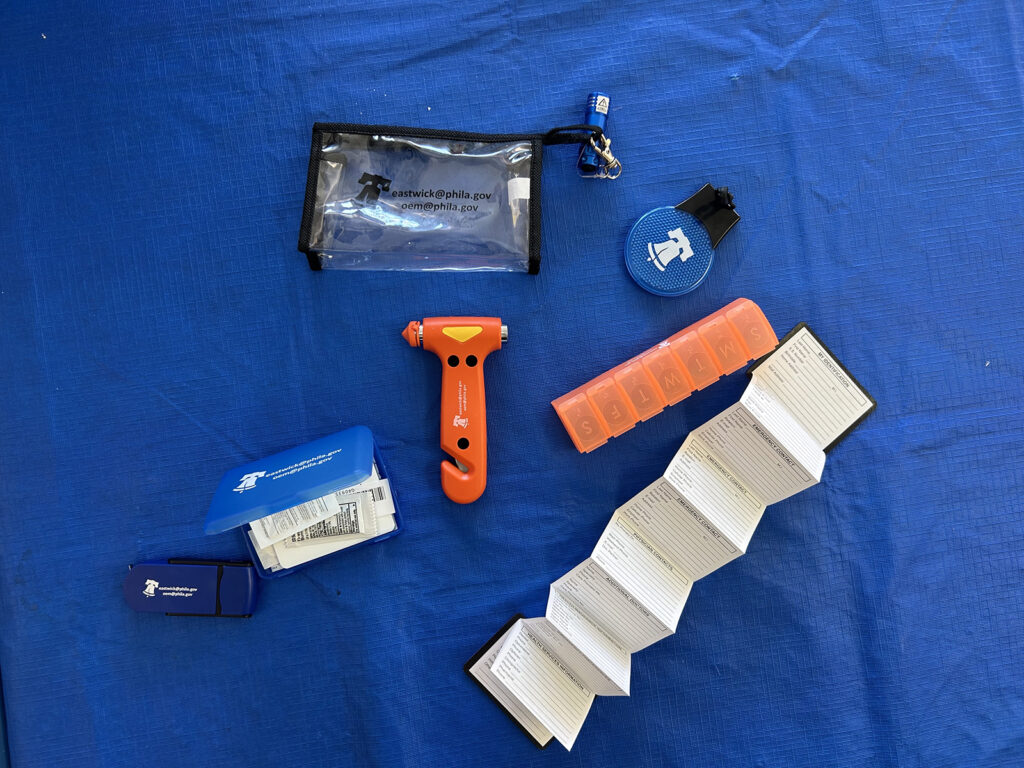
The Philadelphia region faces hurricanes, floods and house fires. Here’s how to pack a go-bag
Packing a go-bag ahead of time can help your family during an evacuation.
1 year ago
Listen 1:13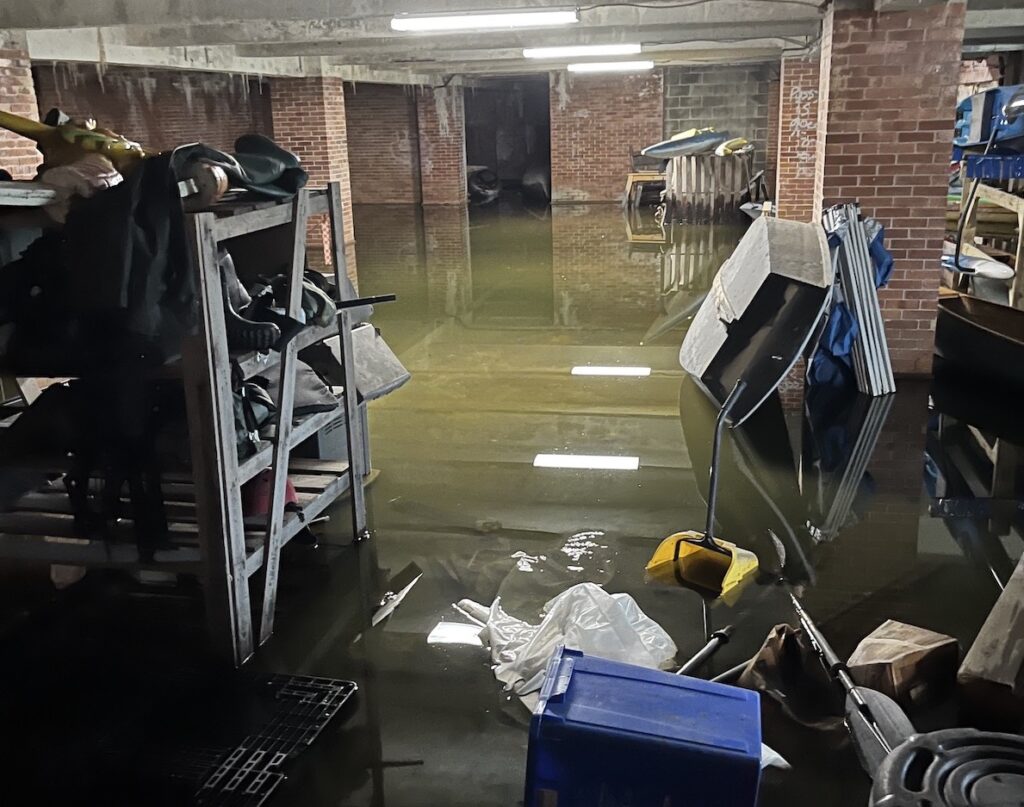
‘Everything was floating’: Flooding of FDR Park’s boathouse destroys nonprofit’s equipment
The nonprofit Discovery Pathways says equipment, including life jackets, boat paddles, fishing rods, kayak seats and power tools, was damaged.
1 year ago
Listen 1:11
2 dead in New Jersey after floodwaters carry away vehicle during heavy rains that hit Northeast
The heavy rains also caused flash floods in New York and south-central Pennsylvania on Monday night into early Tuesday, prompting road closures.
1 year ago