Philly robot tax could replace revenue lost when taxpaying workers are displaced by technology
Councilmember Jim Harrity says the tax would help offset lost wage tax revenue and fund a program providing free SEPTA passes to low-income residents.
Listen 1:05
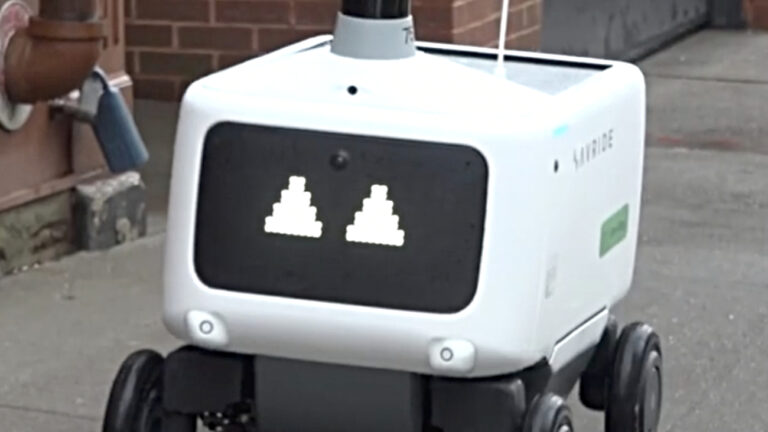
An Uber Eats delivery robot (YouTube/Jersey City TV)
From Philly and the Pa. suburbs to South Jersey and Delaware, what would you like WHYY News to cover? Let us know!
A member of Philadelphia City Council wants to tax companies that use driverless vehicles and delivery robots to perform services traditionally handled by human workers.
The reason is simple in the mind of Councilmember Jim Harrity. He contends the tax is basically designed to replace the wage tax revenue the city loses when companies use driverless vehicles or delivery robots instead of human workers.
If approved by Council, the legislation would cover sidewalk delivery robots, driverless vehicles, taxi robots, automated shuttles and driverless freight, among other things.
Harrity claims the proposal would charge the companies behind the machines, which includes anyone who owns, operates or sells the service, including mobile apps and platforms.
Harrity explained during a speech on the floor of Council why the whole idea matters.
“If you hire a person you can skip the tax. So if they keep people on, then they don’t have to actually pay the tax. It applies when a company puts an automated device in place of a human worker,” he said.
Related Content
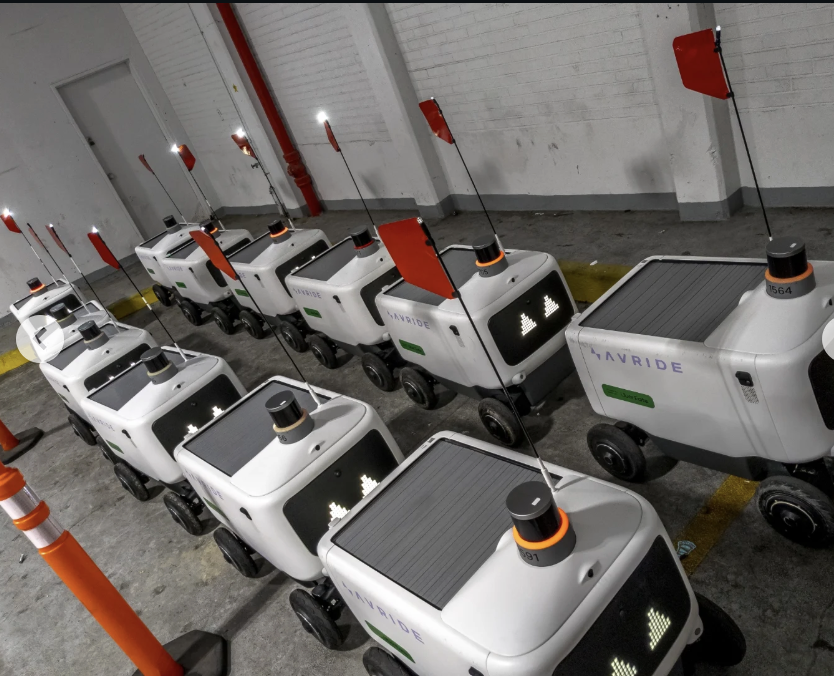
Philly keeps fighting its delivery robots. More are coming anyway
After months of getting kicked, blocked and criticized, Philadelphia’s autonomous food couriers are expanding their reach.
3 weeks ago
Harrity said there are many people who could lose their jobs to a high-tech replacement, especially in some of the city’s poorest neighborhoods.
“The companies deploy these machines, they gain substantial economic benefits here while workers, families and the city absorbs the cost,” Harrity said.
He also added the revenue from the tax would go towards the Zero Fare program, a mechanism through which SEPTA Key card travel passes are given to people who cannot afford mass transit.
“The program is going to be in next year’s budget, and we don’t have a funding mechanism for that,” Harrity explained.
The council member said technology isn’t bad, but when machines replace taxpaying workers, the city loses revenue.
“Work done by people isn’t covered. Neither are tools a person directly controls. A company that keeps hiring humans never owes a dollar. So whether the tax applies is the company’s decision, not the city’s. Robots do not pay into the city they work in. Replace a worker with a machine, and wage tax, business income receipts, tax revenues go with them,” he said.
The proposed bill will now head to a Council committee for a hearing.

Get daily updates from WHYY News!
WHYY is your source for fact-based, in-depth journalism and information. As a nonprofit organization, we rely on financial support from readers like you. Please give today.
Philly’s next budget includes funding for proactive rental inspections, modular home factories
The $7.1 billion plan contains many of Mayor Cherelle Parker’s housing priorities, but none of the staffing requests made by elected officials.
5 months ago
Listen 0:50
Customers, advocates and experts outlined the limited tools the city has to control costs during a hearing on rising utility bills.
6 months ago
Listen 0:55
Bills to protect Philadelphia renters are poised for passage following landlord lawsuit
The bills are part of the Safe Healthy Homes Act, a legislative package that has drawn considerable opposition from independent landlords.
8 months ago
Listen 1:00