


Philadelphia real estate developers argue a 20-year tax abatement would boost city revenues
Critics contend tax breaks deprive the city and schools of badly needed funds, while proponents say that’s a misconception.
Listen 1:23
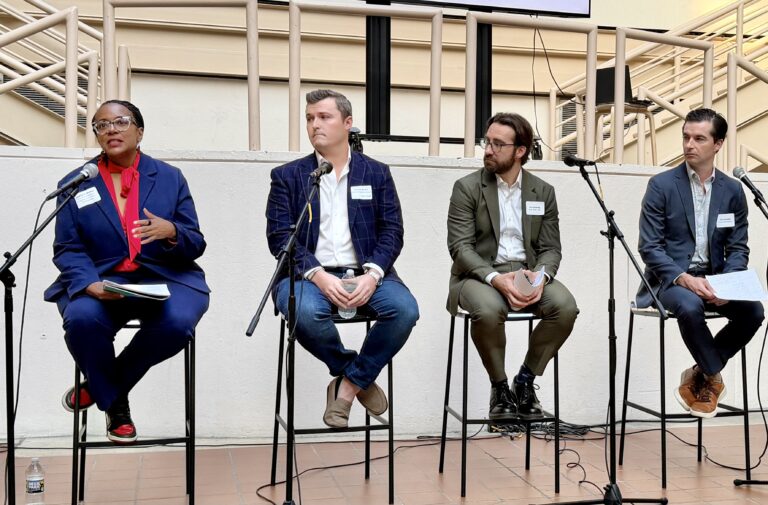
The panelists at the Center City District's housing discussion were, from left, Angela Brooks, Philadelphia's chief housing and urban development officer; Connor Burke of Alterra Property Group; Jon Geeting of Build Philly Now; and Clint Randall of the Center City District. Oct. 7, 2026. (Meir Rinde/WHYY)
Have a question about Philly’s neighborhoods or the systems that shape them? PlanPhilly reporters want to hear from you! Ask us a question or send us a story idea you think we should cover.
As Mayor Cherelle Parker’s administration prepares a new extended tax abatement proposal to incentivize housing construction, some developers are gearing up for a political battle over the plan.
For years, social justice activists have protested Philadelphia’s existing 10-year tax abatement for new construction and building improvements. They argue that it has mostly benefited wealthier residents and saps badly needed revenue from public schools and city programs.
But real estate developers who attended a discussion of Center City housing trends on Wednesday argued that Parker’s proposal — a new 20-year abatement to encourage redevelopment of underused properties — would allow otherwise infeasible projects to advance, and ultimately increase tax revenues.
“There is a misconception out there that tax abatements take assessed value off the tax rolls, and they don’t. Full stop,” said panelist Connor Burke of Alterra Property Group. “The values have already fallen. Once the building is reassessed post-construction, the buildings are providing more to the tax base than they were pre-conversion.”
“There’s no money coming off the tax roll. You’re actually growing the tax base,” he said.
Burke and others said a new abatement is particularly urgent now because inflation, high interest rates, tariffs and high demand for materials to build data centers have driven up construction costs and stalled many projects.
Those factors have contributed to a drop in planned housing projects in Center City, said Clint Randall, vice president of economic development at the Center City District, which sponsored Wednesday’s panel discussion.
Most older, underused office buildings that could be converted into housing economically have already been redeveloped, he said. The remaining targets for rehabilitation are newer buildings with interior layouts that make conversion too expensive without subsidies or a change in the broader cost environment.
“The pipeline is definitely slowing,” Randall said.
Parker has pledged to build or preserve 30,000 units of housing across the city by borrowing $800 million to fund 30 different programs, including the Turn the Key homeownership initiative and a home repair program for low-income property owners.
As part of that effort, the administration explored reviving the old 10-year tax abatement, which was amended in 2020 to roughly halve the value of the tax break.
Officials initially discussed bringing it back only for certain neighborhoods with a greater need for housing stimulus, though it was unclear whether the state’s Uniformity Clause would allow it.
Parker then changed her approach, working with state legislators to change state law. The amended law allows cities to institute a 20-year tax abatement for conversions of larger, underused properties, like former schools and empty office buildings, into housing.
Related Content

Speed up Philadelphia port expansion plan to keep pace with East Coast rivals, City Controller says
The report points to deeper shipping channels, expanded terminals and better road and rail connections as key to PhilaPort’s long-term growth.
1 month ago
Listen 1:06The Parker administration is crafting a bill to authorize the new abatement in Philadelphia, but the proposal faces headwinds in City Council.
Councilmember Cindy Bass has described tax abatements as “hugely unpopular,” the Inquirer reported. Councilmember Nicolas O’Rourke responded by saying he was more focused on ensuring the city gets sufficient revenue.
Developers in the audience at the Center City District event yesterday said supporters of a new tax abatement and other housing stimulus measures have to do a better job of advertising their long-term benefits.
“That kind of conversation, holistically, isn’t happening right now,” developer Jeremy Blatstein said. “The conversation … is being overtaken by the professional protesters or advocates.”
Robert Zuritsky, president and CEO of Parkway Corp., said he can’t build on parking lots he owns in Center City because of high construction costs. He argued for an expanded tax abatement that includes new, ground-up construction on lots like his, not just conversions. Single-family homes could be excluded to reduce opposition to the measure, he said.
“The taxes on the land go up if the improvements are made. If the improvements are not made, nothing happens, and the taxes go down. This is a no-brainer, but the messaging has been perverted through the decades, because of, ‘My neighbor is paying less than I am for a house on my block,’” Zuritsky said.
Panelist Angela Brooks, Parker’s chief housing and urban development officer, said it was important for the development community to advocate and provide information about desired policy changes.
“Data does help. Hearing the stories does help,” said Brooks, who noted that she previously worked as a developer herself. “It does help to hear those stories, and sometimes those aren’t the stories that are on the mic.”
Jon Geeting, director of policy and advocacy at the think tank Build Philly Now, said he has identified at least 19, and as many as 42, office buildings declining in value due to vacancies, and thus candidates for conversion to housing if a new 20-year tax abatement were available.
While the administration has yet to release details of its abatement proposal, Geeting said he has tried to calculate the potential tax impact if those projects advanced with abatements.
“If those [values] keep declining, converting to residential could end up bringing us more tax revenue during the abated period,” he said. “So the question might not be, ‘How much money are we losing?’ It might be, ‘How much could we stand to gain from doing this?’”

Get daily updates from WHYY News!
WHYY is your source for fact-based, in-depth journalism and information. As a nonprofit organization, we rely on financial support from readers like you. Please give today.
Brought to you by PlanPhilly

PlanPhilly
In-depth, original reporting on housing, transportation, and development.
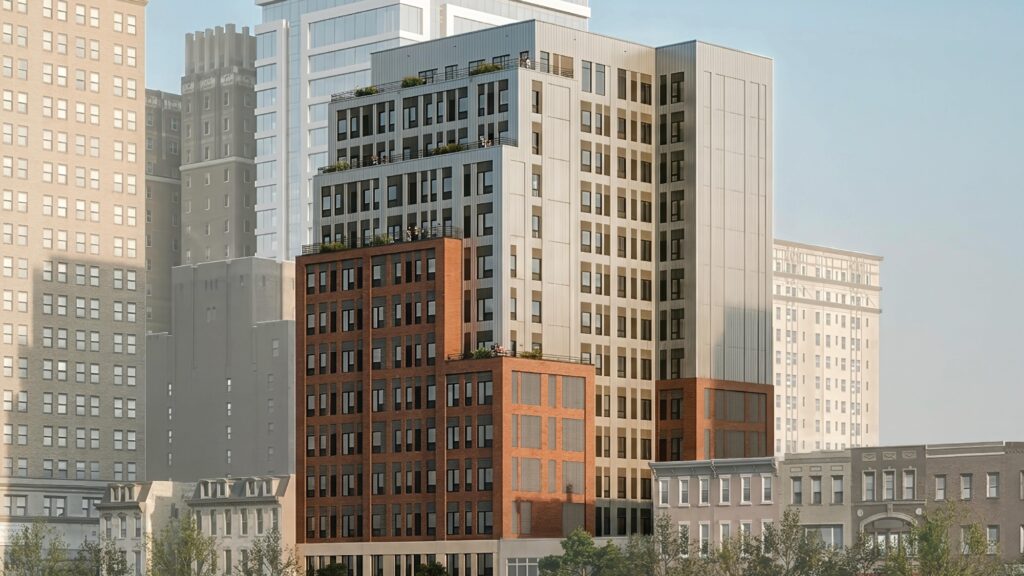
Philadelphia Housing Authority’s first Center City apartments are finally moving forward
The subsidized units are part of a mixed-income project near Rittenhouse Square. It’s expected to open in 2028.
16 hours ago
Listen 0:58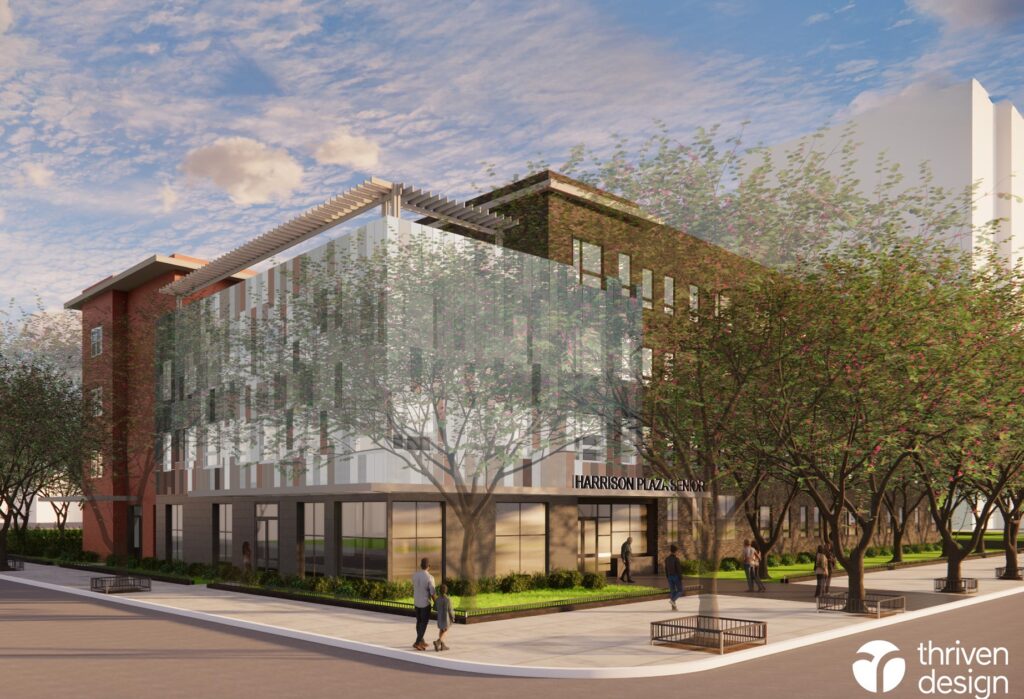
PHA plans 50 new senior apartments in North Philly as larger redevelopment stalls
Funding uncertainty has left the broader vision of completely transforming the 1950s-era Harrison Plaza development without a timeline.
2 days ago
Listen 1:05
The effort is designed to slow drivers down to cut down on the number of pedestrian fatalities.
4 days ago
Listen 1:22