
New Navy Yard training program prepares Philadelphians for pharmaceutical manufacturing jobs
The program will offer training in simulated clean rooms, with courses beginning in January. Some will be open to people without college degrees.
Listen 1:16
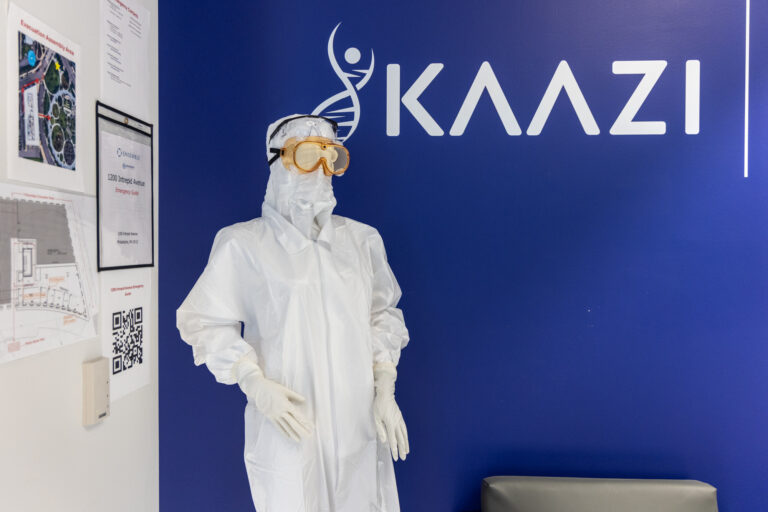
The new KAAZI Workforce Training Center aims to get the next workforce in gene and cell therapy manufacturing comfortable working in a clean room environment, including learning about the PPE required to operate in a sterile environment. (Kimberly Paynter/WHYY)
Have a question about Philly’s neighborhoods or the systems that shape them? PlanPhilly reporters want to hear from you! Ask us a question or send us a story idea you think we should cover.
A simulated “clean room” has debuted at the Philadelphia Navy Yard to provide lab training to city residents starting careers in pharmaceutical manufacturing — including some who don’t have college degrees.
The room is a project of Kaazi, a new firm launched by Orchestra Life Sciences. It aims to cater to companies like Johnson & Johnson, Merck and TerraPower Isotopes that are eager to develop the next generation of cancer treatments and other drugs but need help finding thousands of workers trained in highly specific manufacturing processes.
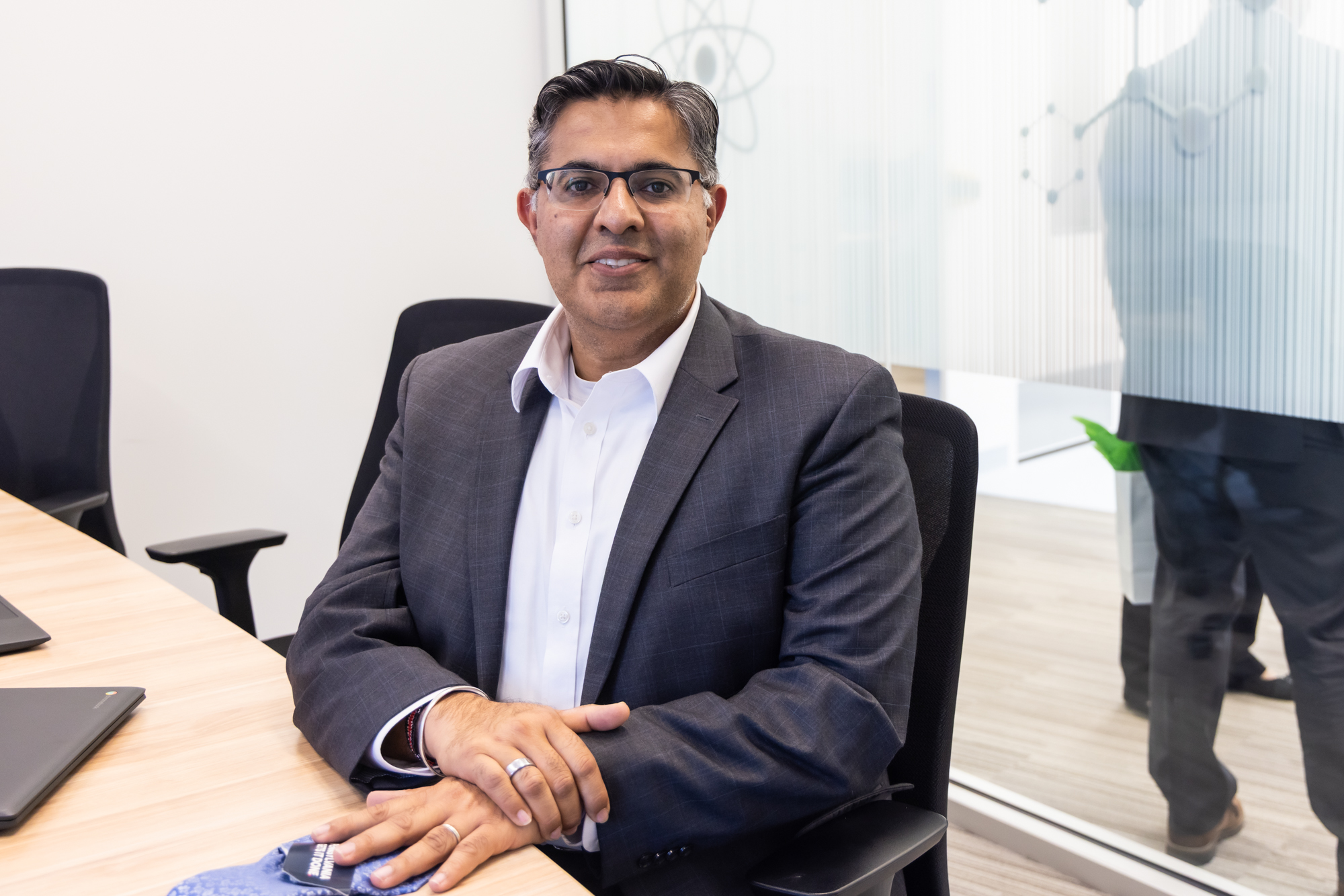
Orchestra partner Sumit Verma said there’s excitement in the industry about potentially transformative new treatments for melanoma, certain breast cancers and other conditions, but schools and existing training programs lack the facilities and instructor expertise to teach workers how to make those products.
“You’re looking at first-of-a-kind treatments, whether it is nuclear medicine, cell and gene therapy, mRNA, biologics,” Verma said at a ribbon-cutting Monday afternoon for the new facility. “The question would be: who’s going to produce these once they get past phase 3 clinical trials? So that’s where the challenge is in terms of subject matter expertise.”
Company executives also described Kaazi as a way to expand economic opportunity in a city with high unemployment and a need for more paths to good-paying jobs.
Some trainee cohorts will be required to have associate’s or bachelor’s degrees in life sciences, while others will just need to have taken basic high school physics and chemistry classes.
“With initiatives like Kaazi, we can lead the way in how these medicines are manufactured, and develop the workforce that makes that possible,” Orchestra CEO Emilie Pelletier said. “When we build the future of medicine in Philadelphia, we should be building careers for Philadelphians.”
Orchestra, which relocated its headquarters to Philadelphia from Montreal a year ago, is a technical consultancy that helps drugmakers set up and run factories that make advanced therapies.
Related Content
Philly-area manufacturers say fragmented economic-development efforts are holding them back
Business leaders say better coordination could help manufacturers overcome workforce shortages, transportation barriers and supply chain challenges.
1 month ago
Listen 1:15Hands-on training without pressure
The new training area inside Orchestra Life Sciences’ Navy Yard offices contains working lab equipment and closely resembles a real clean room, a controlled environment designed to prevent contamination during manufacturing. One wall has been left open to allow easy access.
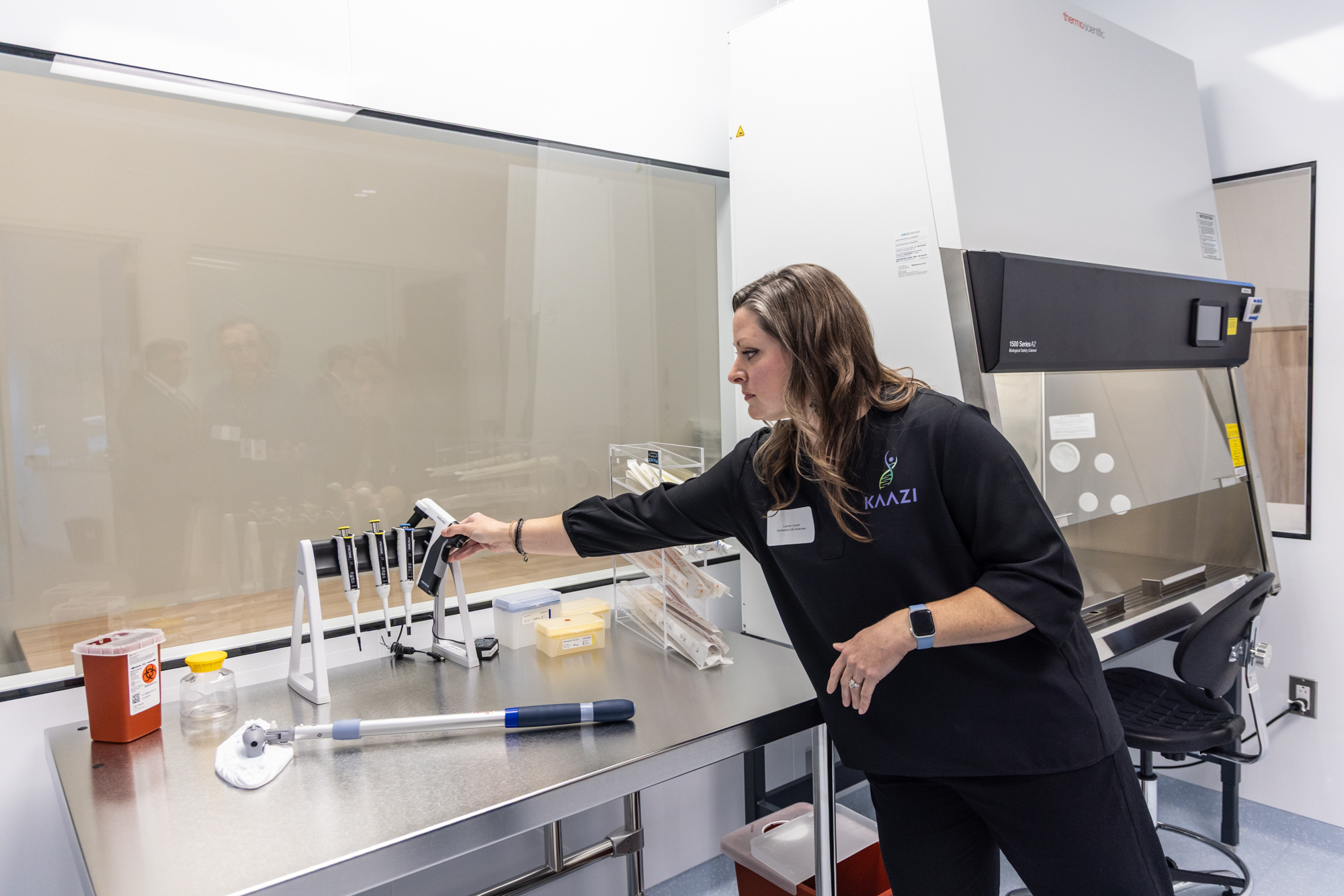
“This would be your grade B space where all of the actual manufacturing would take place,” said Lauren Lewitt, Kaazi’s associate director, during a tour Monday. “If we were working in this in real life, we would be fully gowned up from head to toe.”
Workers in clean rooms wear protective clothing, including full-body suits, masks and gloves, to prevent contamination.
As ribbon-cutting attendees milled around the office, Lewitt demonstrated how to use pipettes, the highly accurate eyedroppers used in labs, and a biological safety cabinet where workers would handle cell cultures and other materials in a super-clean, “aseptic” space.
A nearby room has a centrifuge, water bath and environmental monitoring equipment standard to pharmaceutical labs.
“This is critical for people to get hands-on experience in real life, but without the pressure,” Lewitt said. “They don’t have to have the fear of, ‘I’m going to mess up the cell line,’ or, ‘I’m going to contaminate this patient culture.’ We know how critical those are, how precious they are, the cells that are being worked on. So it just takes the pressure out of everything.”
Verma described the clean room as a “first-of-a-kind” training space unlike any other in the region. Orchestra spent close to $2.5 million to design and build the facility, he said.
The first cohort of 12 to 16 students will start training in January, Verma said. Training groups of students with associate’s or bachelor’s degrees will last four months, while cohorts who have high school diplomas will take six-month courses, he said.
Related Content
The 40,000-square-foot facility, dubbed “The Generator,” is set to break ground in fall 2027 and open in early 2029.
1 month ago
No room for error
Kaazi’s first customers for customized clean room courses will include TerraPower Isotopes. The nuclear sciences company founded by Bill Gates is building a $450 million facility in Philadelphia’s Bellwether District to manufacture actinium-225, a rare radioactive isotope being tested as a targeted treatment for cancer.
“It’s exciting, but it comes with a pretty unique challenge: finding skilled talent who are ready to work in a pharmaceutically regulated environment, from day one,” TerraPower President Scott Claunch said. “In pharmaceutical manufacturing, there’s no room for trial and error. Quality and safety are non-negotiable. This is why programs like Kaazi are so important and will be a game-changer for our industry.”
TerraPower is receiving state incentives to site its facility in Philadelphia and has committed to creating 225 jobs. It plans to start production in 2029.
Kaazi is also in discussions with some of the region’s major pharmaceutical companies, including Merck and Johnson & Johnson, about creating training programs tailored to their production processes, Verma said.
He noted that big drugmakers have lately tended to build their therapy pipelines by acquiring small startups, which have a product but no manufacturing capacity and no systems to find or train workers.
“Should they go on this journey by themselves when they don’t know some of this expertise, or should they hire talent like us to do it?” he said. “We see this as the opportunity to support these kind of clients. We have active talks with them, and they’re struggling too. They’re going to governments and saying, ‘Hey, how do you help me?’”
For example, while Pennsylvania offered TerraPower incentives to build in the state, it could not point to educational programs at Penn State or other institutions that could provide the very specific training in handling radioactive therapies that the company will need, he said.
“Most companies have their own secret sauce on their manufacturing process, or they have some very company-specific training that they’d like to achieve,” Verma said. Kaazi will be “learning on the fly too, and we would be the ones shaping that up.”
He said firms and workers who want to find out more about the training programs can contact Kaazi through its website.
-
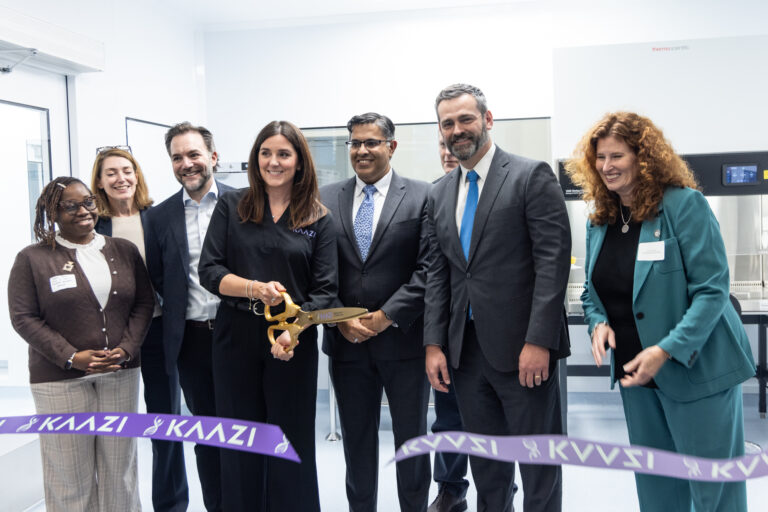
Emilie Pelletier, CEO, Orchestra Life Sciences and Sumit Verma, Co-Founder and Partner, Orchestra Life Sciences, (center) cut the ribbon on the new KAAZI Workforce Training Center joined by city officials and other company executives on October 26, 2026. (Kimberly Paynter/WHYY) -
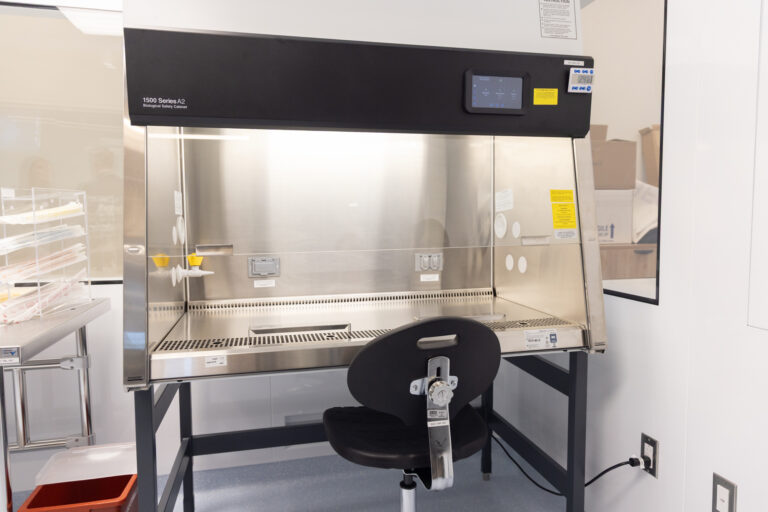
A biological safety cabinet, where aseptic manufacturing of sterile pharmaceuticals are created, for cohort participants to train on at the KAAZI Workforce Training Center. (Kimberly Paynter/WHYY) -
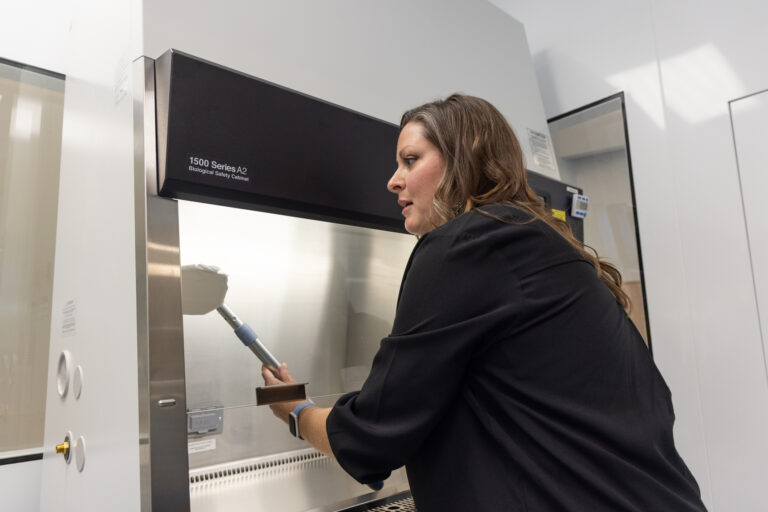
Lauren Lewitt, associate director at the KAAZI Workforce Training Center, demonstrates cleaning the biological safety cabinet used in cell and gene therapy manufacturing. (Kimberly Paynter/WHYY) -
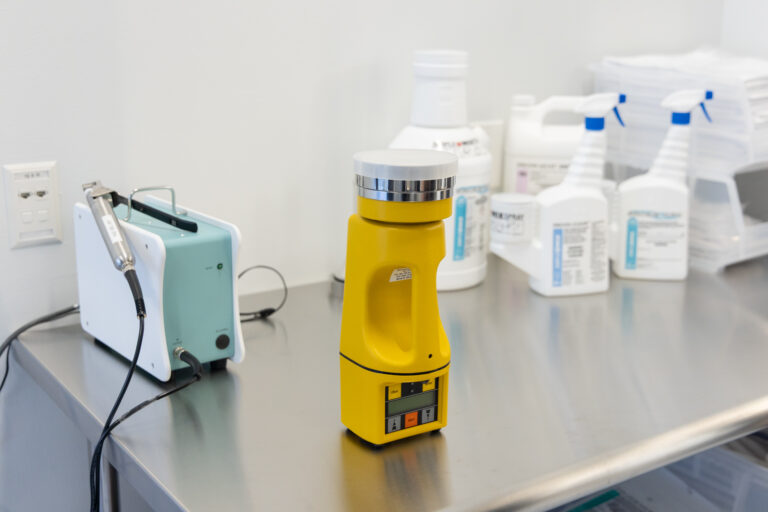
In addition to manufacturing, cohort participants will learn how to operate environmental monitoring equipment, heat sealers and the types of cleaning products need to keep the environment sterile at the KAAZI Workforce Training Center. (Kimberly Paynter/WHYY)

Subscribe to PlanPhilly
WHYY is your source for fact-based, in-depth journalism and information. As a nonprofit organization, we rely on financial support from readers like you. Please give today.
Brought to you by PlanPhilly

PlanPhilly
In-depth, original reporting on housing, transportation, and development.
Philadelphia tree advocates report progress on planting, with over 18,000 added in 3 years
The city aims to expand its tree canopy from 20% to 30%. Partners implementing the plan have not yet measured progress toward that goal.
3 days ago
Listen 0:54
“Why is this such a difficult decision to make when the money is there?” asked one Cobbs Creek renter at risk of displacement.
5 days ago
Listen 1:07
Philly Habitat for Humanity project will overhaul blighted East Germantown rentals
The townhomes will become homeownership units after becoming vacant in 2006.
1 week ago
Listen 1:00