

‘Philadelphia in Color’ celebrates the grit and glam of the amateur photographer
Hidden City’s visual tome to the spirit of mid-century Philly features work by over 200 professional and amateur photographers.
Listen 1:20
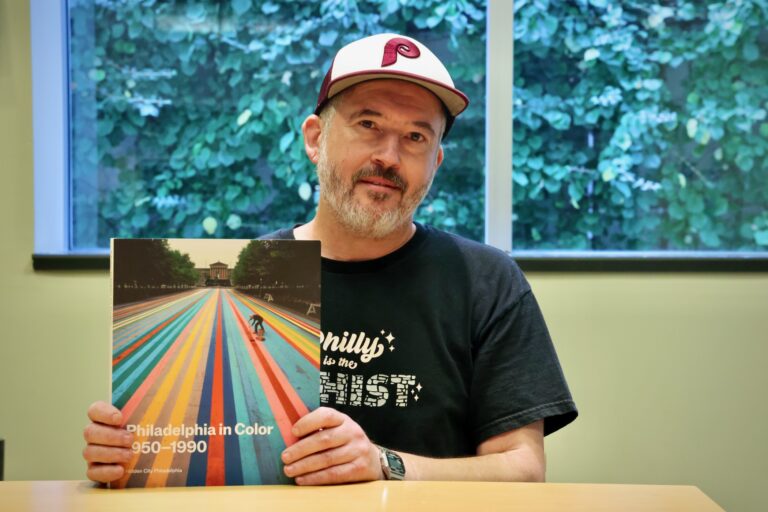
Peter Woodall edited ''Philadelphia in Color: 1950–1990.'' (Emma Lee/WHYY)
From Philly and the Pa. suburbs to South Jersey and Delaware, what would you like WHYY News to cover? Let us know!
Pete Woodall discovered many things as he edited the massive photo book, “Philadelphia Color 1950-1990,” featuring 367 color photos by over 200 of the city’s professional and amateur shutterbugs.
For starters, the years 1950 to 1990 were arguably more colorful than the decades before or since.
“Cars are now basically gray, silver, black or navy blue. They used to be every color of the rainbow. They were really beautiful,” Woodall said. “Likewise, people’s clothes, especially in the ‘60s, were often very bright, very saturated in color. I feel like everything is more of a monotone now.”
“Philadelphia in Color” is produced by Hidden City, a Philly urban development blog. The city pops off the page in the book’s vintage photos: clothes, cars, hairstyles, signs painted on brick and apples being eaten by kids in tattered jeans while sitting on a stoop. In the late 1970s, about 100 students from Hallahan Catholic Girls’ School in full uniforms waded into the fountain at LOVE Park. In 1982, a punk rock band played on Kater Street in South Philadelphia as a mosh pit formed in the middle of the street.
-
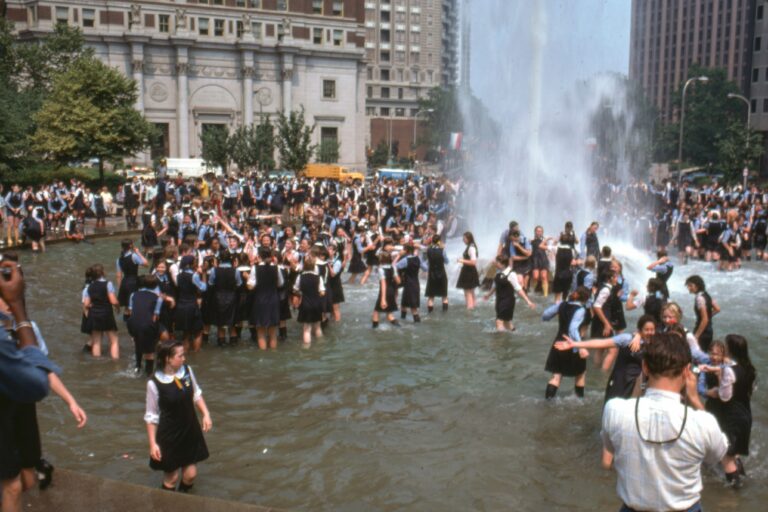
In the 1970s, an unknown photographer took a picture of students from the John W. Hallahan Catholic Girls’ High School as they take a ritual dip in the former fountain of LOVE Park. The phot from the archives of Philadelphia Historical Commission is included in the book “Philadelphia in Color.” (Philadelphia in Color) -
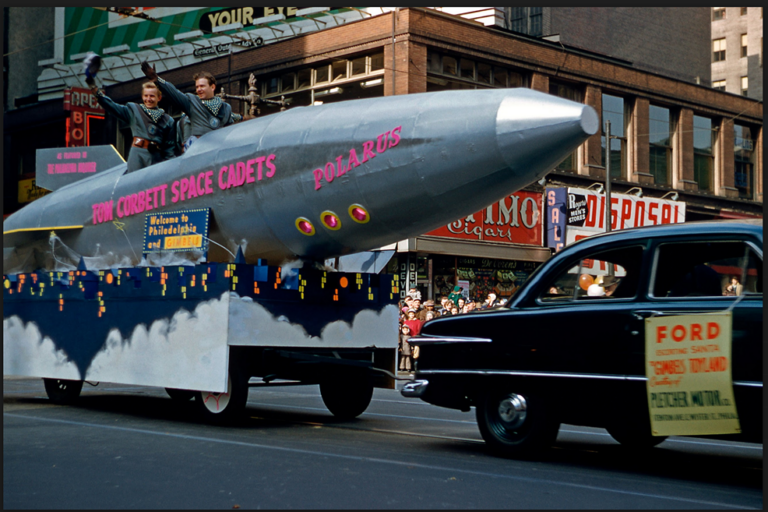
An unknown photographer took this photo of the 1951 Gimbels Thanksgiving Day Parade. It is featured in the book “Philadelphia in Color.” (Philadelphia in Color) -
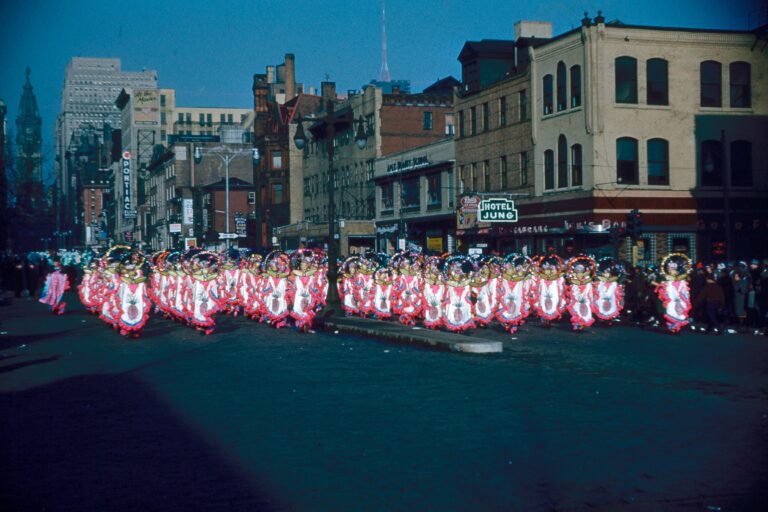
In 1953, an unknown photographer took this picture of the Mummers Parade at Broad and South streets. It is included in the book “Philadelphia in Color.” (Philadelphia in Color) -
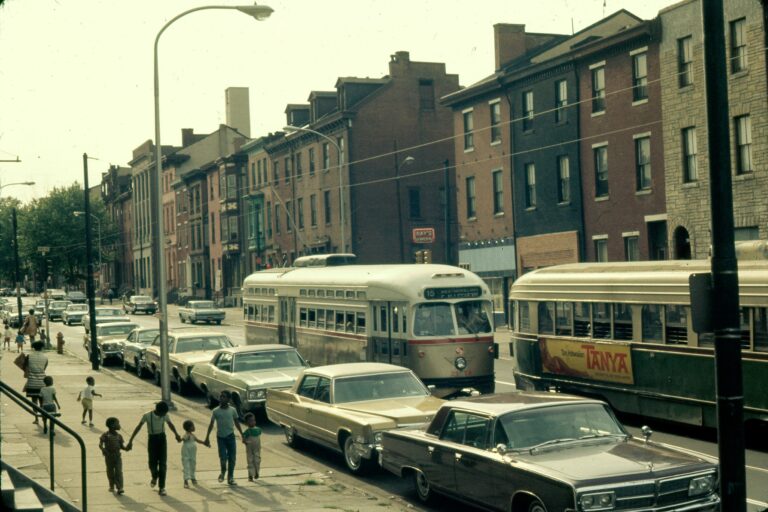
An unknown photographer took this photo of the 1400 block of Girard Avenue in 1971, featured in the book “Philadelphia in Color.” (Philadelphia in Color) -
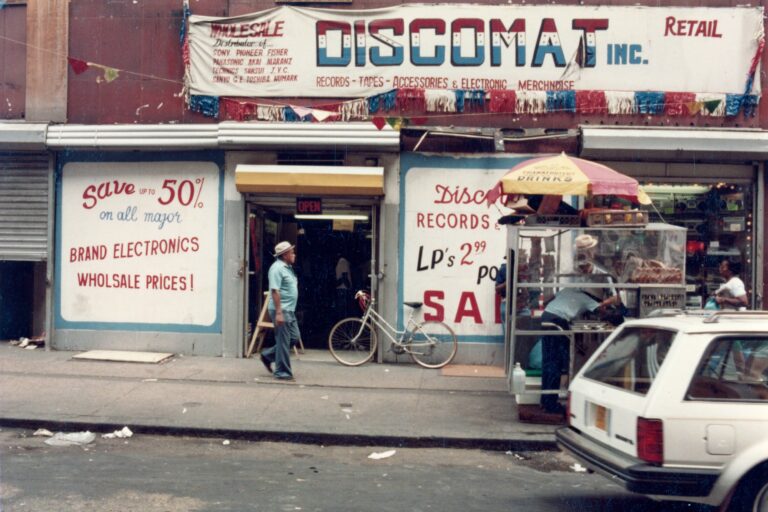
In 1981, an unknown photographer took this photo of the Discomat music store at 12th and Market streets in Philadelphia. It is featured in the book “Philadelphia in Color.” (Philadelphia in Color)
The 40-year span of the book covers a period between color film entering the consumer market up to the advent of digital cameras and cell phones.
That era also corresponds with a low period for Philadelphia as the city went through an era of rapid deindustrialization after World War II and lost a quarter of its population as residents fled to the suburbs.
“People have all sorts of understandings of what Philadelphia was like in these decades, decades that are considered an era of decline, not just for Philadelphia, but for most large, East Coast, Rust Belt American cities,” Woodall said. “But what we see in this book is just how lively the city was.”
Related Content
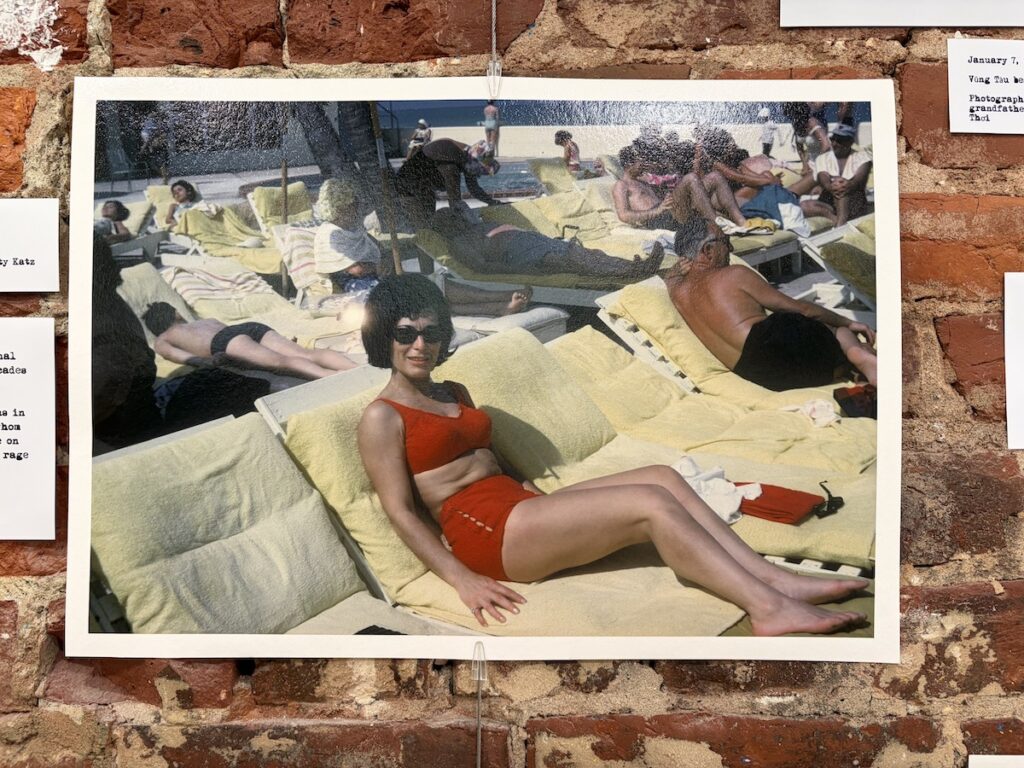
Philadelphia’s Photo Lounge shows what summer looked like before Instagram
Over 60 customers submitted family vacation snaps to “That Summer Feeling” from 1931 – 2010.
3 months ago
Listen 2:23Giving Philly history another look
Another thing Woodall learned is that Philadelphia does not have a good scrapbook.
People who want to find out what the city looked like mid-century are, for the most part, out of luck. Woodall said there is a dearth of citywide photo documentation.
“There’s very little material out there, especially compared to New York, that can show us what Philadelphia looked like,” he said. “There are some history-related books that are in black-and-white that aren’t really visually compelling.”
To compile “Philadelphia in Color,” Woodall pulled from every archive he could find, including well-known collections at the Temple University Urban Archive and the University of Pennsylvania Architectural Archives. He also dug into lesser known collections such as one maintained by the Pennsylvania Horticultural Society, which for over a century has used color photography to document its citywide neighborhood gardening projects.
Woodall also tapped the archives of Edmund Bacon, the legendary urban planner who was responsible for redevelopment projects that both revived the city and displaced whole neighborhoods. His records held at the University of Pennsylvania contain thousands of photographs he took of cities around the world, including Philadelphia.
“He was thinking about how cities work,” Woodall said. “He was taking notes with his camera, trying to understand what was happening.”
-
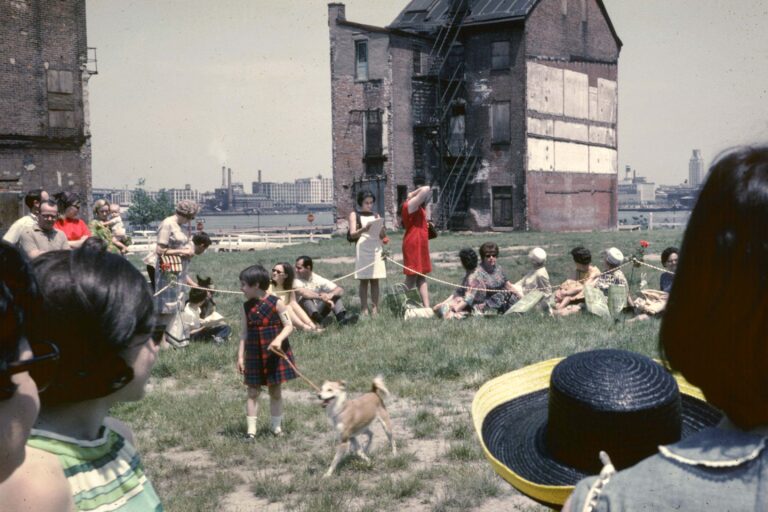
City planner Edmund Bacon photographed a neighborhood dog show at Front and Lombard streets in the 1960s. The photo is featured in the book “Philadelphia in Color.” (Philadelphia in Color) -
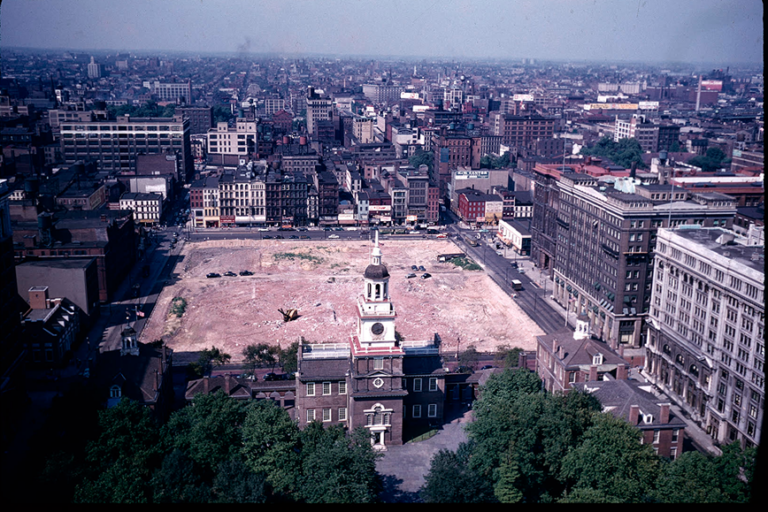
An unknown photographer took this aerial photograph of Independence Hall in 1953 as the area was being demolished to create Independence National Historic Park. The photo from the archives of Independence National Historic Park is included in the book “Philadelphia in Color.” (Philadelphia in Color) -
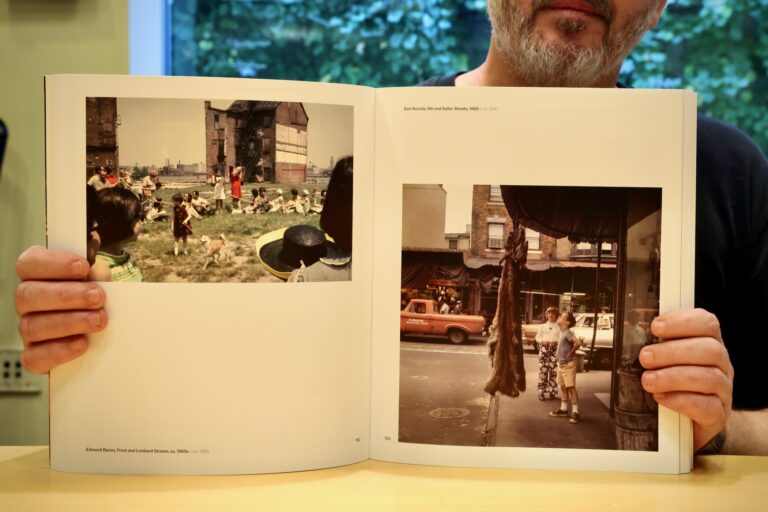
Editor Peter Woodall shows one of his favorite photo pairings in ''Philadelphia in Color: 1950–1990.'' At right is a photo of children looking at animal skins in the Italian Market, taken by Sam Nocella in 1969. At left is a photo of children with dogs in a vacant lot at Front and Lombard streets, taken by Edmund Bacon in the 1960s. (Emma Lee/WHYY) -
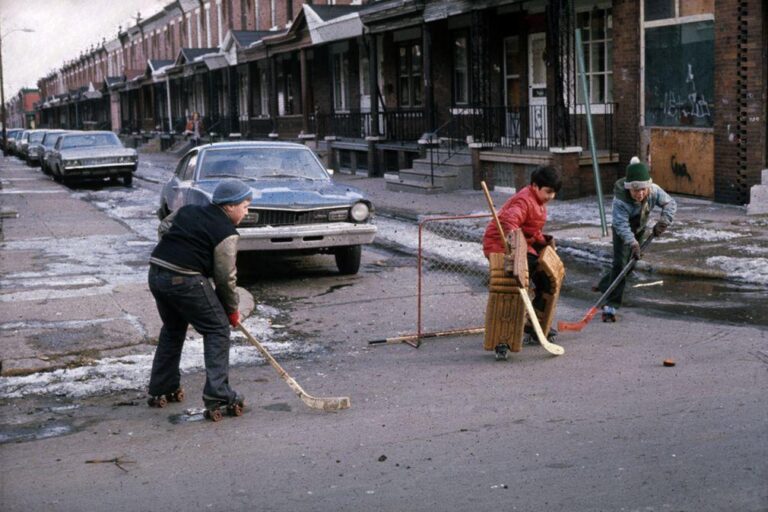
A photograph of boys playing hockey on a street in Kensington, 1977, by Robert Harper, then a Haverford College student studying Kensington for his senior thesis. It is featured in the book “Philadelphia in Color.” (Philadelphia in Color) -
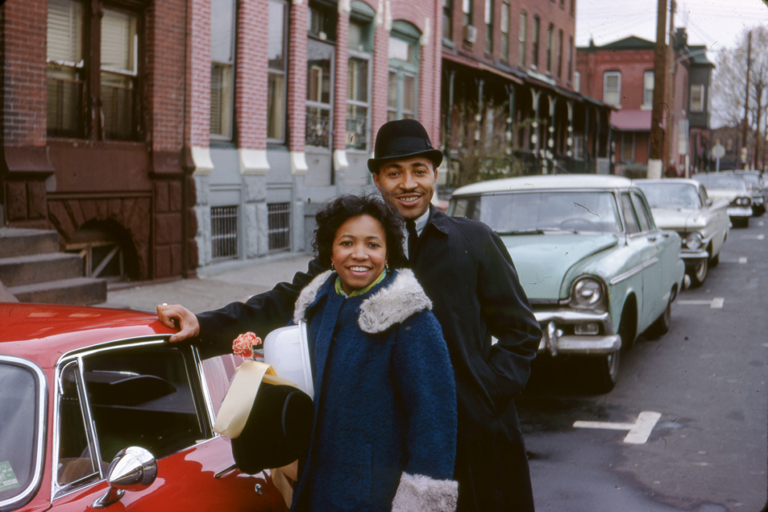
In 1968, an unknown photographer took this picture of a couple in West Philadelphia near the campus of the University of Pennsylvania. It is featured in the book “Philadelphia in Color.” (Philadelphia in Color)
One of Bacon’s photos is a scene in Society Hill in the 1960s when the neighborhood was in transition with massive demolition and rebuilding. A group of neighbors with their children are seen in an open field holding an informal dog show with neighborhood pets. There is a partially destroyed building behind them.
“The transformation of that neighborhood was very complex and yet we don’t have many pictures of it. I think if you ask people, ‘What did that look like?’, they wouldn’t understand just how much got torn down,” Woodall said. “We have photos in this book where it seems like every other block was being torn down. It looks like something closer to [World War II] Dresden than 1960s Philadelphia. There’s something about having an image that can clarify your thinking.”
Related Content
2025 in photos: A year of change, celebration and resolve in the Philadelphia region
Here’s a view from WHYY News photographers of how the last 12 months unfolded in real time.
11 months ago
The genius of the amateur photographer
A third thing Woodall learned is that good photos come from good photographers.
One of the sources Woodall tapped to compile “Philadelphia in Color” is the public. Hidden City put out a general call for submissions to anyone who had personal color photographs from 1940 to 1990 that showed something of the city’s urban landscape. People dug into their scrapbooks, file folders and old slide carousels. The results reveal not only the city, but the private lives of the people who lived in it.
Like Dawn Kelly, who submitted a photo of herself from 1974, riding a bike on A Street in Kensington while wearing a white dress and knee-high socks. It was her 10th birthday.
Like the Lazorko kids — Catherine, Paul and Jonathan — exploring rocks on the Schuylkill River shoreline at Bartram’s Garden in the late 1960s. They were photographed by their father, Anthony Lazorko.
Like a girl in a floral-print dress standing in the street with her eyes closed to the sunlight. Behind her is the now long gone Breyers Ice Cream factory at 43rd Street and Woodland Avenue in West Philadelphia. The photo was taken by the Black architect James William Strothers, who photographed the Black middle class in Philadelphia in the 1960s.
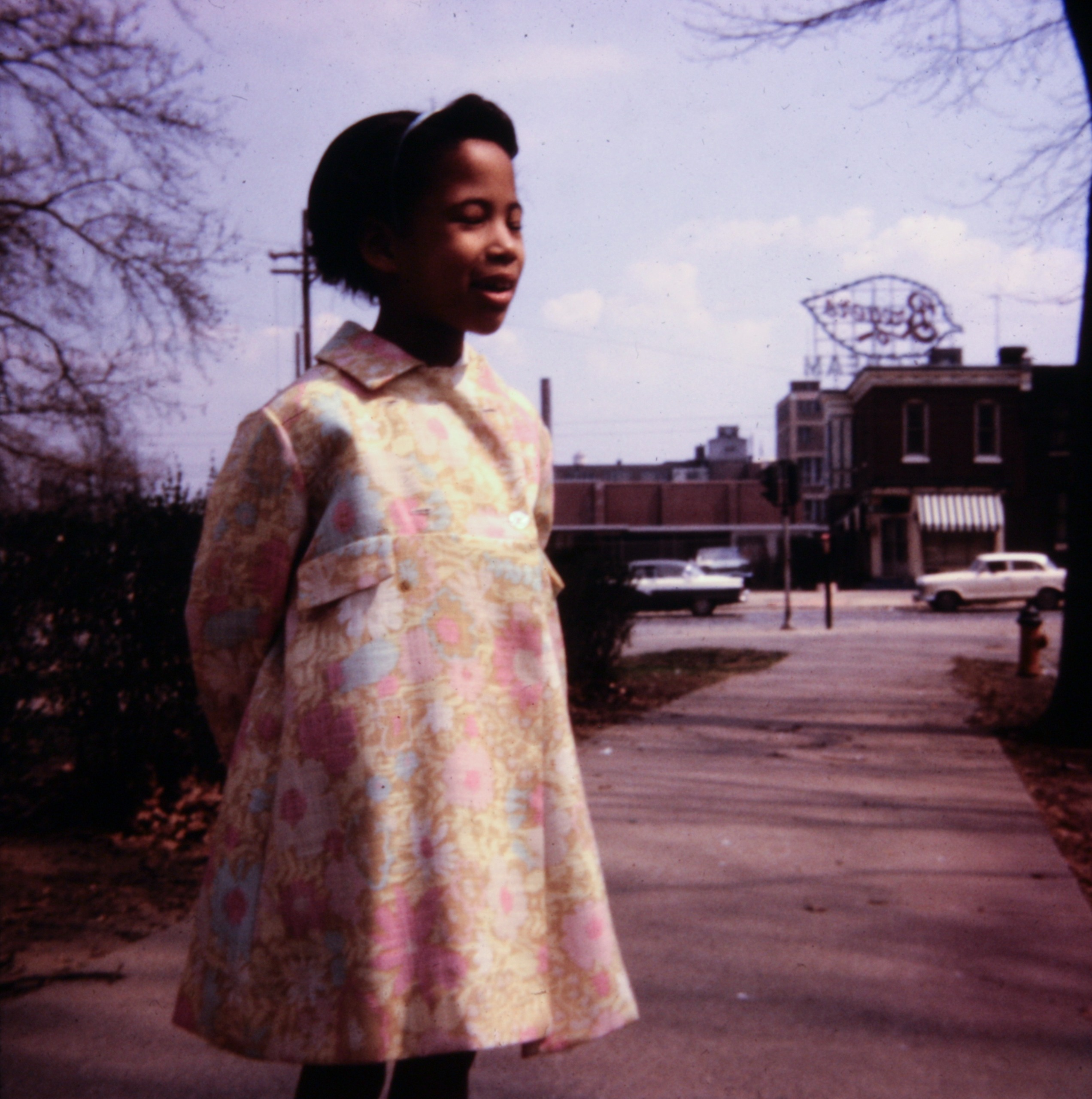
Woodall received hundreds of amateur photographs and he said the ones that made the cut were taken by average people who knew their way around a camera.
“There’s no such thing as an accidentally great photo,” he said. “People think it’s possible, and hypothetically it is, but I’ve looked through, like, millions of photos and it’s really rare.”
The book includes images by Stephen Shore, a celebrated fine-art photographer who crisscrossed the country in the 1970s taking photos of seemingly mundane things. They are mixed in with the pictures taken by less skilled photographers.
“His photos jump out at you because they’re so clean and clear. There’s a difference between good and great,” Woodall said. “But within the context of this book, we didn’t want a whole book of Stephen Shore because it would have told us less about Philadelphia. It wouldn’t have had as much to say.”
Here’s one example of a photo that has a lot to say but keeps quiet: A Black man in a dark suit holds hands with a tiny girl in a pink dress. Her entire right hand grips one of his fingers. The rowhomes of Thompson Street near Girard College circa 1961 recede to a vanishing point behind them. The picture is out of focus and the colors are dulled, but you can see that the car parked at the curb next to them matches the girl’s dress. It was submitted by the descendants of Charles B. Ford, about whom nothing is explained.
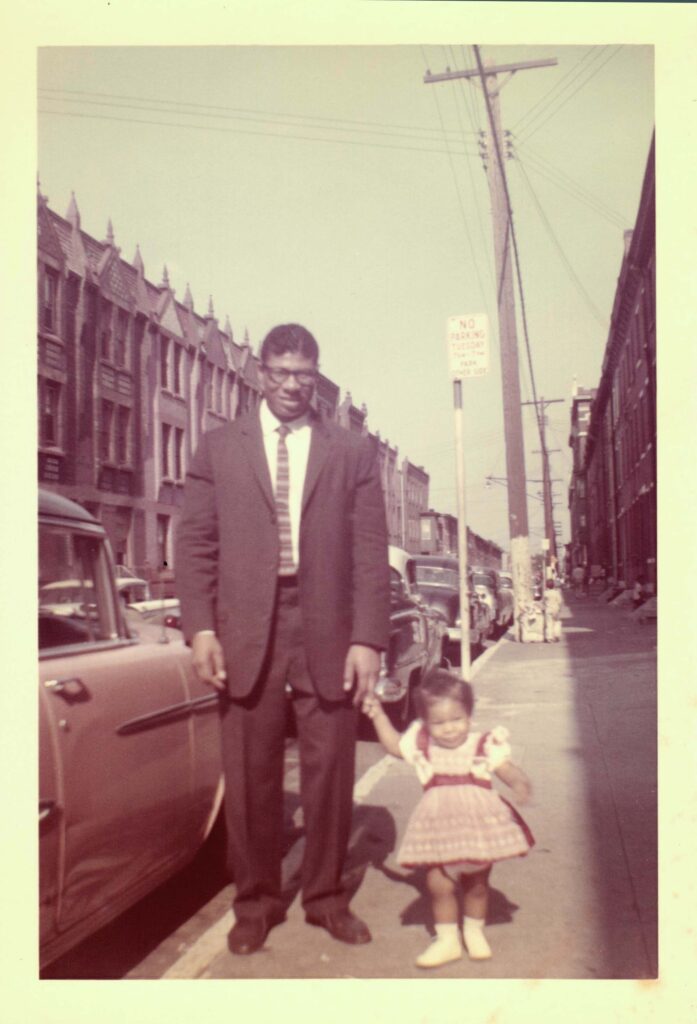
Without a little grit, a book of photographs wouldn’t look like Philadelphia. And it wouldn’t be beautiful.
Hidden City will host a book launch event on Sunday, Oct. 25 at the Barnes Foundation, with its editors in conversation with Peter Barberie, photography curator with the Philadelphia Museum of Art.

Never miss a moment with the WHYY Listen App!


WHYY is your source for fact-based, in-depth journalism and information. As a nonprofit organization, we rely on financial support from readers like you. Please give today.
Philadelphia’s Photo Lounge shows what summer looked like before Instagram
Over 60 customers submitted family vacation snaps to “That Summer Feeling” from 1931 – 2010.
3 months ago
Listen 2:23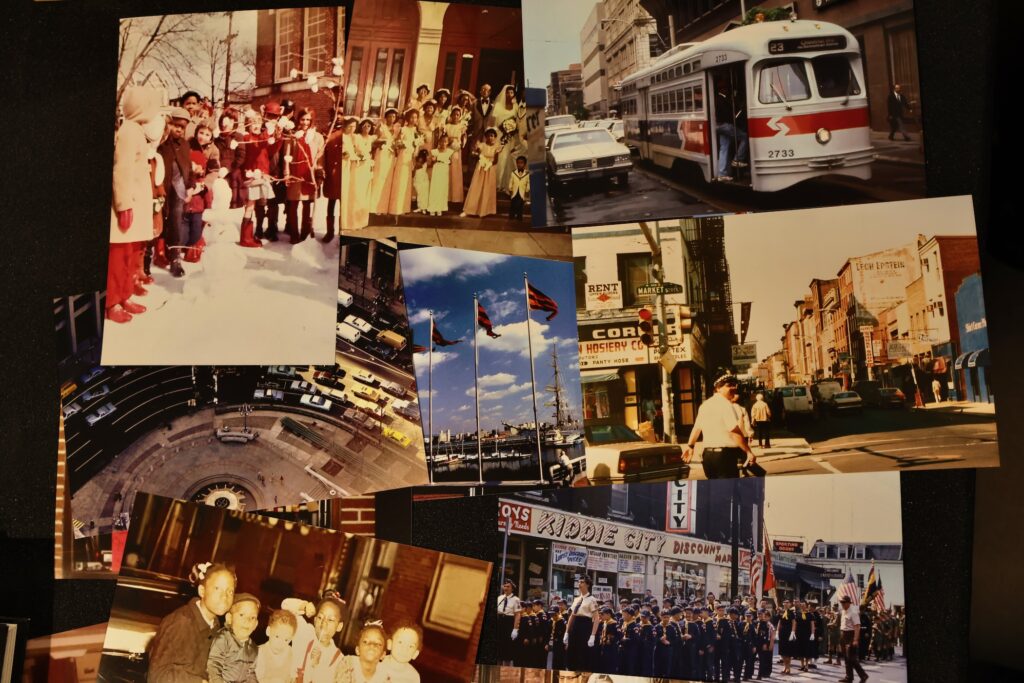
“Philadelphia in Color: 1950 - 1990,” coming in 2026, will feature candid snapshots submitted by the public.
2 years ago
Listen 1:20
A Philly photographer captures the glory days of the Black cowboy
Ron Tarver has been taking pictures of Black horse culture for 30 years, in town and country.
2 years ago