

5 key takeaways about immigrants and the Greater Philadelphia economy, per report
Speakers at an event Tuesday co-hosted by The Welcoming Center and WHYY highlighted data showing immigrants’ integral role in the region’s economic growth.
Listen 1:12
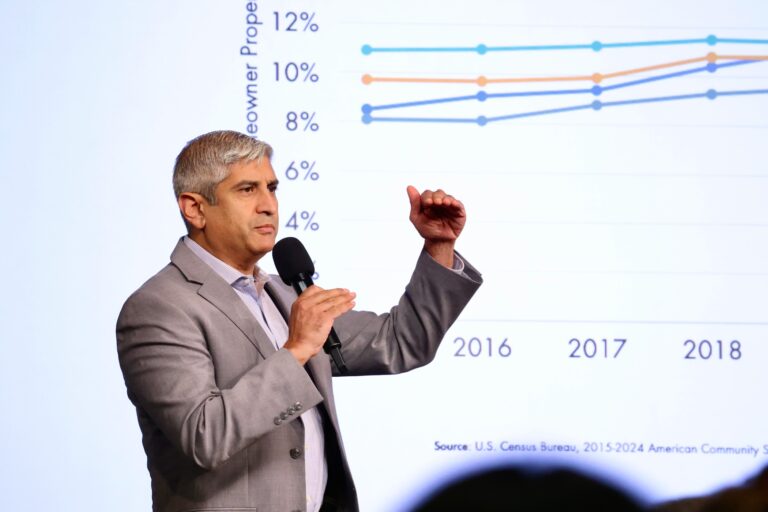
Anuj Gupta, president and CEO of The Welcoming Center, speaks at ''Exploring Trends: Immigration's Regional Impact,'' a presentation and panel discussion about The Welcoming Center's latest report hosted by WHYY. (Emma Lee/WHYY)
From Philly and the Pa. suburbs to South Jersey and Delaware, what would you like WHYY News to cover? Let us know!
Immigrants have an outsized economic impact throughout Greater Philadelphia, according to a new report released Tuesday.
“Building Collective Prosperity” is the second edition of the study on immigration in the region by The Welcoming Center, a Philadelphia-based nonprofit that promotes immigration through economic integration.
At an event Tuesday co-hosted by The Welcoming Center and WHYY, speakers highlighted data showing immigrants’ integral role in the region’s economic growth.
The report seeks to help answer “one of the most fundamental questions of our time,” said Anuj Gupta, president and CEO of The Welcoming Center, as he presented the report Tuesday. “What does it mean for all of us, when people from another land come here in search of opportunity?”
Looking at the role immigrants play in the local and national economy is all the more important, Gupta said, given the Trump administration’s ongoing federal immigration enforcement crackdown.
“If we continue down a path where we are pulling people out of our communities, out of our economy, and on a parallel track, we are making it impossible for others to come here, what does that mean for us?” he said. “I think this data gives you an answer.”
Here are five key takeaways from the report and Tuesday’s event.
-

Audience members listen during ''Exploring Trends: Immigration's Regional Impact,'' a presentation and panel discussion about The Welcoming Center's latest report hosted by WHYY. (Emma Lee/WHYY) -
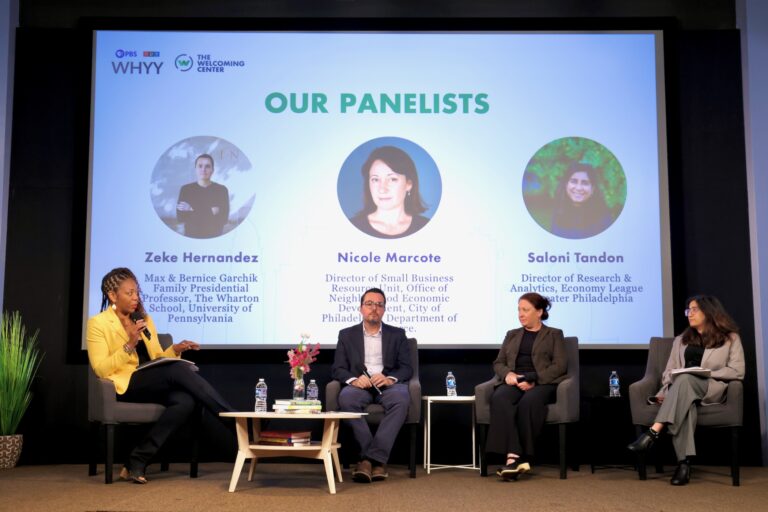
WHYY's Cherri Gregg (left) moderates a panel discussion during "Exploring Trends: Immigration's Regional Impact,'' a presentation and panel discussion about The Welcoming Center's latest report hosted by WHYY. (Emma Lee/WHYY) -
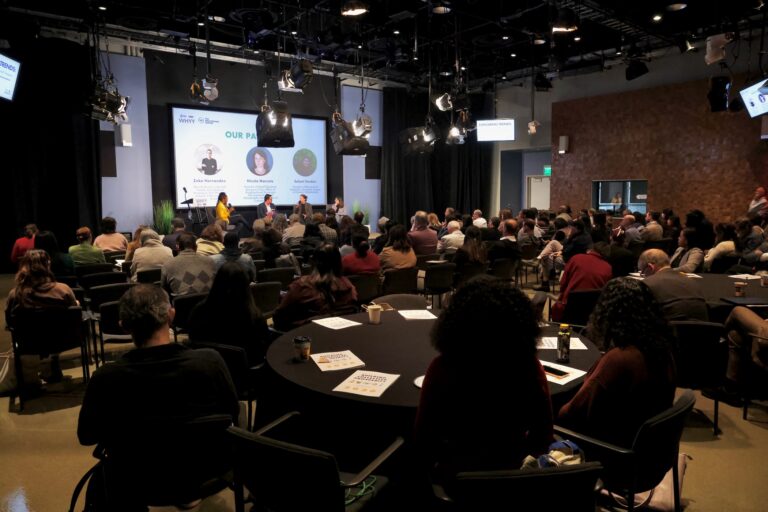
WHYY hosts ''Exploring Trends: Immigration's Regional Impact,'' a presentation and panel discussion about The Welcoming Center's latest report hosted by WHYY. (Emma Lee/WHYY) -

Tracie B. Henry of Willow Grove raises a question to the panelists at ''Exploring Trends: Immigration's Regional Impact,'' a presentation and panel discussion about The Welcoming Center's latest report hosted by WHYY. (Emma Lee/WHYY) -
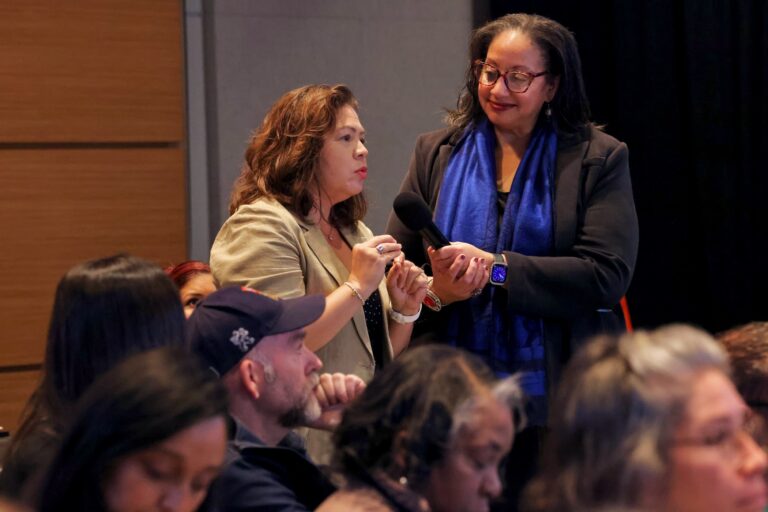
Attorney Caroline Cruz asks a question of panelists during ''Exploring Trends: Immigration's Regional Impact,'' a presentation and panel discussion about The Welcoming Center's latest report hosted by WHYY. (Emma Lee/WHYY) -

WHYY's Cherri Gregg moderates a panel discussion during ''Exploring Trends: Immigration's Regional Impact,'' a presentation and panel discussion about The Welcoming Center's latest report hosted by WHYY. (Emma Lee/WHYY) -
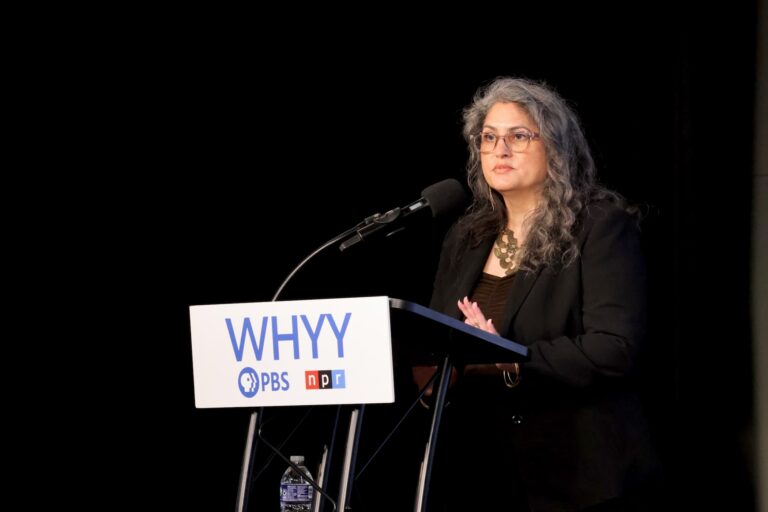
Elizabeth Jones, chief program officer at The Welcoming Center, speaks at ''Exploring Trends: Immigration's Regional Impact,'' a presentation and panel discussion about The Welcoming Center's latest report. (Emma Lee/WHYY) -
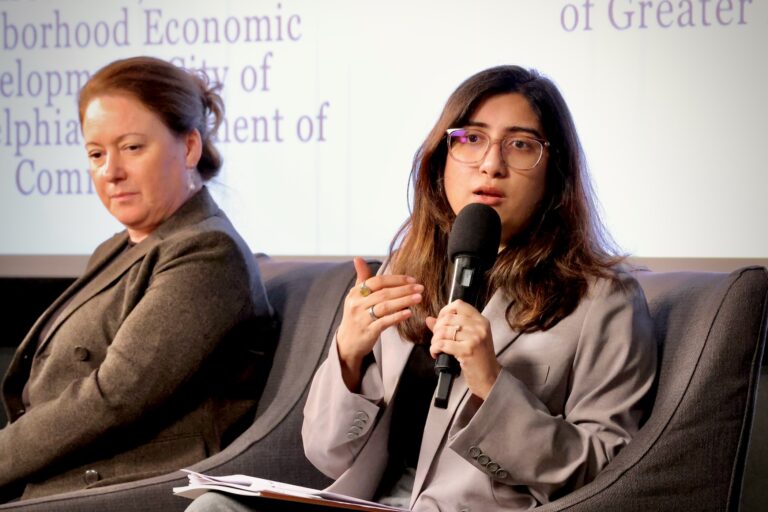
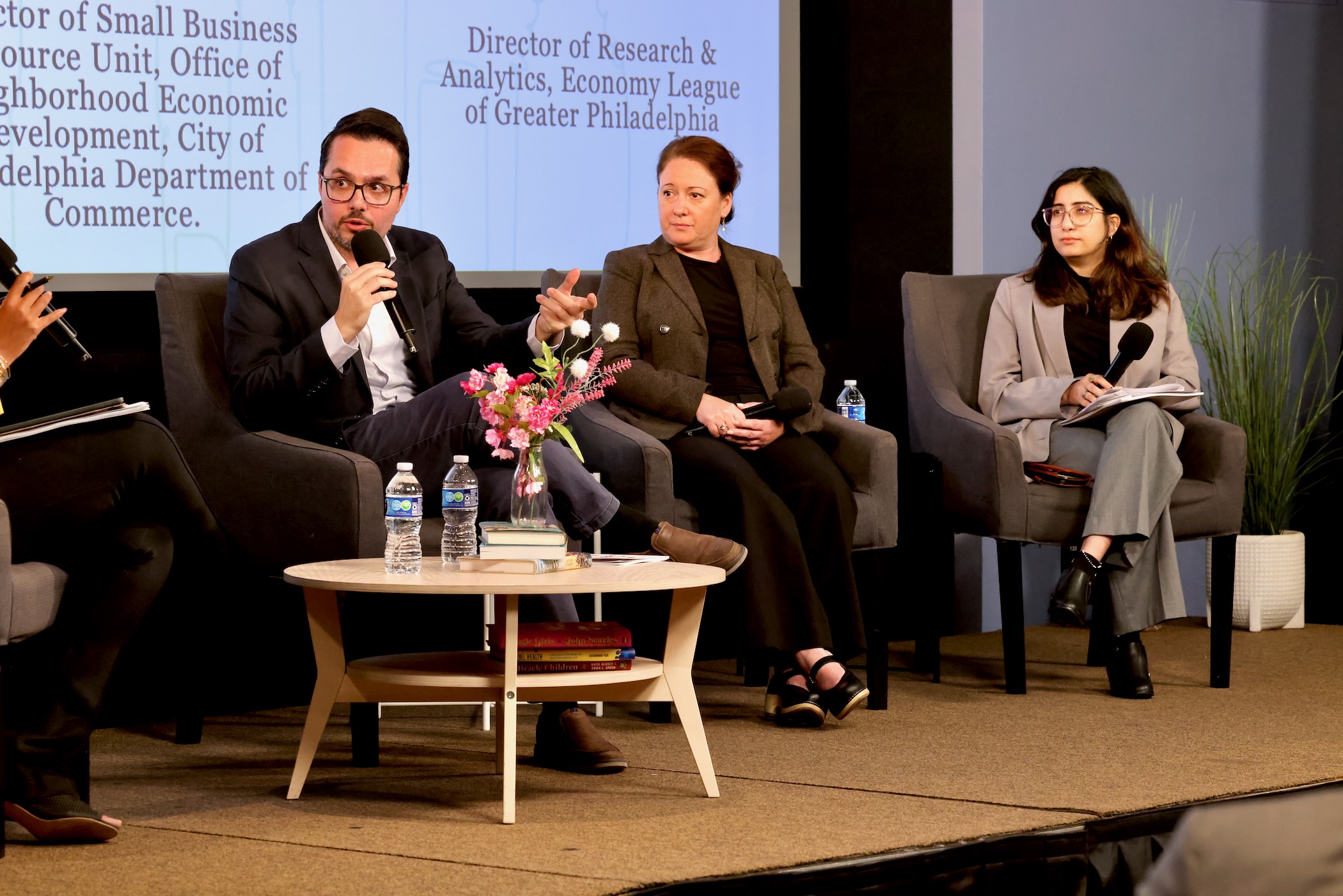
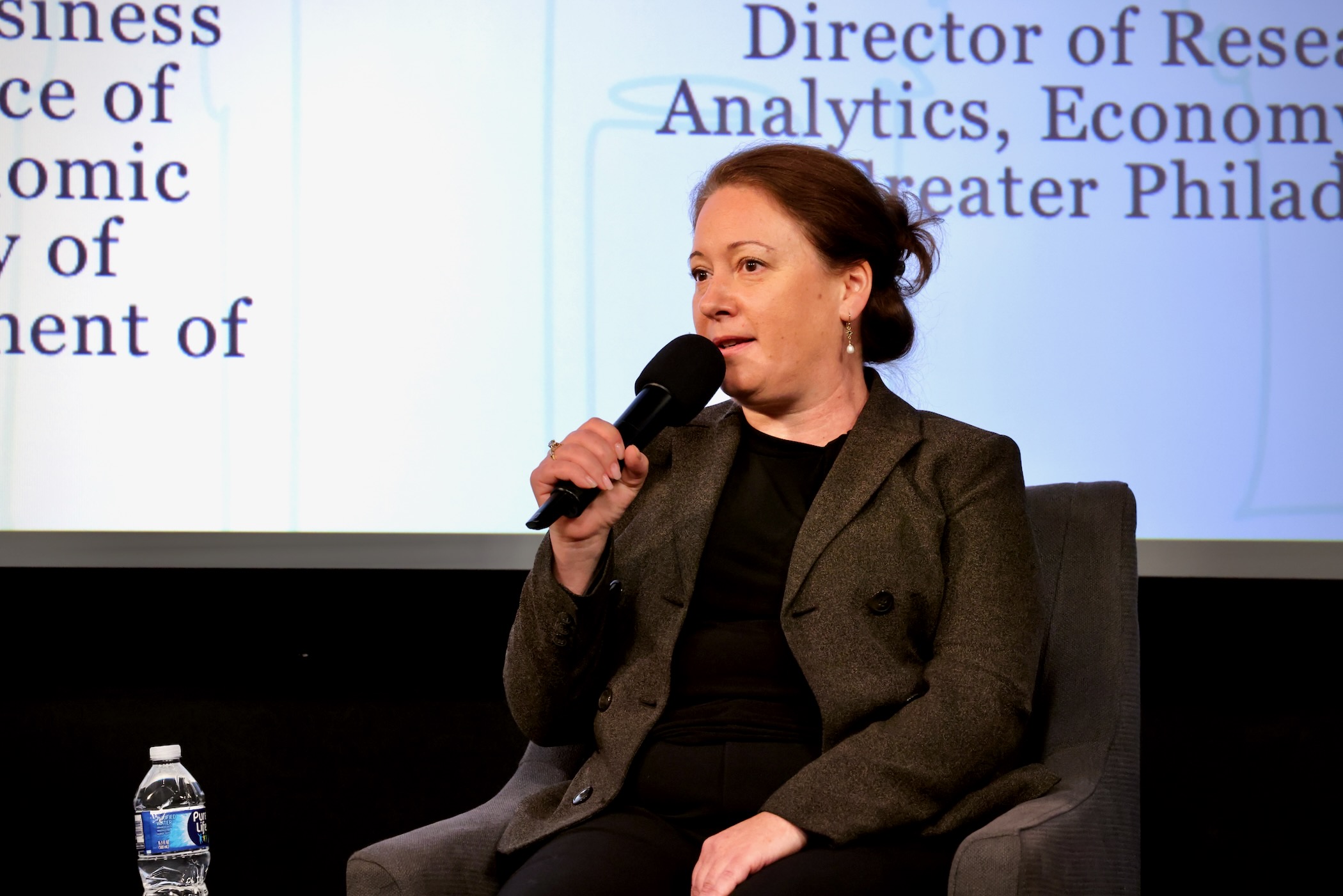
Panelist Saloni Tandon (right) is director of research and analytics at the Economy League of Greater Philadelphia. (Emma Lee/WHYY) -
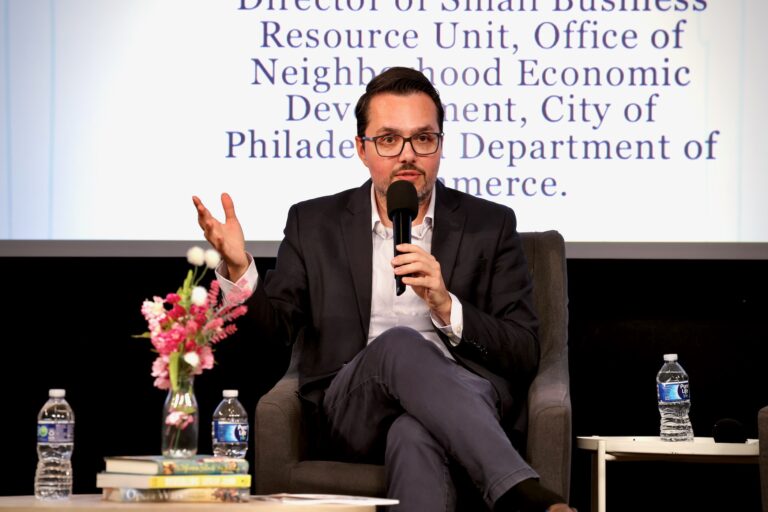
Panelist Zeke Hernandez is the Max and Bernice Garchik Family Presidential Professor at University of Pennsylvania’s Wharton School of Business and author of ''The Truth About Immigration: Why Successful Societies Welcome Newcomers.'' (Emma Lee/WHYY) -
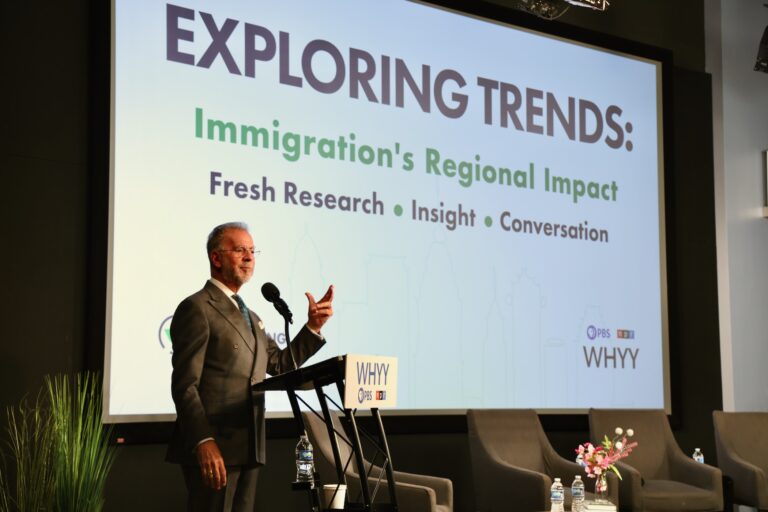
WHYY President and CEO Bill Marrazzo introduces ''Exploring Trends: Immigration's Regional Impact,'' a presentation and panel discussion about The Welcoming Center's latest report. (Emma Lee/WHYY) -
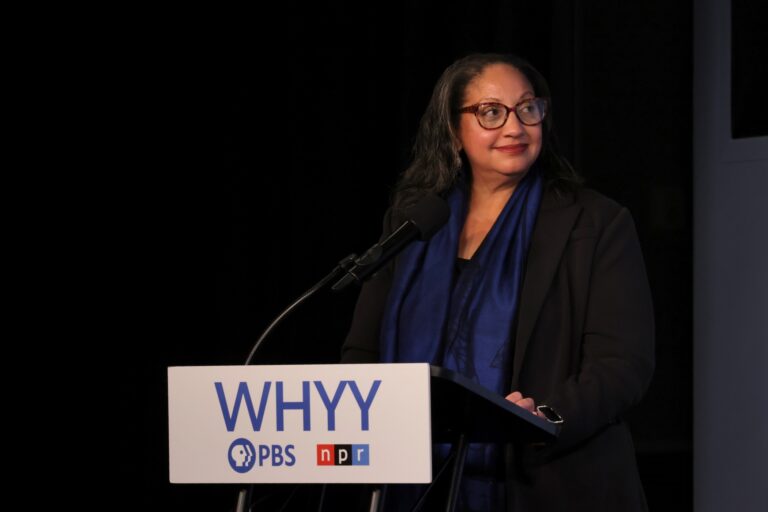
WHYY Vice President of News and Civic Dialogue Sarah Glover closes ''Exploring Trends: Immigration's Regional Impact,'' a presentation and panel discussion about The Welcoming Center's latest report hosted by WHYY. (Emma Lee/WHYY) -
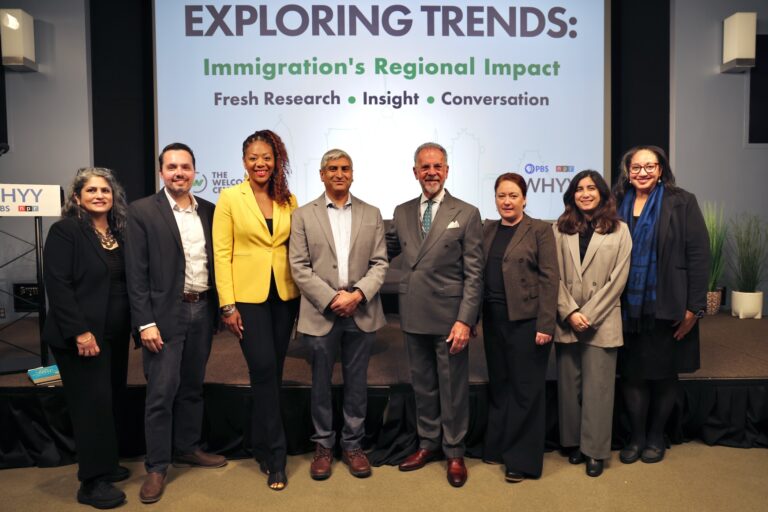
WHYY hosts representatives of The Welcoming Center, who released a new report that explores immigration’s impact on the economy and investment throughout the Philadelphia region. Pictured (from left) are Chief Program Officer Elizabeth Jones, panelist Zeke Hernandez, moderator Cherri Gregg, Welcoming Center President and CEO Anuj Gupta, WHYY President and CEO Bill Marrazzo, panelist Nicole Marcote, panelist Saloni Tandon, and WHYY Vice President for News and Civic Dialogue Sarah Glover. (Emma Lee/WHYY)
1. Immigrants make up a growing portion of the workforce in Philadelphia and its suburbs
Immigrants make up a greater percentage of the labor force than their share of the population in Philadelphia and its four collar counties.
“Immigrants across the region are more likely to be in the workforce, and they are substantially younger,” Gupta said.
Statewide, the immigrant workforce has grown by 150% since 1990, while the workforce among native-born workers has remained stable, the report found.
“I think the the problem is that immigrants are like the seeds that then produce a little shoot, and then the plant grows, and then we pick the sweet fruit and we love to eat it, but we don’t think of the seed that produced that,” said Zeke Hernandez, a professor at University of Pennsylvania’s Wharton School of Business, in a panel discussion Tuesday moderated by WHYY’s Cherri Gregg.
The contributions of immigrants are all the more important in the Pennsylvania workforce, said Saloni Tandon, director of research and analytics at the Economy League of Greater Philadelphia. The commonwealth is an “aging state,” she said, with 1 in 5 residents over the age of 65.
“This basically means that these people are going to withdraw from the labor force,” Tandon said. “They’re going to stop producing the kind of goods and services they were producing, and they also will need different types of services and infrastructure to be able to maintain their standard of life. Now, if you don’t have an addition to the labor force to really balance this out, you’re essentially looking at higher prices, longer wait times in say, service centers, like hospitals. You’re just looking at more pressure in the economy.”
That’s where immigrants have stepped in, Tandon said. Between 2000 and 2024, foreign-born workers fueled 60% of the net population growth in Philadelphia and the four surrounding Pennsylvania counties, she said.
“People just look at immigration as this added pressure on an economy, taking away jobs, just adding more stress,” Tandon said. “That’s not the case. They’re trying to fill a lot of gaps also while creating a lot of value as well.”
She added that immigrants in many industries, including the care economy, also bolster native-born workers’ productivity and ability to do their jobs.
“Just think of it in this hypothetical scenario,” she said. “You’re looking at a father who needs long-term care at home, right? Because this family is able to get this care at home, the daughter of this father is able to go work the hours she needs to work or wants to work. Her employer is able to benefit from the fact that he is able to retain her, and so is able to benefit from her skills and expertise. The family is able to earn money. This money is then spent in the neighborhood on buying goods and services, which then supports a lot of other businesses.”
Related Content
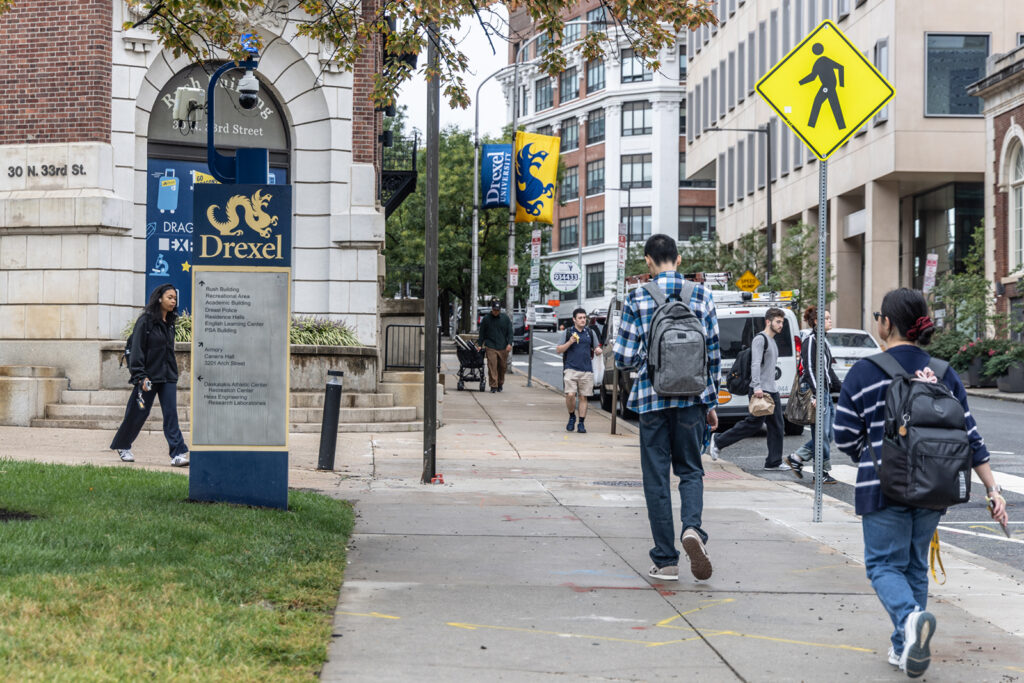
In 2025, international student enrollment declined for the first time in years, leading to an estimated $50 million loss for Pennsylvania.
1 month ago
Listen 1:502. STEM fields, patent creation are fueled by immigrant workers
Immigrants are disproportionately represented in science, technology, engineering and mathematics in Philadelphia’s suburban counties, and throughout Pennsylvania, per the report.
Immigrants work in STEM-related fields at more than double the rate of native-born workers in Pennsylvania, the report stated, making up approximately 16% of STEM workers statewide in 2024.
In Philadelphia and its surrounding Pennsylvania counties, immigrants make up more than 20% of the STEM labor force, the report found, while in Chester County, 1 in 3 STEM workers is an immigrant.
As the immigrant share of the regional workforce has risen, so has the number of patents registered in four of the region’s five counties.
Hernandez said collaboration between foreign-born and native-born workers produces this kind of innovation.
“When we talk about the economic benefits that immigrants bring, we’re not talking about them as like, you annexed a country and they’re doing their own thing,” he said. “The interactions are essential.”
“Immigrants themselves also benefit from the ideas of their local native counterparts,” he added. “So these are inbound and outbound spillovers that then produce more innovation for everybody. In other words, the pie is bigger.”
Related Content
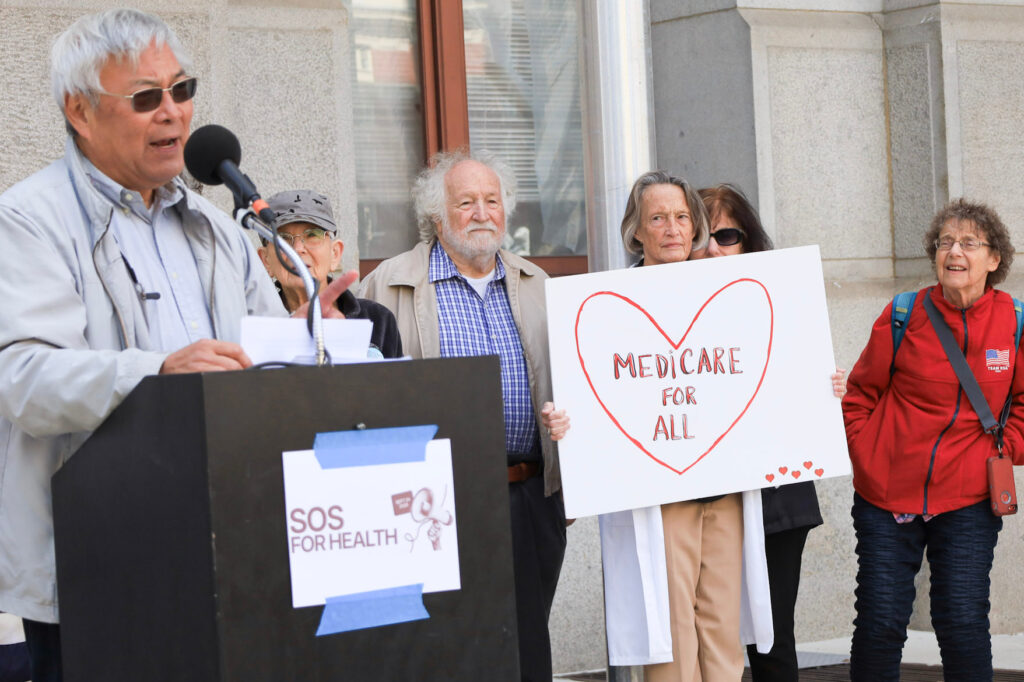
New federal Medicaid eligibility cuts for immigrants, including refugees and asylees, were passed by Congress and President Trump.
2 months ago
Listen 1:243. Immigrants have major spending power
Per the report, immigrant-headed households in Philadelphia and its suburbs retain more than $20 billion in spending power after taxes each year. In the suburbs, foreign-born households have higher median incomes than their native-born counterparts.
Across the five counties, immigrant households contributed nearly $9 billion in state and federal taxes in 2024, per the report.
Immigrants are also investing capital in the region, the report found, by purchasing homes and paying property taxes.
Since 2015, immigrant households across the five counties have doubled their home equity value to nearly $60 billion in 2024, according to the report, while, foreign-born homeowners are paying 90% more property taxes, with a total now of more than $700 million.
Related Content
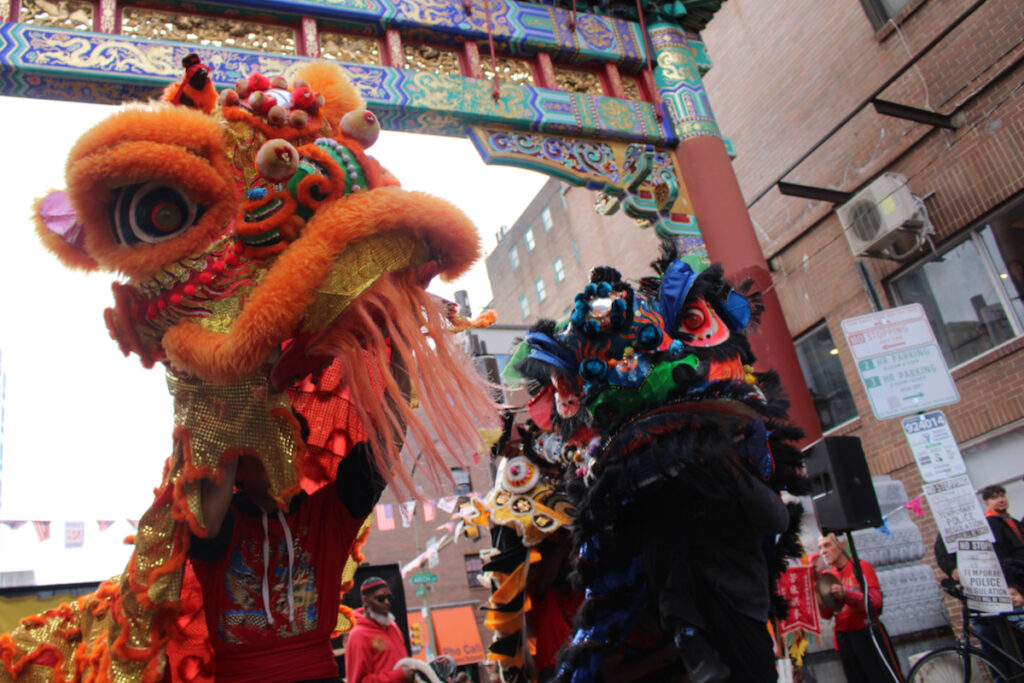
Philadelphia’s Chinatown celebrates resilience, immigrant rights at Mid-Autumn Festival
Asian Americans United founded the festival in 1995 to mark the holiday, celebrated widely across Asia, that honors family reunions and the end of harvest season.
1 month ago
Listen 0:584. Immigrants are fueling entrepreneurship, employment
In every one of the counties except for Chester, immigrants are self-employed at higher rates than native-born residents.
In the Philadelphia-Camden-Wilmington region, nearly 20% of all businesses are owned by immigrants, according to the report.
Nicole Marcote, director of small business resource units at Philadelphia’s Department of Commerce, said she often sees how one immigrant entrepreneur opening a business can have a ripple effect on the block, neighborhood and city as a whole.
“What happens when one business opens is that you very soon will get another neighbor business,” she said.
Immigrants opening small businesses has “a multiplying effect,” she said, a reality she’s seen as Mexican restaurants spread on Ninth Street in Philadelphia’s Italian Market neighborhood.
“They also need accountants, and they need somebody to serve the tables, and they need somebody to go do the shopping, and it just becomes a source of employment and a source of sharing information, which I think is what takes immigrants to the next level,” Marcote said.
Related Content
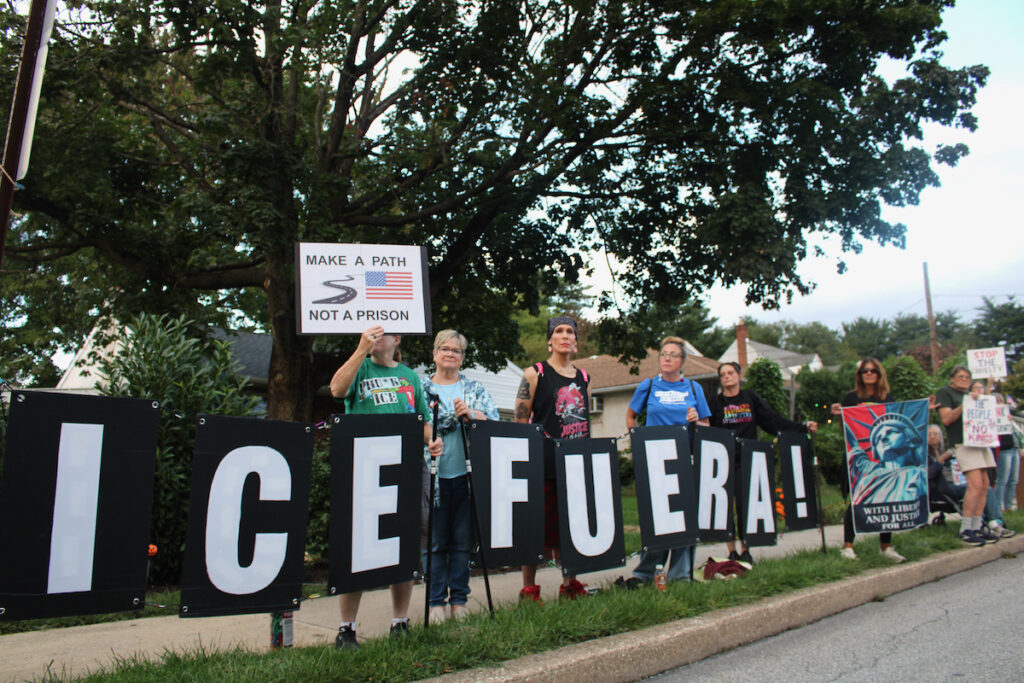
Norristown rally decries impact of ICE operations on community
Community members called on Gov. Josh Shapiro and local municipalities to pass legislation restricting cooperation with U.S. Immigration and Customs Enforcement.
1 month ago
Listen 1:035. Foreign investment is increasing in Pennsylvania
“There is not a single corridor in this region that has not been revitalized because of immigrant entrepreneurs, and as we become a more cosmopolitan region, the world is paying attention to that,” Gupta said.
That has spurred foreign investment in the region, per the report, with foreign-owned employment growing by nearly 20% since 2015.
“They are drawn by a diverse set of skills, talents and backgrounds, and increasingly, Pennsylvania is a home for that investment,” Gupta said. “This investment is to everyone’s benefit. Trends in immigrant entrepreneurship, foreign investment and homeownership signal that people are choosing to put their futures here. We can welcome more of each by staying open enough, connected enough and trusted enough to be worth the leap.”
Per the report, nearly 350,000 Pennsylvanians work for employers that are majority foreign-owned.

Get daily updates from WHYY News!
WHYY is your source for fact-based, in-depth journalism and information. As a nonprofit organization, we rely on financial support from readers like you. Please give today.
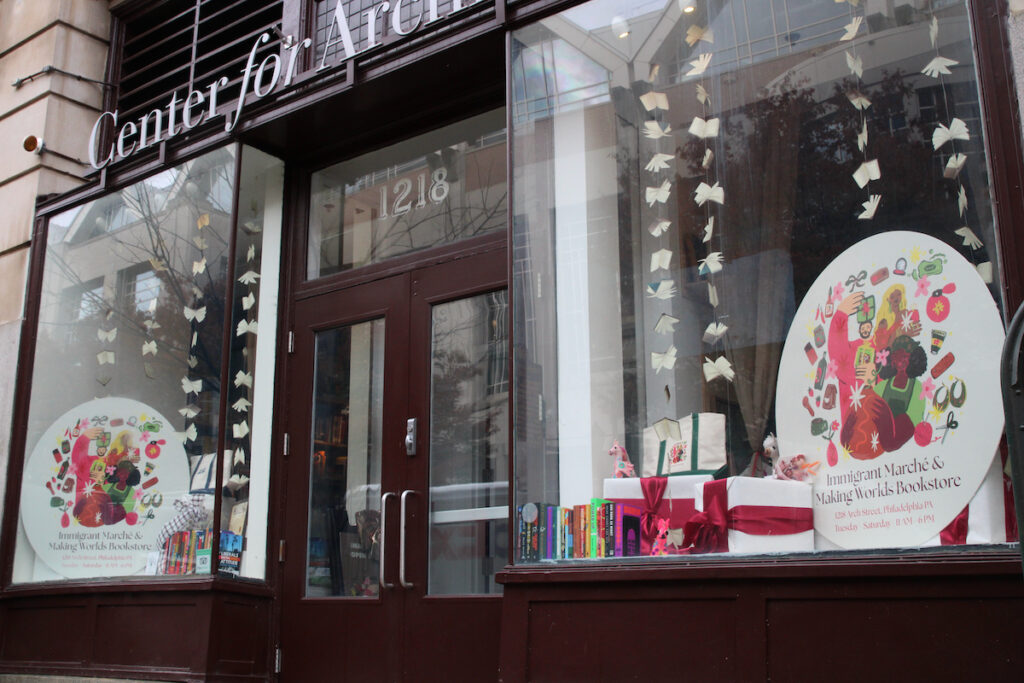
Center City pop-up storefront showcases immigrant entrepreneurs
The Philadelphia shop features handmade goods from local immigrant-owned small businesses and a curated selection of books from Making Worlds Bookstore.
1 week ago
Listen 0:56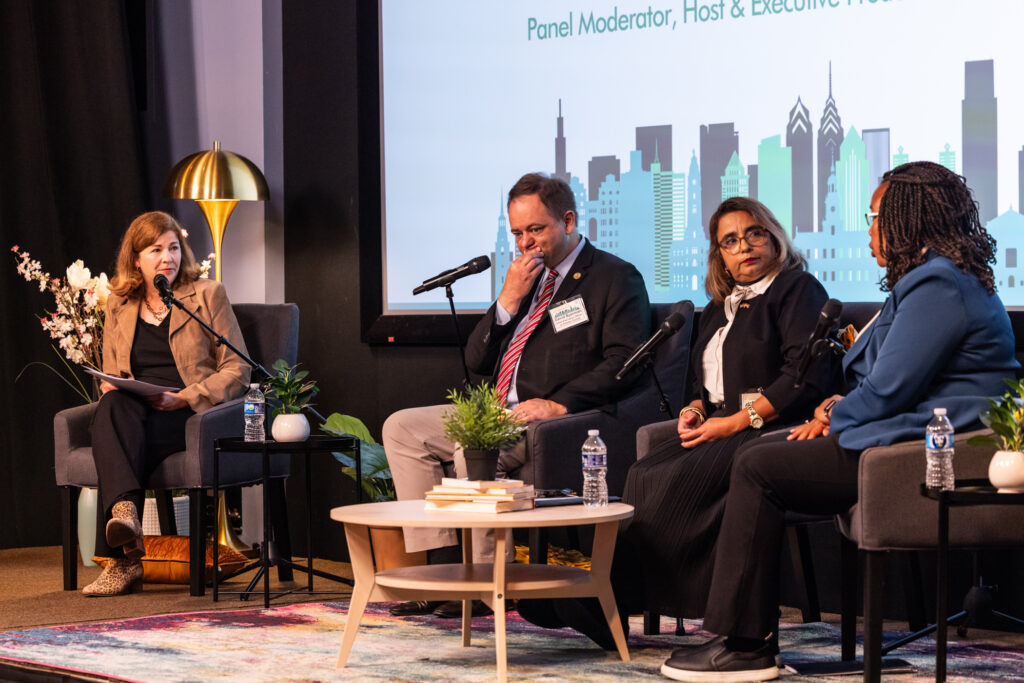
Greater Philadelphia immigrants fuel population, economic growth, report says
Here are six key takeaways from the report and a panel discussion hosted by The Welcoming Center and WHYY on Thursday.
1 year ago
Listen 1:00
Immigrants drive growth in Philly, new report shows
A new report explores how immigration shapes Philadelphia’s population, economy and community. WHYY and the Welcoming Center are hosting a Sept. 18 forum to discuss the data.
1 year ago