
Influential evolutionary biologist’s papers arrive at Philadelphia’s American Philosophical Society
Famed biologist Lynn Margulis’ papers arrive at the American Philosophical Society in Philadelphia after the historic collection was nearly destroyed in a fire.
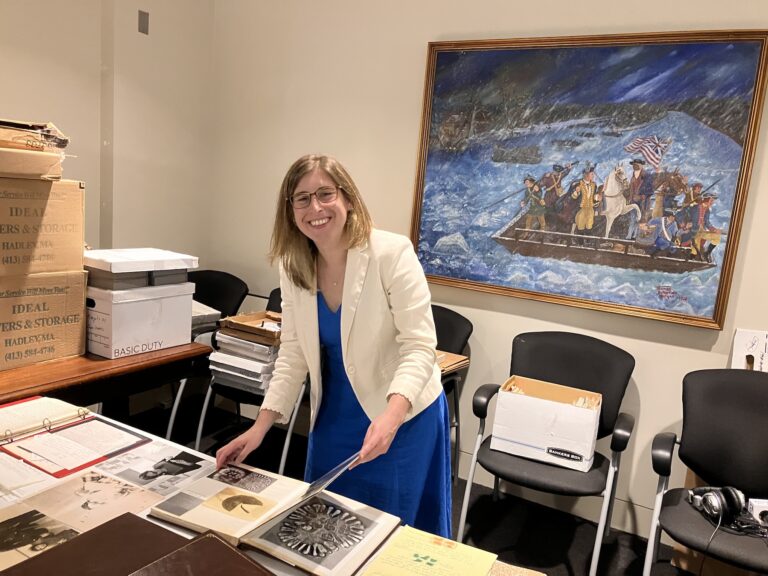
Adrianna Link, curator of History of Science at the American Philosophical Society, looks over papers from the collection of correspondence and works by evolutionary biologist Lynn Margulis. (Maiken Scott/WHYY)
From Philly and the Pa. suburbs to South Jersey and Delaware, what would you like WHYY News to cover? Let us know!
After the death of influential evolutionary biologist Lynn Margulis in 2011, her papers, letters and research journals ended up in a storage facility in New York. Then, her family moved the collection to Southern Oregon, where it was almost destroyed in the devastating Almeda fire in 2020. Now, the collection has safely arrived at The American Philosophical Society in Philadelphia, where employees are carefully sorting through boxes and boxes of materials.
The writings and materials shed light on the life, work and thinking of the pioneering biologist who made the case that cooperation and symbiosis — not just competition and random mutation—have been major forces in evolution. During her lifetime, her theories were not always well received and were even considered “wild evolutionary heresy,” according to her obituary in the Guardian, but she’s now recognized as the greatest contributor to ideas about evolution since Charles Darwin.
Often considered a scientific maverick or rebel, Margulis didn’t shy away from challenging prevailing ideas. She argued that symbiosis is a creative evolutionary force: organisms don’t simply compete and accumulate small mutations; sometimes they merge with other organisms to acquire entirely new capabilities. In her groundbreaking 1967 paper, “On the Origin of Mitosing Cells,” she argued that eukaryotic cells — the complex cells that contain a nucleus — evolved in part through symbiosis, when simpler cells took up bacteria that eventually became permanent residents inside them.
“So this was the publication that really put Lynn’s theories of symbiogenesis on the map,” said Adrianna Link, curator of history of science at the American Philosophical Society. Looking over a pile of Margulis’ papers spread out on a table, Link pointed to a copy of the famous paper.
“And here you can see the sticker that’s covering up her married name; it was actually published under the name Lynn Sagan.” The late astrophysicist Carl Sagan was Margulis’ first husband, but by the time the paper was published, they were divorced. “She replaced the name here with the sticker that says Lynn Margulis, which was the name that she used for most of her scientific life,” Link said.
Margulis’ daughter, Jennifer, said she’s relieved the collection is safe and will become accessible to researchers, especially after the shock of almost losing it all during the 2020 fire.
“The entire storage facility burned to the ground, except for a couple of units. So that was an incredible gift from the universe, if I can say it that way, that we didn’t lose her papers.”
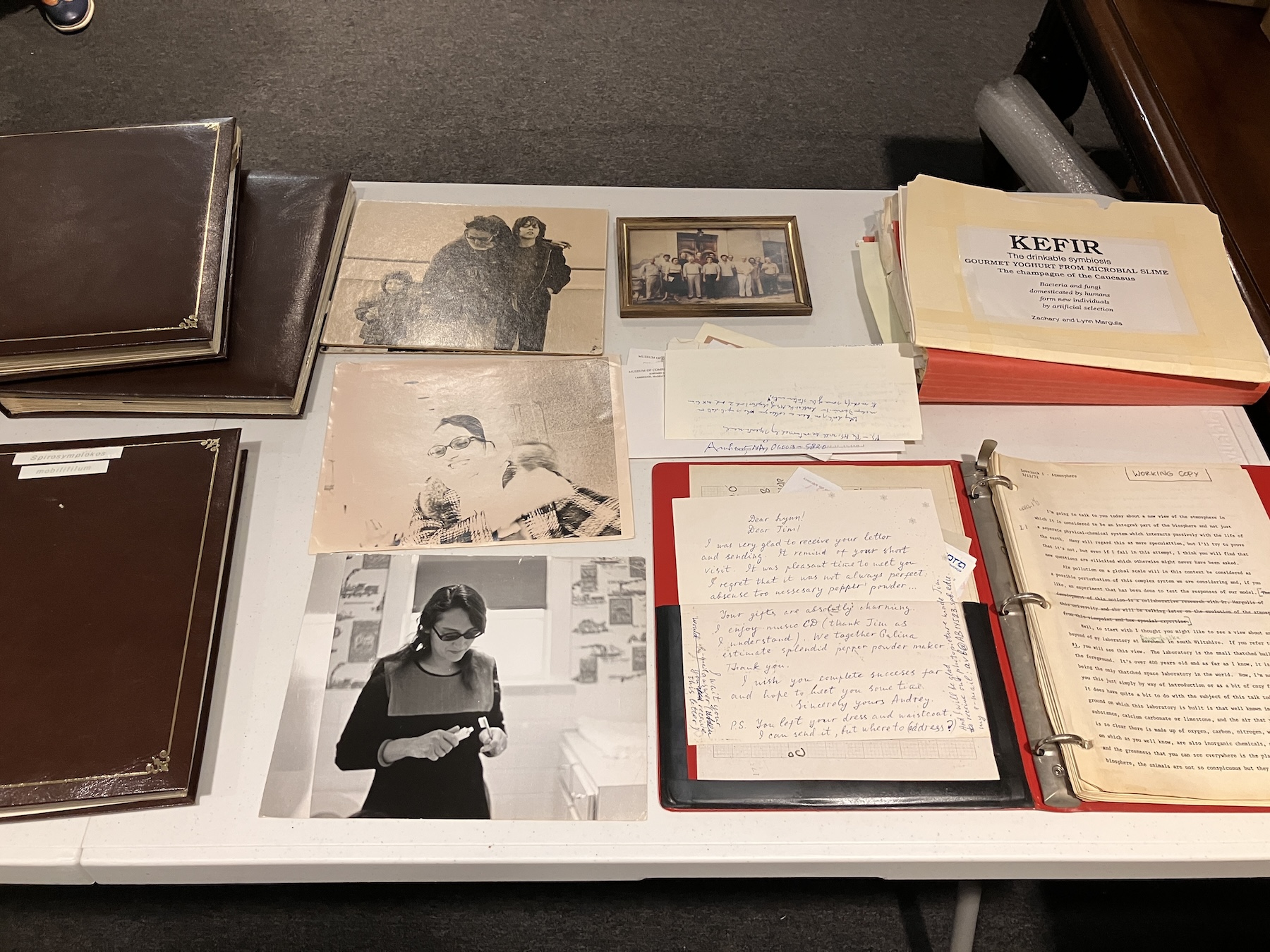
Sorting through the collection and making everything available to researchers will take some time, Link said.
Related Content
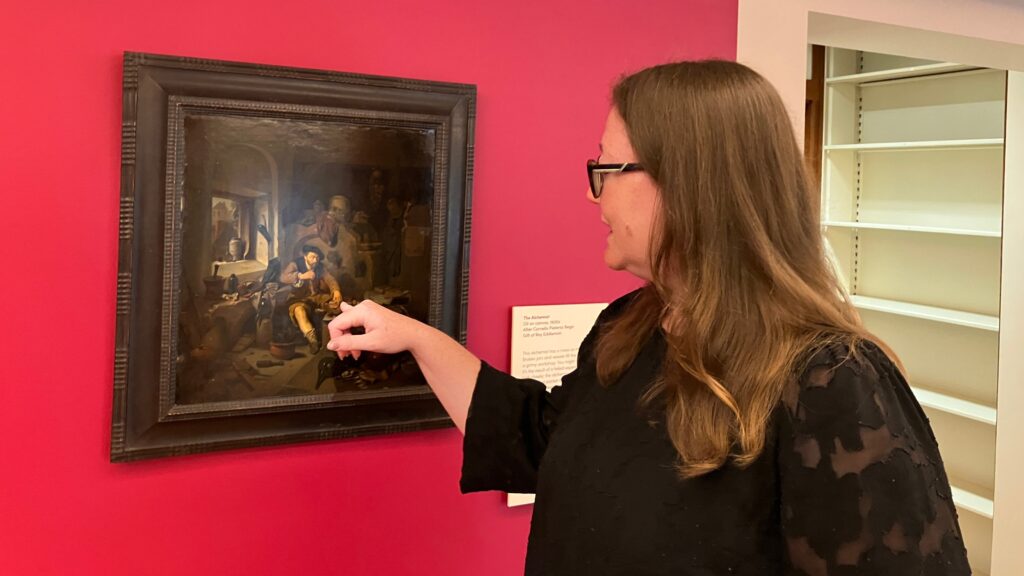
A new permanent exhibit at Philadelphia’s Science History Institute looks at the contributions of alchemists from the 15th to 19th centuries.
1 month ago
Listen 1:44The boxes contain hundreds of notebooks, letters, photos, and papers that need to be digitized and catalogued. The collection also includes many audiovisual materials.
“There’s film reels, DVDs, tapes, CDs. We were really surprised actually to see just how much AV material she had produced throughout her career,” Link said.
Margulis was partial to small notebooks she carried while doing research at the seashore, exploring small puddles of ocean water on the beach.
“She would take samples from those little pockets and look at them under the microscope,” Link said. “She would study the merger of different bacteria to essentially demonstrate what she had been putting forward about the origins of life.” Many of the notebooks contain simple drawings of cells or bubble formations.
Margulis is also known for co-developing the Gaia hypothesis with British scientist James Lovelock: the idea that Earth is a self-regulating system that supports life through the interaction and co-evolution of living and nonliving organisms.
Jennifer Margulis said her mother was interested in many scientific fields and always examined how things were connected.
“She was a systems thinker who looked at everything. She knew about geology, paleontology, atmospheric science, chemistry, biochemistry, and then of course, biology, that was the most important,” Margulis said.
The Gaia hypothesis resonated with the blossoming environmental and New Age movements of the 1970s, and quickly took on a life of its own. People interpreted the hypothesis as pertaining to a sacred Earth, a planetary consciousness or a mother figure deserving reverence. Gaia groups, retreats, gardening movements and even church services emerged around the idea.
Jennifer Margulis said this did not sit entirely well with her mother.
“She would make fun a little bit, she would call them ‘the crystal slinging tree huggers’ who had adopted her work, because she was the farthest thing from a crystal slinging tree hugger. She was very grounded, she was very scientific. She was using formulae to prove what her ideas were,” Margulis said.
With her mother’s papers at the American Philosophical Society, Jennifer Margulis said she is excited to see a new generation of scholars and scientists discover and explore her mother’s work.
“There is a gold mine of information in those papers, because my mother accomplished more in a day than most people accomplish in a month, and I’m not exaggerating. And there was not a single day went by where she wasn’t corresponding with somebody on paper or writing notes or making a drawing of an obscure bacterium,” she said.

Get daily updates from WHYY News!
WHYY is your source for fact-based, in-depth journalism and information. As a nonprofit organization, we rely on financial support from readers like you. Please give today.
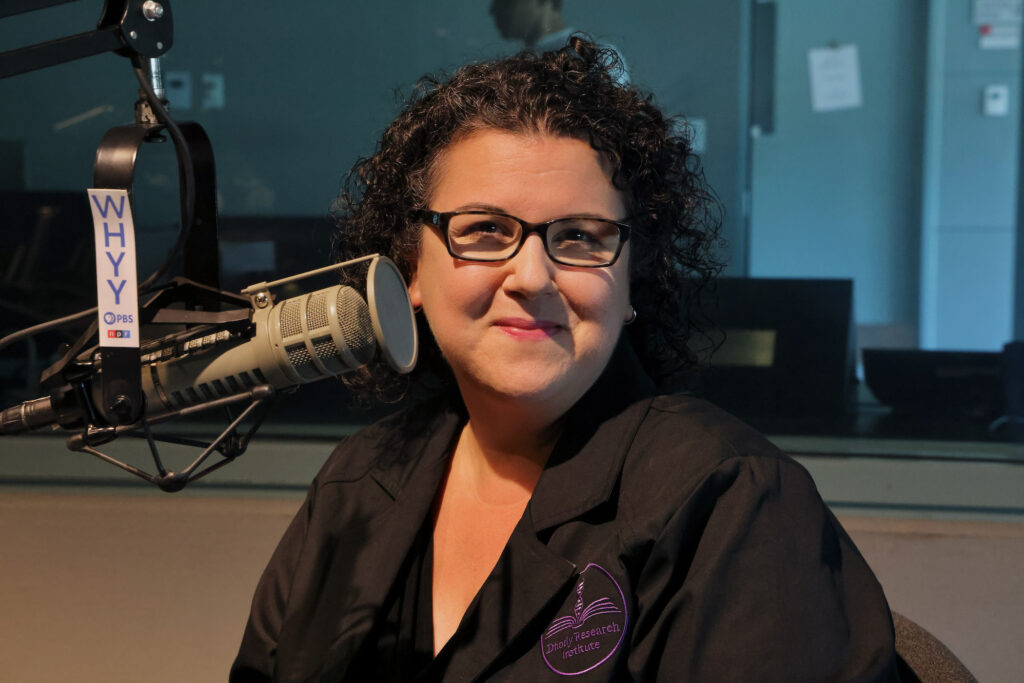
Former Mütter Museum forensic anthropologist launches research institute
Longtime Mütter Museum forensic anthropologist Anna Dhody will continue her work analyzing historic samples, but now in a research institute of her own.
2 years ago
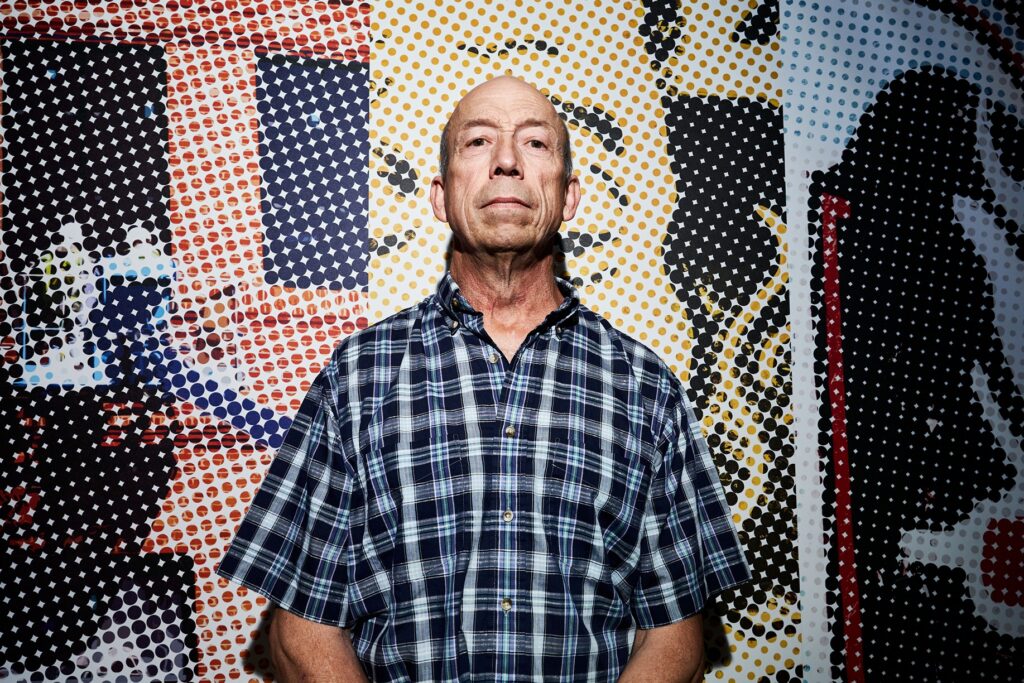
2 people who donated parts of their bodies to Philly’s Mütter Museum now want them back
This comes as the relatively new leadership grapples with how to approach their collection, which includes a lot of human remains.
2 years ago
Listen 5:20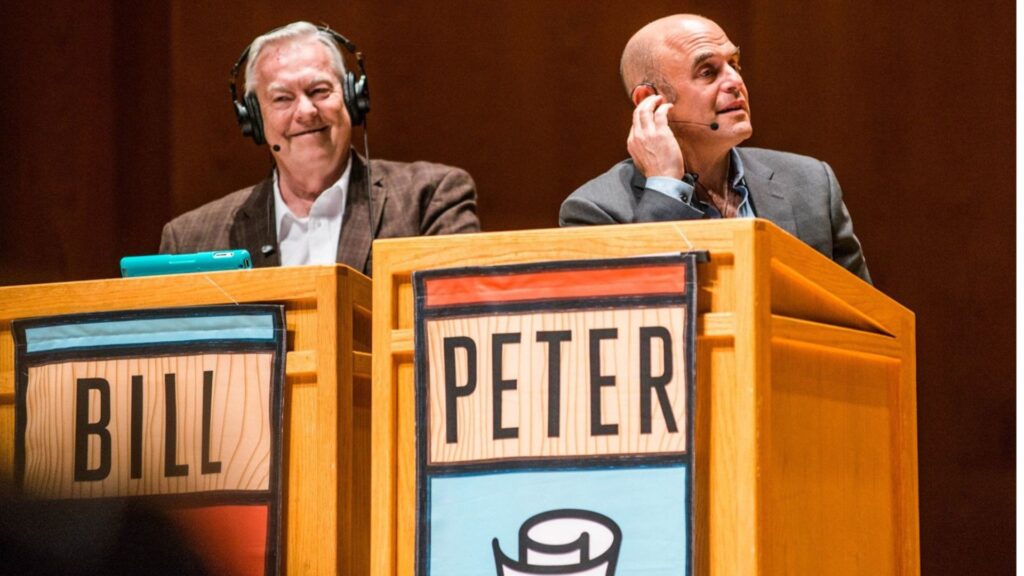
Wait Wait Don’t Tell Me host Peter Sagal, how a hurricane made monkeys nicer, Philly Joy Bank
We talk to NPR host Peter Sagal before a live taping of Wait Wait in Philly. And, a new study found monkeys in Puerto Rico became kinder after Hurricane Maria.
Air Date: June 25, 2024 12:00 pm
Listen 44:14