
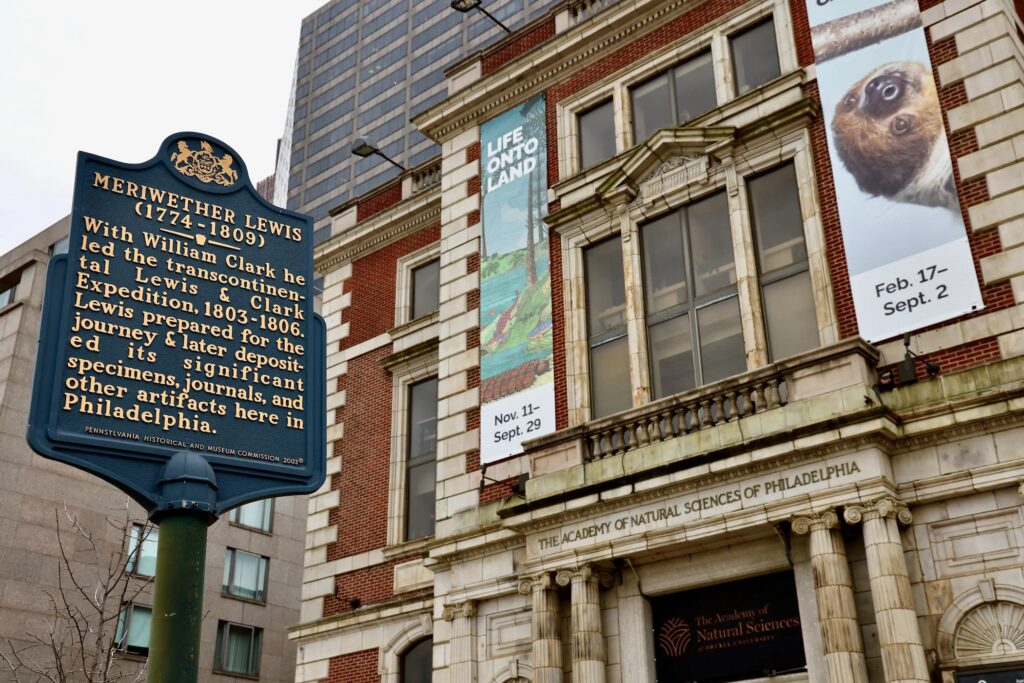
Supporters and fans rally to protest closing of Philadelphia’s Academy of Natural Science Museum
The nearly 200-year-old museum is the oldest natural history museum in the Americas.

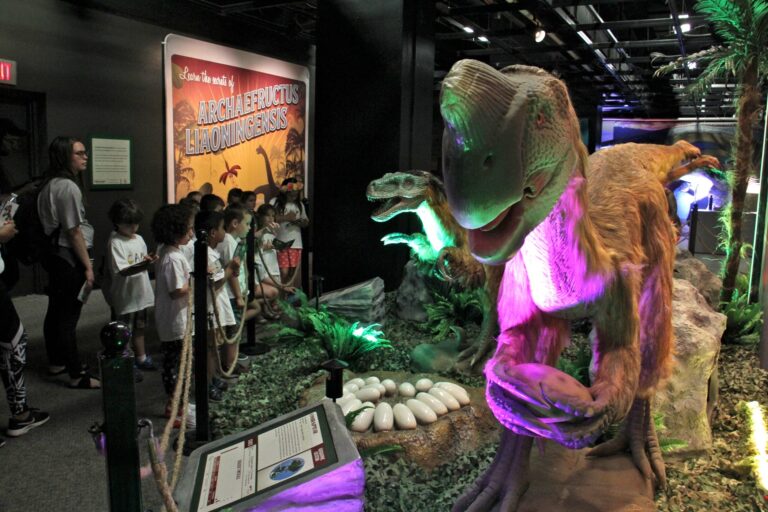
File: A group of children marvel at the oviraptor at the Academy of Natural Sciences in June, 2019. (Emma Lee/WHYY)
From Philly and the Pa. suburbs to South Jersey and Delaware, what would you like WHYY News to cover? Let us know!
Fans and supporters of the Academy of Natural Sciences of Drexel University in Philadelphia are not ready to see the storied institution shut down without a fight.
On Sept. 1, Academy leadership announced that the museum, which has been around for almost two centuries, will close at the end of the month. The news was met with a wave of disbelief, sadness, anger and pushback.
The Academy is “the oldest continuously operating natural history museum in the Americas, like historic, long-standing, amazing precious treasure trove of collections within the walls,” said entomologist Isa Betancourt, who had worked at the Academy for nearly a decade up until 2022. She said that the public museum is an “invaluable portal” that connects the public to the Academy’s collections and research.
“Where are the efforts? Where is the capital campaign to find solutions to open up and ask for money and support?” Betancourt said.
The Academy of Natural Sciences is the first natural science research center in the Americas, and was founded in 1812. The public museum opened in 1828.
Fans of the museum plan to rally on Sept. 8 at 10 a.m. in front of the Academy to protest the closing.
Organizers expect more than 100 people to show up for speeches to support the museum. They have also contacted all the members of Philadelphia City Council and Mayor Cherelle Parker. Councilmember Nina Ahmad, who put out a statement calling the museum’s closure “unacceptable,” will be speaking at the rally.
The goal of the rally is to say that Philadelphia residents want to make their voices heard in this matter, said Sarah McAnulty, one of the organizers and the executive director of Skype A Scientist, a nonprofit science education organization in Philadelphia.
“I think they thought perhaps that if you just announce it last minute and say it’s happening, that we’ll just accept it. And we will not,” she said. “You have to at least give us the opportunity to rescue the situation.”
She said ever since the Academy announced the closing, she has been in touch with other science advocates in the city, and partnered with Philadelphia Science Action, which organized the 2017 March for Science in Philadelphia and 2025 Philly Stand Up for Science rally; and Green Philly, a local media organization focused on sustainable living.
McAnulty said she feels heartened at the passionate response.
“As a scientist and a person who has dedicated my life to trying to advocate for science and wildlife and nature … sometimes it can feel like you and your friends and your colleagues are the only ones that care,” she said.
She added that one person in her social circle rescheduled a flight so they could attend the rally.
Related Content
Here’s what we know about the Academy of Natural Sciences museum’s closure
Public outcry over the Academy of Natural Science’s closure has led many to call for leadership changes. Here’s what we know.
1 month ago
Katie Lockwood, a pediatrician at the Children’s Hospital of Philadelphia and a mother of two children, ages 12 and 15, said she and her children are sad and disappointed at the news that the museum will close.
“We treated the museum almost like an extension of our backyard, so it was a go-to place anytime school wasn’t in session or weekends,” Lockwood said. “We love to go there all the time. We went to many birthday parties there, and my kids, even though they’re teenagers now, they still love going. We went twice last year.”
She said her children usually go straight to the Outside In exhibit where they can learn about and handle animals like tortoises, snakes and spiders, then walk through the rest of the museum from there.
“We actually have a photo that we recreate almost every time we’re there of holding my daughter up into the mouth of a T-Rex so it looks like the T-Rex is eating her, and then we’ve recreated that as recently as last year when she was 11,” Lockwood said.
She said that while she sees the museum as a valuable resource for people to learn about science and enjoys that the museum is not very crowded, she has noticed fewer visitors there lately.
“In the recent years that I’ve been there, it’s been especially quiet,” Lockwood said. “I think sometimes maybe it doesn’t get as much publicity as other museums, so some people may not know about it, but I think most people I know who have small children have been there at least once and view it fondly.”
Last fall, the museum cut back its hours to only be open on the weekends, citing federal funding cuts and a drop in the number of visitors since the COVID-19 pandemic. In 2011, the Academy and museum merged with Drexel University, in part because of finances.
When Betancourt still worked for the Academy, she said she felt the squeeze for resources. She said there would be no new hires to replace curators who left, and a beloved butterfly exhibit closed during the pandemic and never reopened.
However, she also said that new leadership and support could bring the museum back, citing recent fundraising successes at the Yale Peabody Museum, the American Museum of Natural History and the Natural History Museums of Los Angeles County La Brea Tar Pits.
“I do not accept this closure plan as being the end of the Academy of Natural Science’s Museum’s story. Strong leadership and benefactors can reignite the Academy’s precious wildlife museum and boost it into a thriving, must-see institution in the Philadelphia area,” she said.
Betancourt said the Academy building is very old and has significant and expensive maintenance issues that cannot be overlooked, but she did not see enough of an explanation from museum leaders about how they tried to save the museum before deciding to close it.
In a statement, Drexel and the Academy said they recognize this is an emotional time for people who care about the academy, and that they did not make the decision to close the museum lightly. They say they are “committed to developing a sustainable long-term model that preserves the Academy’s scientific research enterprise and creates new, meaningful opportunities for continued public engagement and display of these natural history collections and the scientific discoveries they make possible.”

Get daily updates from WHYY News!
WHYY is your source for fact-based, in-depth journalism and information. As a nonprofit organization, we rely on financial support from readers like you. Please give today.
WHYY News joins Every Voice, Every Vote to expand access to civic news and information
The grant funding will support accountability reporting, neighborhood journalism and engagement around key city issues.
1 hour ago
Preserving seeds as cultural heritage
WHYY’s Maiken Scott will moderate a discussion on ethnobotanical practices at the Academy of Natural Sciences on Thursday night.
2 years ago
‘Creepy crawlies’ fiesta: Philly’s Bug Fest returns
The annual celebration includes all things insect-related. This year, certain events will include American Sign Language translations.
2 years ago