
Young Pa. voters weigh in on the issues that brought them to the polls
Pennsylvania college students shared why they voted, which issues matter most to them and the challenges they faced navigating the midterm election.

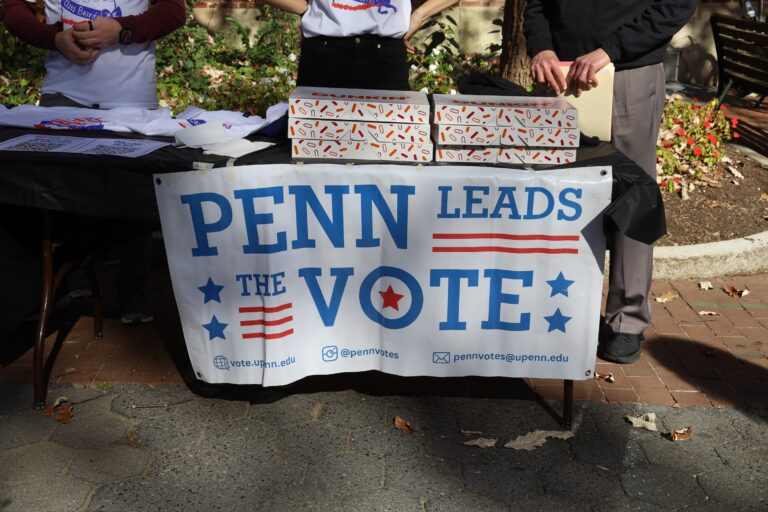
A voter outreach table organized by Penn Leads the Vote encourages students to participate in the 2026 midterm election. (Rana Rastegari/WHYY)
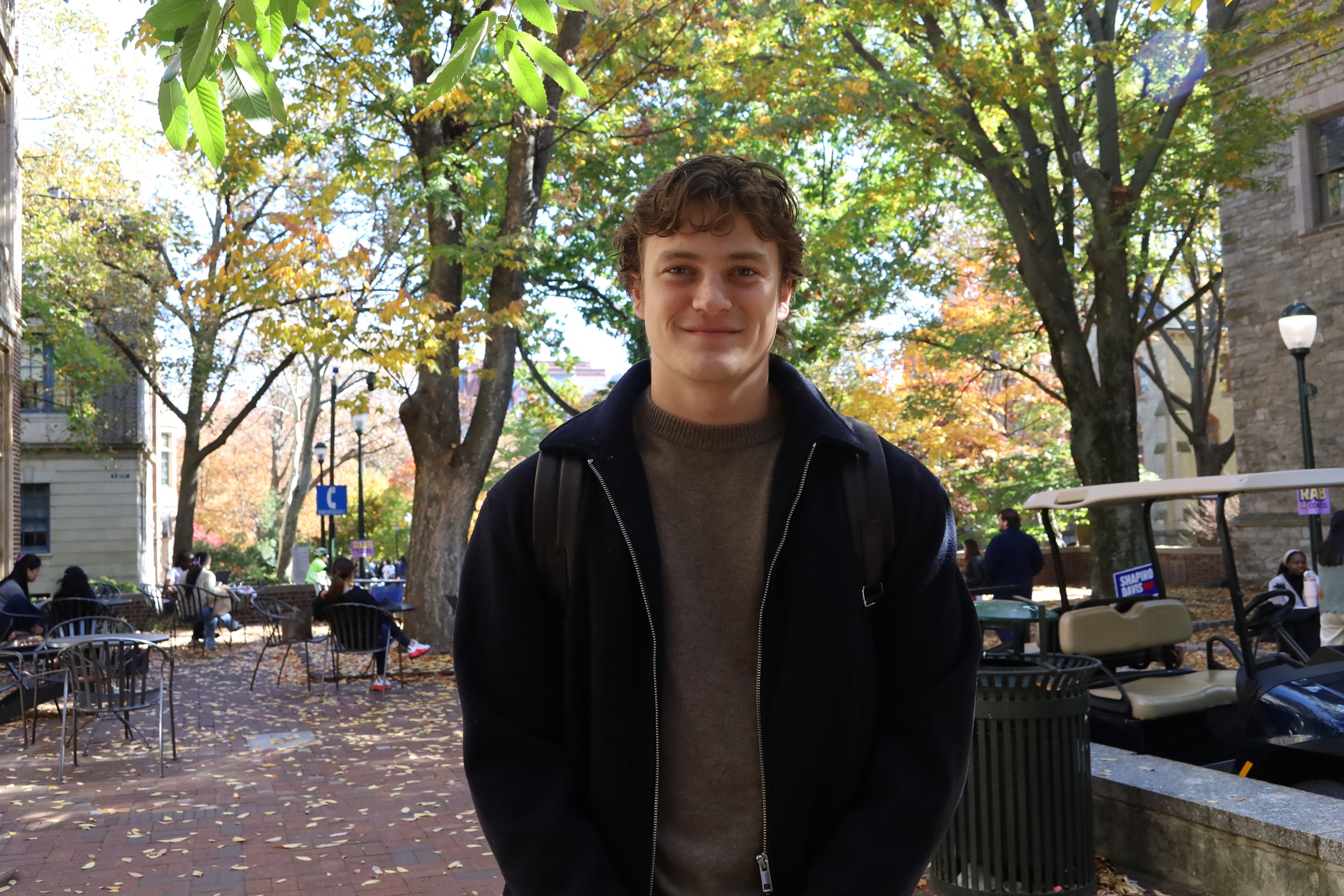
Young voters headed to the polls Tuesday with a variety of priorities and political frustrations. Across Pennsylvania’s college campuses, students weighed in on foreign policy, abortion and the future of Congress while some struggled to make their voices heard.
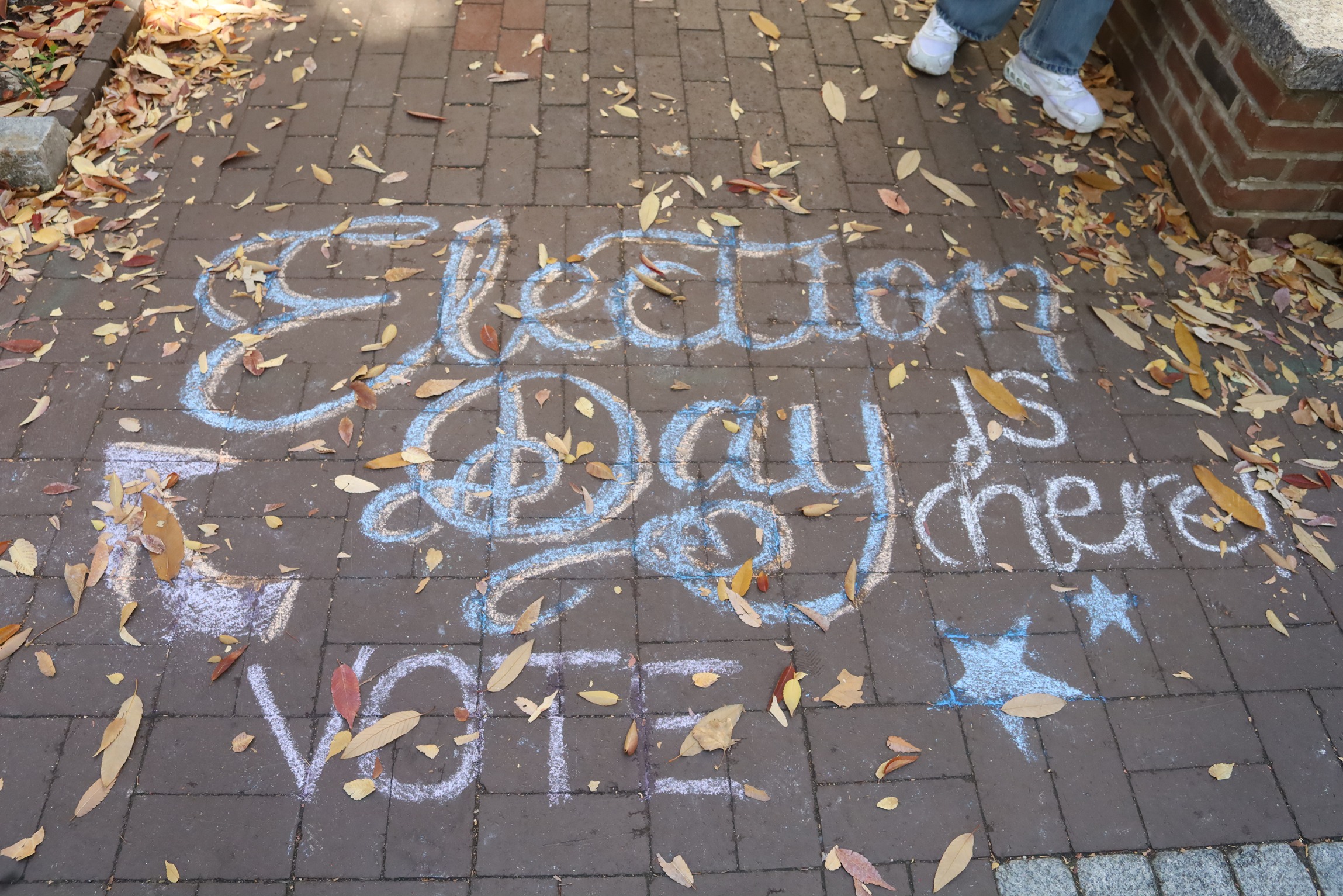
At the University of Pennsylvania, student groups including Penn Leads the Vote and Penn Dems set up tables outside the two polling places on campus. Signs endorsing Josh Shapiro and Chris Rabb lined the campus, and on the ground messages in chalk encouraged students to vote.
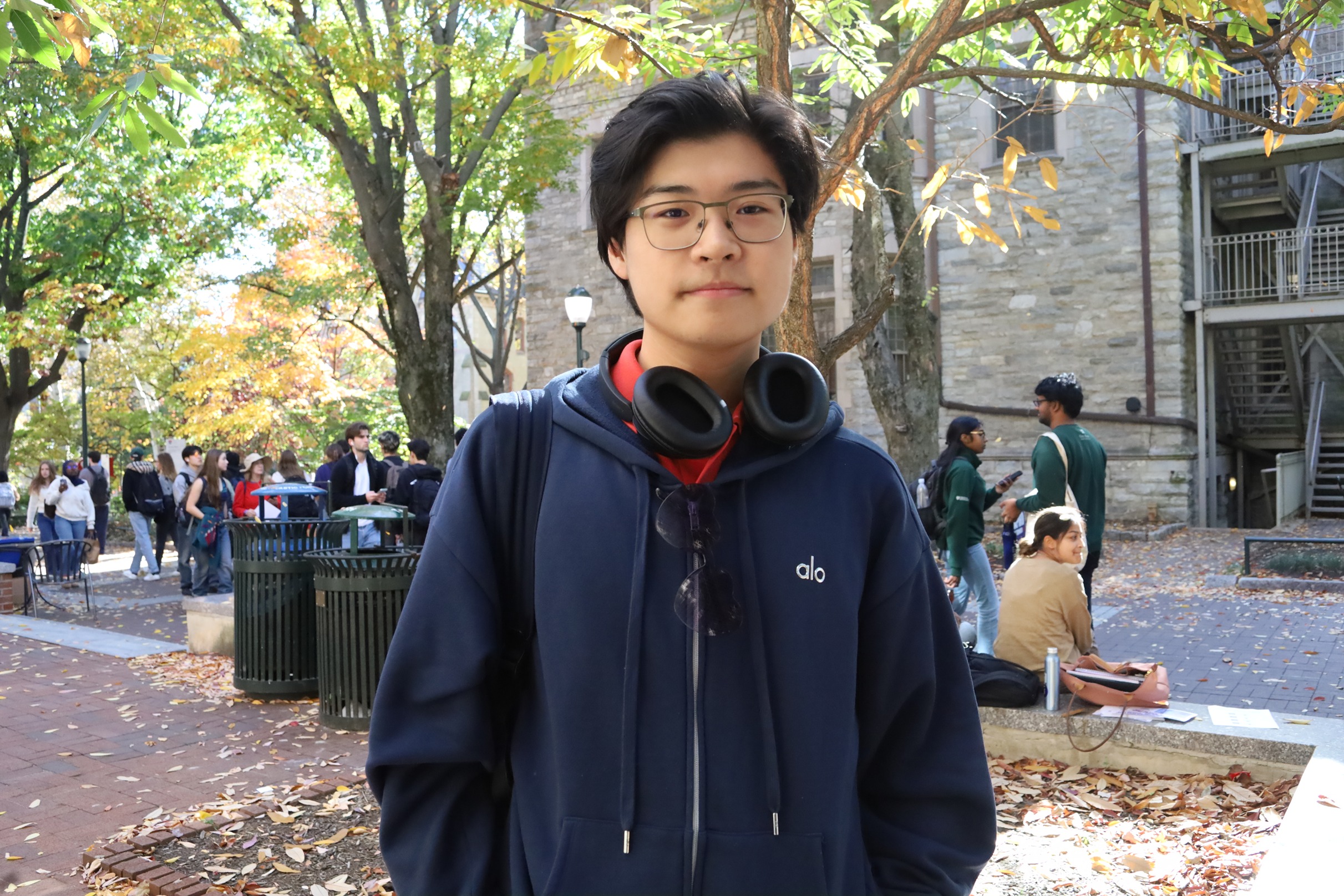
Winny Zhang, a freshman at Penn, voted for her first time this year in between classes. She said voting makes her feel proud of herself and her community at large.
“Since I was a kid, I always wanted to be involved in what our country is doing and how my community is running … I came to vote to make a difference,” she said.
As she left the election booth, Zhang’s main concern was stopping foreign wars. “I don’t like seeing people die for meaningless wars,” she said.
In Central Pennsylvania, young voters at Penn State were also thinking about foreign policy as they cast their ballots. Madeleine MacKenzie, vice president of the on-campus GOP, said that she trusts President Donald Trump’s actions and that she supports “Trump ensuring that Iran does not get a nuclear weapon.”
For MacKenzie, her biggest concern was maintaining a Republican majority in Congress. She said abortion and immigration were two of her main issues for wanting a Republican-controlled Congress.
“Trump has really sealed up the border and I think that what ICE is doing is great,” she said. She hoped that a Republican majority in Congress would have allowed Trump to “keep pushing through [his] policies” such as keeping Roe v. Wade overturned.
“I think that Democrats, if they were to get a majority, would try to reinstate that,” she said.
But her wishes didn’t come to fruition as Democrats swept back into power with control of both chambers of Congress.
Long Jiang, also a first-time voter and freshman at the University of Pennsylvania, said he wants to challenge the idea that young people do not vote as much. “When young people do vote, we are the deciding factor in many elections,” he said.
Across the nation, voter turnout tends to drop for midterm elections compared to presidential elections. Data from Census Bureau estimates shows that young voters, in particular, vote at far lower rates in midterms, with a 51% drop compared to presidential elections.
For Jiang, voting in the midterms matters because of the impact on local communities and policy. “We’re not only voting for the big name roles but also ballot questions that [impact] small businesses and arts funding,” he said.
According to Gallup data, 56% of Generation Z voters identify as political independents, a steady increase from previous generations. Alex Georgiev, a junior at Penn, voted for the Democratic ticket Tuesday, but said he believes in some Republican policies and some Democratic policies. He described his vote as “almost an opposition vote” against Trump.
“I really dislike Trump,” he said. “It’s not like I had high hopes but it’s always been kind of let down after let down, and I just don’t like the way that his team is managing everything.”
In terms of policies from each party, Georgiev said that abortion access is important to him and that he is strongly pro-choice. He also said he believes that capitalism as an economic structure is “fundamental to the U.S.” He said his parents are immigrants who “attribute America and its opportunities to their success.”
Related Content
Follow along for live special coverage of the 2026 general election, with reporting on the ground from Pennsylvania, New Jersey and Delaware.
2 weeks ago
Temple senior Enzo Napolitano also does not feel well-represented by the two-party system. Though he is a registered Democrat and planned to vote for the Democratic ticket this year, he said he is “not proud of it.”
“I think the Democratic Party is still in the pocket of whoever’s influencing the campaign money and whoever’s donating [to] the PACs,” he said
Penn State College Republicans President Tristan Kilgore said one of his top concerns is school choice. Pennsylvania has not yet opted into the Trump administration’s federal Education Freedom Tax Credit program set to launch on Jan. 1, with the governor as the final authority.
“The only reason [Shapiro] is not doing it is because he doesn’t want a win for the Republicans,” Kilgore said.
But not all students were able to cast their ballots Tuesday due to mix-ups and delays with mail-in and absentee ballots.
Rhannon Martin, a freshman at Temple, said she did not receive her mail-in ballot to vote in her home county in Lancaster. She said not being able to vote makes her feel like a “poser” because she really wanted to participate.
Martin said experiences like hers, along with feeling intimidated by the voting process, can discourage young people from voting.
“It’s scary to go voting when you’re young. At least for me, I always want to go with my mom because I’m like, ‘What if I do it wrong?’” she said.
She said more civic education or a “buddy system” could help reduce stigma and anxiety around voting.
Kendall Lorfink, a senior at Temple, also described difficulties navigating mail-in voting. She said delays in receiving her ballot left her unsure whether she would need to travel home to vote in person.
“There was a moment where I was considering, do I have to go home on election day to vote? It’s something that can be really difficult and I don’t think people think about, especially for college students,” she said.
Malani Terry, a nursing student at Temple, said she registered to vote in Pennsylvania because it is “more of a red state” than her home state of New Jersey. She said she hoped Congress would flip to a Democratic majority. Georgiev, too, is originally from Florida but registered to vote in Pennsylvania because he believes his vote can make “more of an impact” in a swing state.
Editor’s Note: This story is part of a series on Youth Civic Engagement funded by the William Penn Foundation. WHYY News produces independent, fact-based news content for audiences in Greater Philadelphia, Delaware and South Jersey.

Get daily updates from WHYY News!
WHYY is your source for fact-based, in-depth journalism and information. As a nonprofit organization, we rely on financial support from readers like you. Please give today.
Part of the series
Youth voting
WHYY News explores stories about youth voting as part of its civic dialogue work and to elevate awareness for our future generations.
Funded by William Penn Foundation.
Part of the series
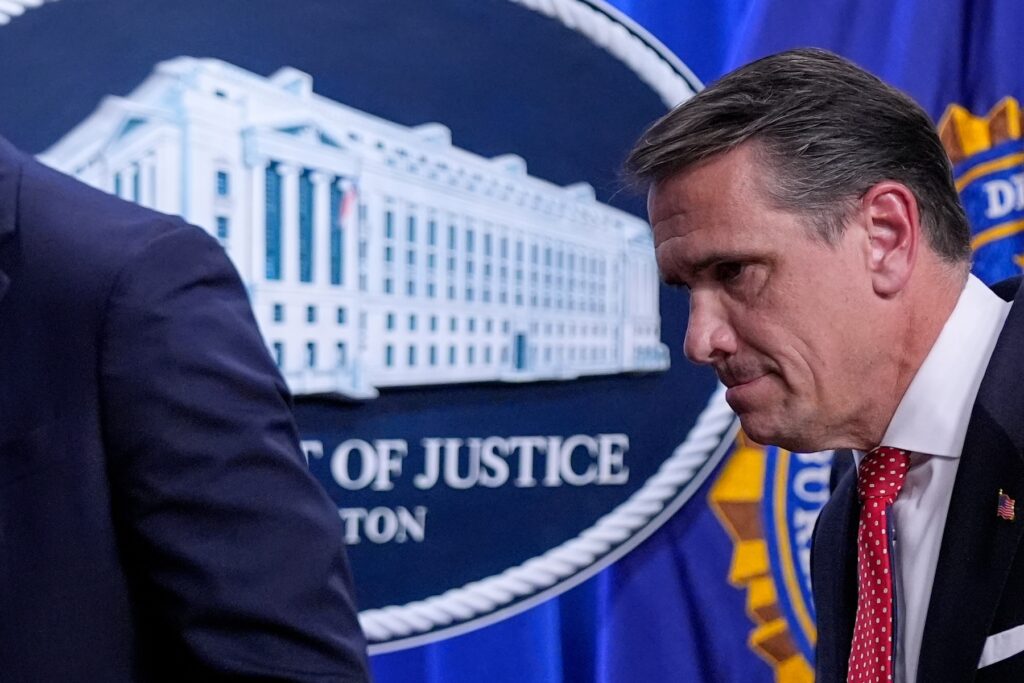
Trump’s Justice Department faces a new era of scrutiny under a Democratic-led Congress
Attorney General Todd Blanche says the department will cooperate with Congress but has also insisted that “we will not back down” from the Republican president's agenda.
10 hours ago
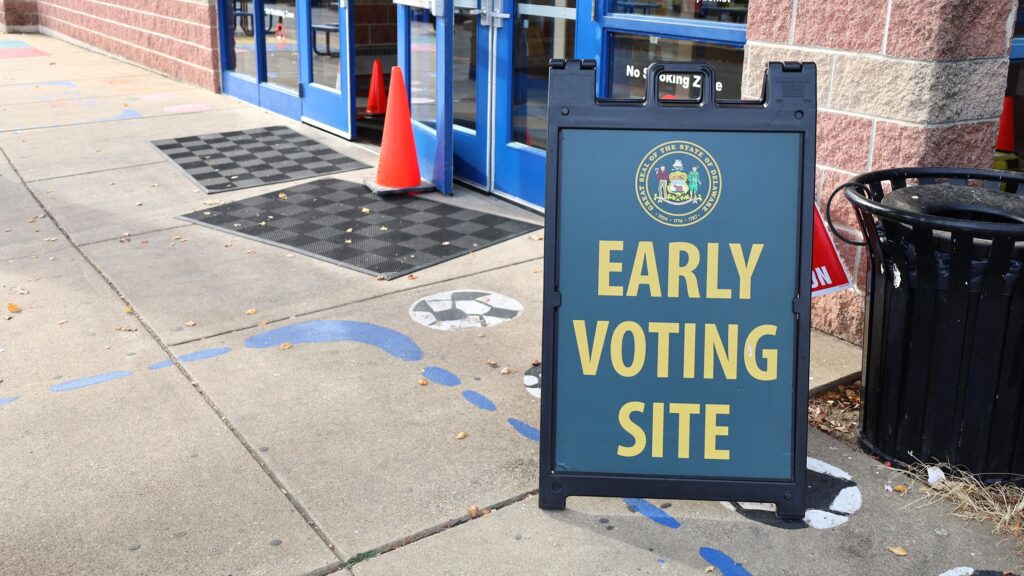
Delaware district judge rejects Trump’s DOJ attempt to obtain the state’s voting data
The U.S. Department of Justice wanted the state’s unredacted voter list, including Social Security numbers and addresses.
3 days ago
Listen 0:58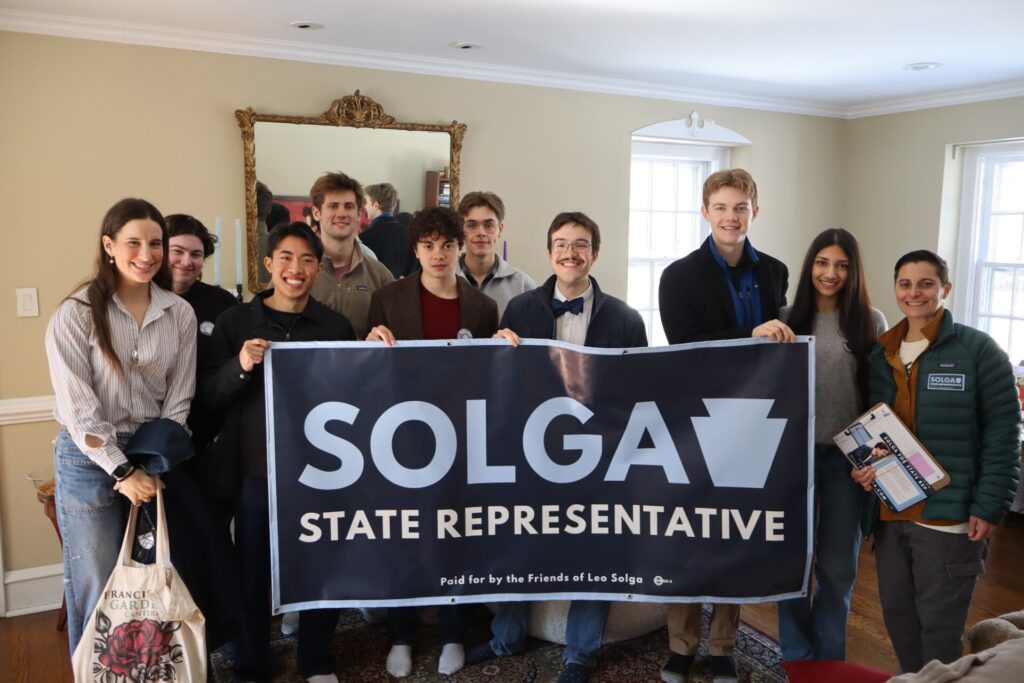
A young Pa. state representative candidate is giving his peers hands-on campaign experience
Leo Solga’s new internship aims to expand civic literacy and give other young people the tools they need for a future run for office.
8 months ago