

Gov. Shapiro signs bell-to-bell cell phone ban for all Pennsylvania schools
Pennsylvania joins 26 other states in adopting a statewide, all-day restriction.
Listen 0:56

FILE - A child plays with a phone outside of a school in June 2024. (AP Photo/Emilio Morenatti, File)
From Philly and the Pa. suburbs to South Jersey and Delaware, what would you like WHYY News to cover? Let us know!
Gov. Josh Shapiro has officially banned all personal mobile devices in Pennsylvania schools, joining 26 other states in adopting a bell-to-bell restriction statewide.
Shapiro signed Senate Bill 1014 into law Monday morning at Lenape Middle School in Bucks County, where such a policy has already been in place for several years.
The law comes amid growing concern over young people’s mental health, as rates of anxiety, depression and even suicide are on the rise, even among elementary-age children.
When phones, kids and schools combine, challenges often follow. A Pew Research study found that 72% of high school teachers and 33% of middle school teachers said cell phones in class were a “major problem” and that enforcing building policies was a challenge.
At the bill signing, Shapiro’s podium had a sign that read, “Getting Distractions Out of the Classroom.” He said the ban will impact all public, private, charter and cybercharter schools statewide, and each district must adopt a specific means of enforcing the ban before the 2027-28 school year begins next fall.
He framed the law as a “common sense” way to improve student well-being and academic performance. Though some may be upset about the change, they tend to adjust quickly, he said at the press conference.
The governor’s two youngest children, who are in tenth and twelfth grade, were initially dismayed by his plan to ban phones and “gave me a hard time for months,” he said.
But when their school implemented the policy, they got used to it within about a week, Shapiro said.
He said the bell-to-bell ban will improve students’ academic performance, as well as their social skills, mental health and ability to enjoy their school years. Even lunch periods and minutes between classes are a “really critical developmental time,” Shapiro said.
Related Content
The “bell-to-bell” bans face skepticism from students and parents. After going phone-free, early adopters say the difference is striking.
3 months ago
Listen 3:44The law allows certain exceptions, for instance, in cases of disability accommodation, medical conditions or English language learners. Schools must notify families of their own policies and explain how to contact the school in an emergency, Shapiro said.
“This is a bell-to-bell ban, but one size doesn’t fit all,” he said. “Schools will not be told how to do this, but schools will be empowered to do this work.”
One supporter of the ban was Sanjana Chamarty, a senior at Central Bucks High School South, who spoke about the challenges facing teens and tech today.
Young people and adults alike are concerned about artificial intelligence and the addictiveness of phones, which create distractions even when simply placed nearby, she said. Chamarty said the phone ban will invite students to fully engage with their school.
“Our students should not be viewing this as a disconnection from the digital world, but rather an opportunity to forge connections with one another from face-to-face conversations,” she said.
The author of the House bill, state Rep. Mandy Steele of Pittsburgh’s 33rd District, said the current generation of children is “being rendered captive” by technology corporations, creating a “massive public health crisis, the likes of which we have never seen.”
Steele praised the state legislature for moving the bill through quickly and Shapiro for heeding the “bipartisan outcry.”
“The absolute bare minimum we can do is get these things out of our schools,” she said.

Get daily updates from WHYY News!
WHYY is your source for fact-based, in-depth journalism and information. As a nonprofit organization, we rely on financial support from readers like you. Please give today.
Part of the series
Philadelphia teachers union releases plan to save 17 schools
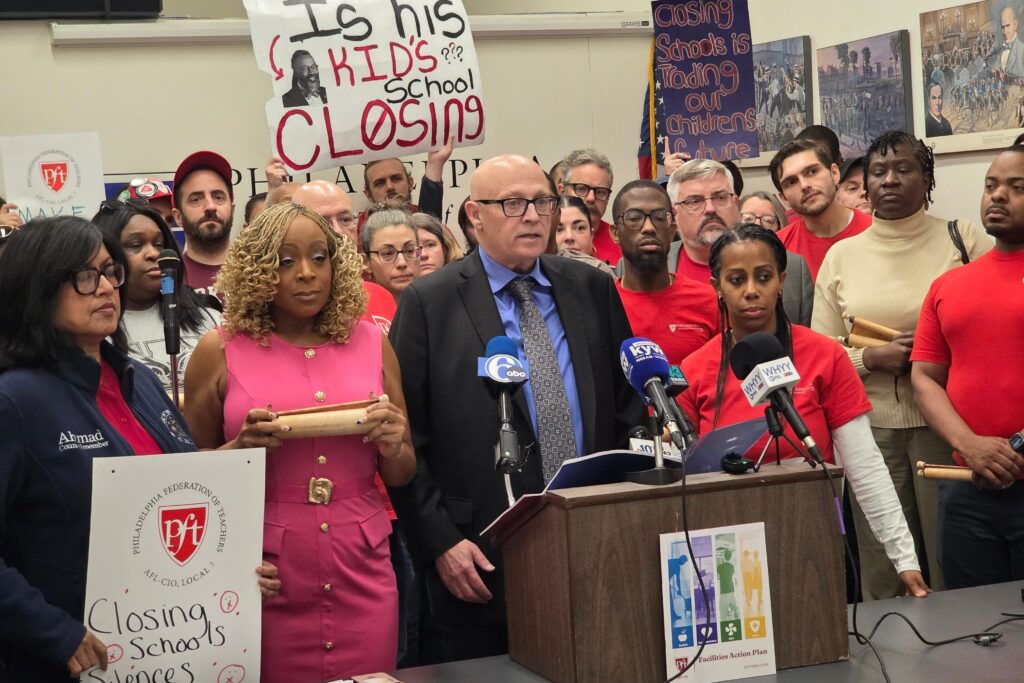
The Philadelphia Federation of Teachers is calling on Mayor Cherelle Parker to intervene to stop the closures and begin overdue maintenance.
3 days ago
Listen 0:57
Students push back against ‘pause’ of Drexel University’s elementary education major
The university enrolled only seven full-time students this fall, but students and alums say all pathways into teaching must be preserved.
2 weeks ago
Listen 0:59
From tending livestock to growing plants, Saul students depend on hands-on learning. Teachers worry the merger with Lankenau could disrupt that education.
2 weeks ago
Listen 1:38