

How a steady flow of data helps Pennsylvania primary care doctors manage their patients’ diabetes
Primary care providers say continuous glucose monitors can help diabetics successfully lower their blood sugar, especially when patients try them at local practices.
Listen 6:00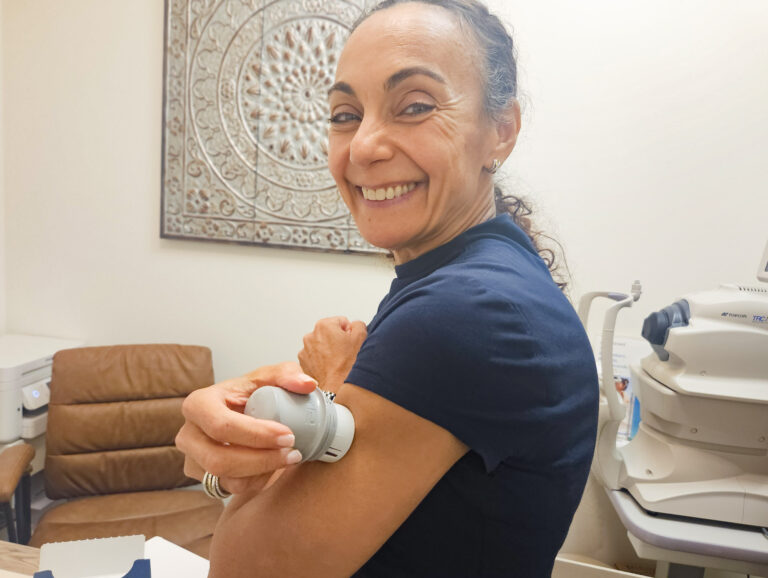
Some patients at Dr. Christine Meyer’s practice in Exton, Pennsylvania, use continuous glucose monitors to help them manage type 2 diabetes. (Nicole Leonard/WHYY)
From Philly and the Pa. suburbs to South Jersey and Delaware, what would you like WHYY News to cover? Let us know!
Philadelphia primary care physician Dr. Tara Cuda sits in an exam room with her patient, Betty Jean Tscherniawsky, 65, who has Type 2 diabetes and takes insulin to regulate her blood sugar.
She’s looking at a detailed report on Tscherniawsky’s blood sugar levels for the past two weeks.
“Forty-four percent of the time, you’re out of range, you’re too high,” Cuda says, pointing at the numbers on her computer screen. “It shows 2%, you’re low. So, I want to know, when your sugars are low, are you having any symptoms?”
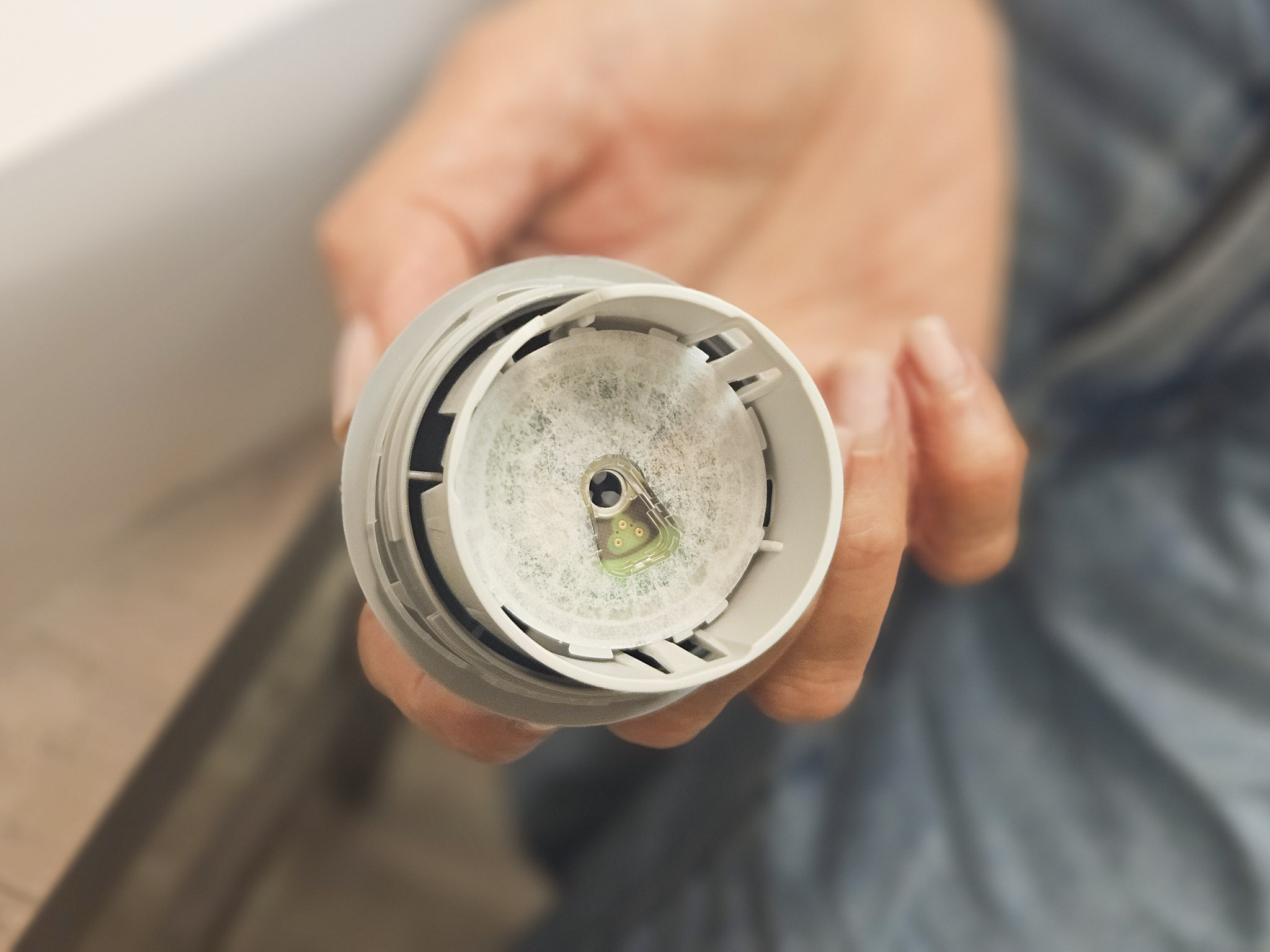
This real-time blood sugar data comes from Tscherniawsky’s continuous glucose monitor, or CGM. It’s a small, round device that she applies to her upper arm. It implants a thin needle sensor into her skin that measures the amount of sugar, or glucose, in her blood.
Tscherniawsky relies on the data to help her make healthy eating choices throughout the day.
“That’s how I know I can eat strawberries, because they don’t do a spike. So, I snack more on that,” she said. “But I was doing a protein drink and it was really messing me up. It said it had no sugar or anything, but it was really spiking my sugar.”
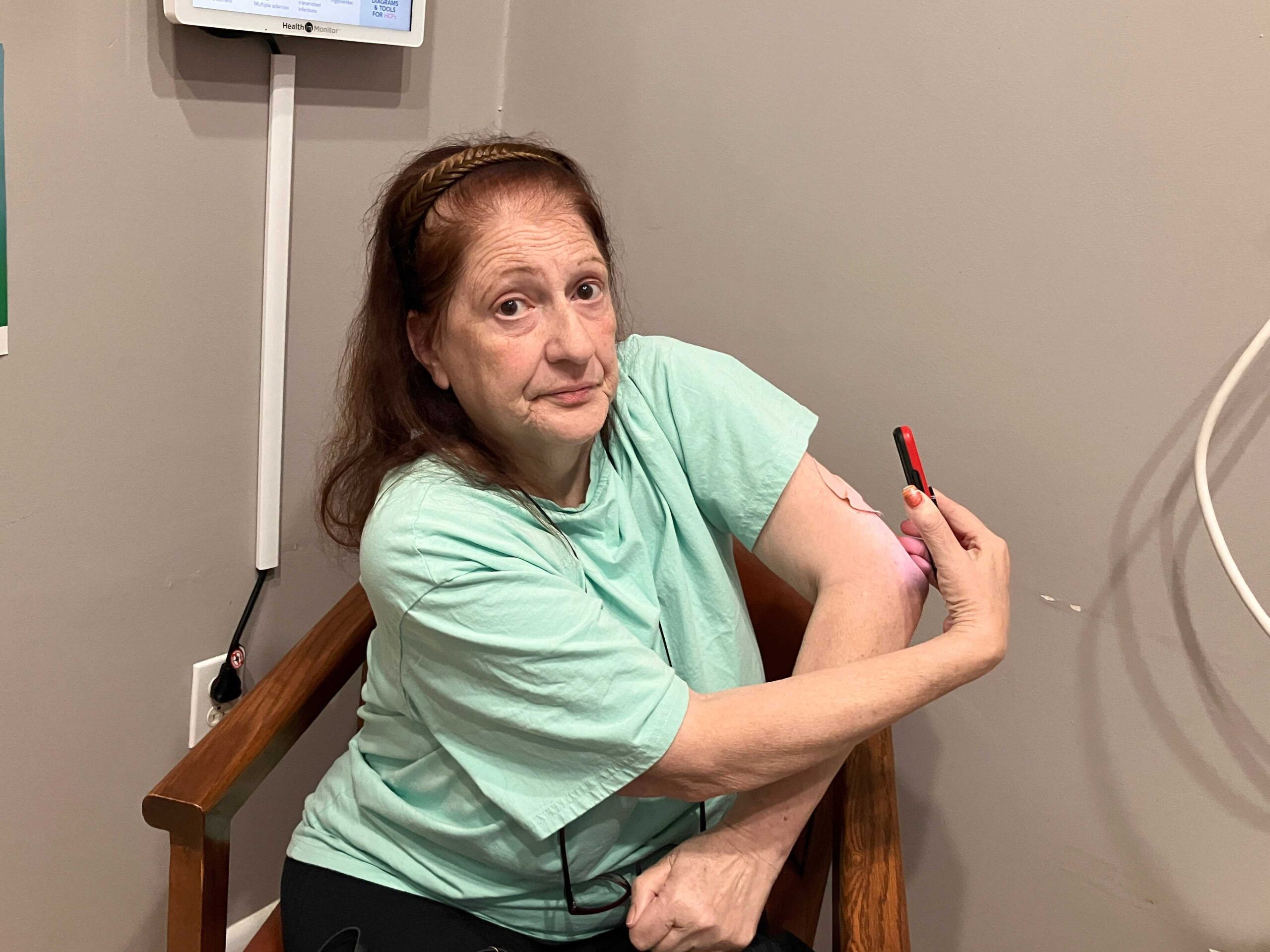
Tscherniawsky, who lives in South Philly, has had Type 2 diabetes for at least 27 years. She’s used insulin on and off to help her manage the chronic disease. But in the past, when she didn’t have a CGM, she had to prick her finger to test her blood sugar multiple times a day.
“And a lot of times you didn’t want to do it, because it hurt. Whereas this, no problem,” she said, gesturing to her CGM. “You can [check] it 10, 12 times a day. It don’t bother you.”
Cuda is the one who introduced Tscherniawsky to CGMs. Her practice uses a value-based care model through Aledade, a health tech company that partners with independent practices. Traditionally, health care runs on a fee-for-service model, where doctors are paid for visits and tests they perform. With value-based care, doctors are paid based on the quality and outcomes of patient care. It also allows Cuda and her team to have more frequent visits with her patients to answer questions, flag issues and make sure they’re managing their illness.
Cuda says the real-time blood sugar data helps her make treatment plans and helps her patients become more engaged in lifestyle changes.
“It allows the patients to recognize what foods are detrimental to their health,” she said. “For Betty, she definitely was not following a good diet previously, and I think she’s getting on the right track. More engagement, and I think I’m very confident these sugars are going to improve. They already have.”
New research shows that when primary care clinicians initiated CGM use for adults with insulin-treated diabetes, patients saw significant improvements in hemoglobin A1c levels, which is an average of blood sugar levels from the previous two to three months.
The study, published in the Journal of the American Medical Association this summer, also found associated reductions in hospitalizations and emergency department visits.
The findings support expanding CGM implementation in primary care settings to improve diabetes outcomes, researchers wrote. Doctors in Pennsylvania say they’ve been ramping up the use of CGMs in recent years as they see a need in their communities.
“They need, yes, the counseling, the nutrition, the support,” said Dr. Christine Meyer, who owns a primary care practice in Exton, Pennsylvania. “But they also need things like continuous glucose monitors, which have been a game changer in the treatment of diabetes.”
Related Content
Pennsylvanians buying 2027 health insurance on Pennie will face 16% average premium increase
Loss of pandemic-era tax credits and high use of medical care are driving up costs on Pennie, the state’s Affordable Care Act marketplace, insurance officials say.
3 weeks ago
Listen 1:03Primary care clinicians take on diabetes care and treatment tools
Personal CGMs for diabetes management came to market in the early 2000s and primarily targeted people with Type 1 diabetes, a chronic autoimmune condition. The monitors also became available to people with Type 2 diabetes who took insulin.
In 2024, the U.S. Food and Drug Administration approved the first over-the-counter CGM, which made the devices more widely available to people with Type 2 diabetes who didn’t take insulin, but were still managing the chronic disease.
However, it hasn’t always been easy to get a CGM. Patients would often have to take extra steps to find an endocrinologist who could evaluate and set them up with a device. There’s also a financial barrier. National data shows that it could cost someone as much as several hundred dollars a month out-of-pocket for a monitor, which needs to be changed about every other week.
Many health insurers will now cover the devices, but priority is on patients who take insulin. Coverage for non-insulin Type 2 diabetes treatment is still inconsistent and varies greatly.
Meanwhile, Meyer says there are a lot of efforts to expand access to these monitors where patients can easily get them and afford them, like at their local primary care practices.
Meyer and her colleagues see a lot of patients with prediabetes and Type 2 diabetes. Some don’t even know they have the chronic disease until they make their first health appointment.
“Patients just don’t know,” she said. “If you’re not feeling well, [not] losing weight, peeing a lot, you should probably see your doctor and talk about that.”
Meyer guides patients through the core approaches to treatment: healthy eating and nutrition, exercise, and weight loss, when necessary.
When she introduces patients to CGMs, she explains how they can use them to figure out what exactly is causing their blood sugar to fluctuate — and how to act on it.
“We used to give diabetic patients very general advice, like ‘eat less carbs, eat more protein, avoid refined sugars.’ All very common-sense things that are still true today,” Meyer said. “But what we’ve learned with CGMs is, not all carbs are the same for every patient.”
For example, she has some patients who, if they eat a bagel, their blood sugar will spike to over 400 milligrams, which is considered very high. The target blood sugar level for Type 2 diabetes after eating is 180 milligrams or lower.
“But if they eat a bowl of ice cream, it’s a little high, but it’s not bad,” she said. “And so teaching patients to look at their readings and make choices, very specific choices, as opposed to all-or-nothing choices is great.”
CGMs are a tool that has made diabetes care more personalized, Meyer said. The real-time data can help patients feel more confident in their lifestyle changes.
The monitors can also ease some anxiety and stress a patient might feel if they still need insulin or another medication, including a GLP-1 drug, to manage their chronic disease.
“Sometimes, diabetes just has a mind of its own,” Meyer said. “We see you’re doing everything right, but look at what your CGM is showing us, it’s time for medication. And that also helps patients really come to acceptance.”
Her health care team in Exton tries to help patients navigate the financial barriers in getting a CGM, and investigates what patients are entitled to through their insurance, she said.
They also try to help people save money in other areas of treatment.
“It doesn’t cost anything to learn how to cook a meal, right?” Meyer said. “So, education is free. We really try to utilize that.”
Meyer’s practice recently started a new treatment approach for a small group of people with uncontrolled Type 2 diabetes. They’re working with a company called LifeChef Health to provide patients with nutritiously tailored meals, as well as dietician support and CGMs.
“And we’re trying to figure out, is it really just medication that works? Is it medication and CGM? Is it the meals?” she asked.
And what they’re learning, she said, is that the best strategy to successfully treat prediabetes and diabetes includes all of the above.
“It underscores the point that diabetes care has to include multiple modalities,” she said. “Of course, sometimes medicine, but we are really underutilizing things like nutrition care and CGMs.”

Get daily updates from WHYY News!
WHYY is your source for fact-based, in-depth journalism and information. As a nonprofit organization, we rely on financial support from readers like you. Please give today.
The Fight to Save Rural Hospitals — and Access to Healthcare
A look at the growing healthcare crisis in rural America — and emerging solutions for bringing care to patients.
Air Date: October 2, 2026
Listen 49:31
2 unvaccinated Pennsylvanians die after contracting measles as outbreak reaches nearly 400 cases
The measles-associated deaths occurred among two residents of Lancaster County.
2 months ago

Pa. is considering $900K to fund meals tailored to people’s chronic diseases and medical needs
Medically tailored meals are informed by dietitians who evaluate recipes and match them to nutrition needs for diabetes, cancer and other diseases.
6 months ago
Listen 2:08