
Inside Pa.’s measles vaccination efforts as statewide outbreak infects over 1,200
The state pop-up measles vaccine clinics are hosted at small venues in communities with pockets of unvaccinated residents, including in Lancaster County.
Listen 2:18
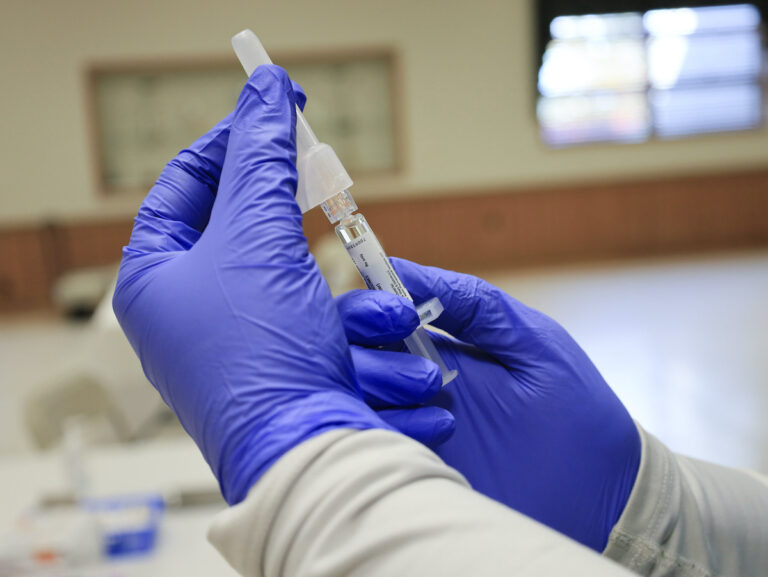
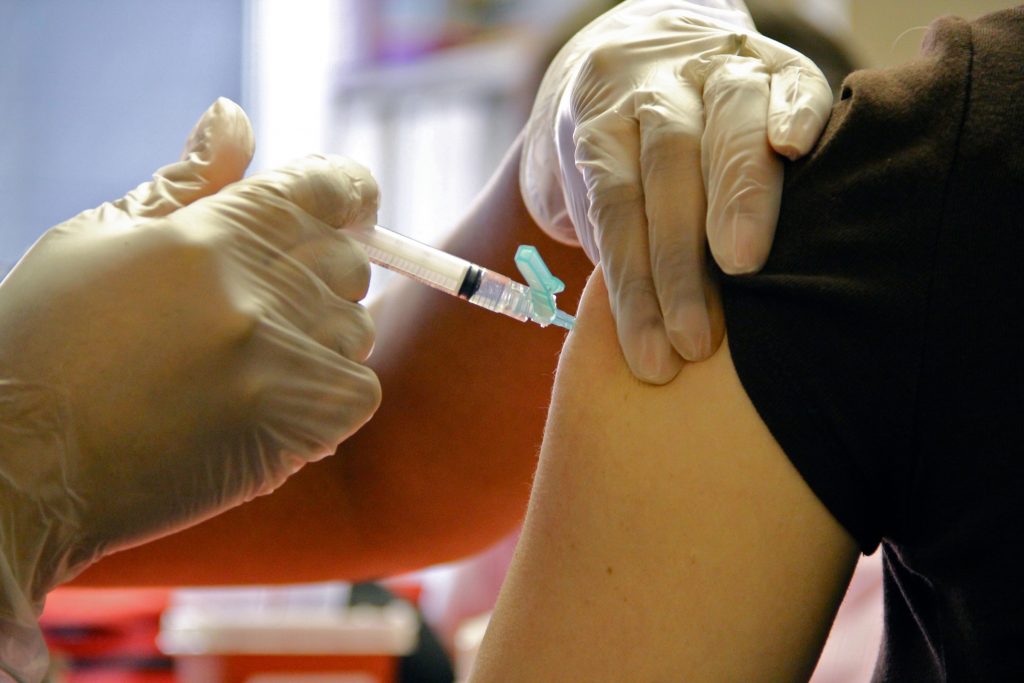
The Pennsylvania Department of Health provides doses of the measles, mumps and rubella vaccine during pop-up measles vaccination clinic in New Holland, Lancaster County, on Thurs., Oct. 8, 2026. (Nicole Leonard/WHYY)
From Philly and the Pa. suburbs to South Jersey and Delaware, what would you like WHYY News to cover? Let us know!
Around 4 p.m. on a recent Thursday, people began to arrive outside a fire station in New Holland, in Lancaster County, Pennsylvania. They came in cars, horse-drawn buggies and on bicycles.
Some were in groups and others alone, including several women wearing long dresses and white bonnets over their hair – traditional attire for members of the Amish and some Mennonite communities.
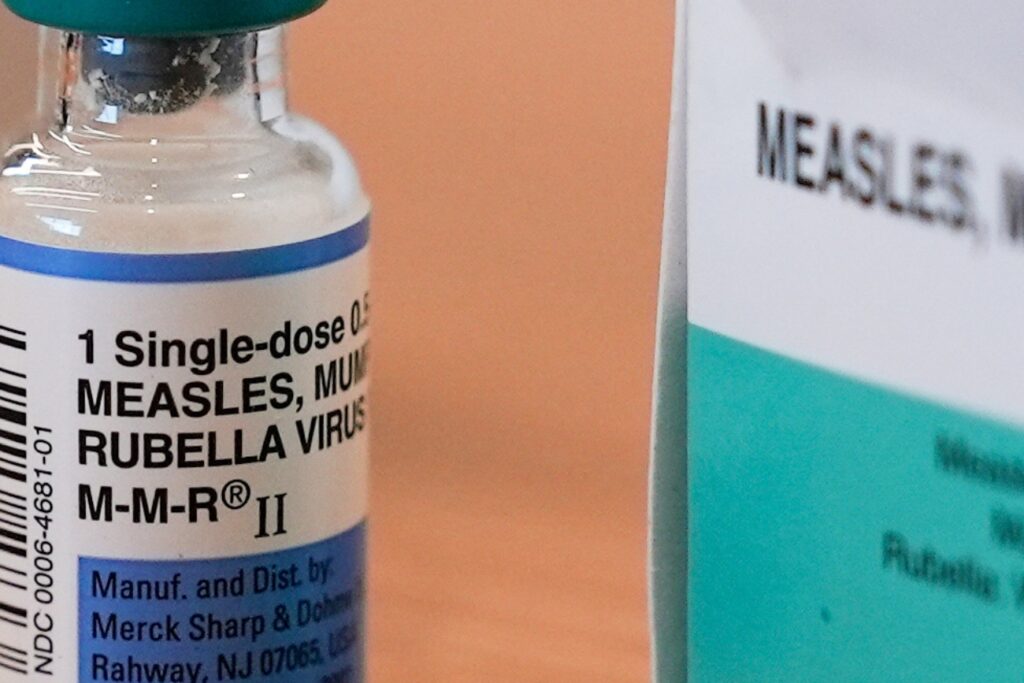
They headed inside the fire station, where nurses and workers from the Pennsylvania Department of Health waited to answer questions about the measles virus and administer shots of the measles, mumps and rubella, or MMR, vaccine.
For some, it was their first time getting any kind of vaccine.
“To be entrusted with that is a huge honor, that they’re trusting us enough to come for their very first vaccine ever,” said Dr. Jennifer Wallace, medical director of the department’s Bureau of Community Health System.
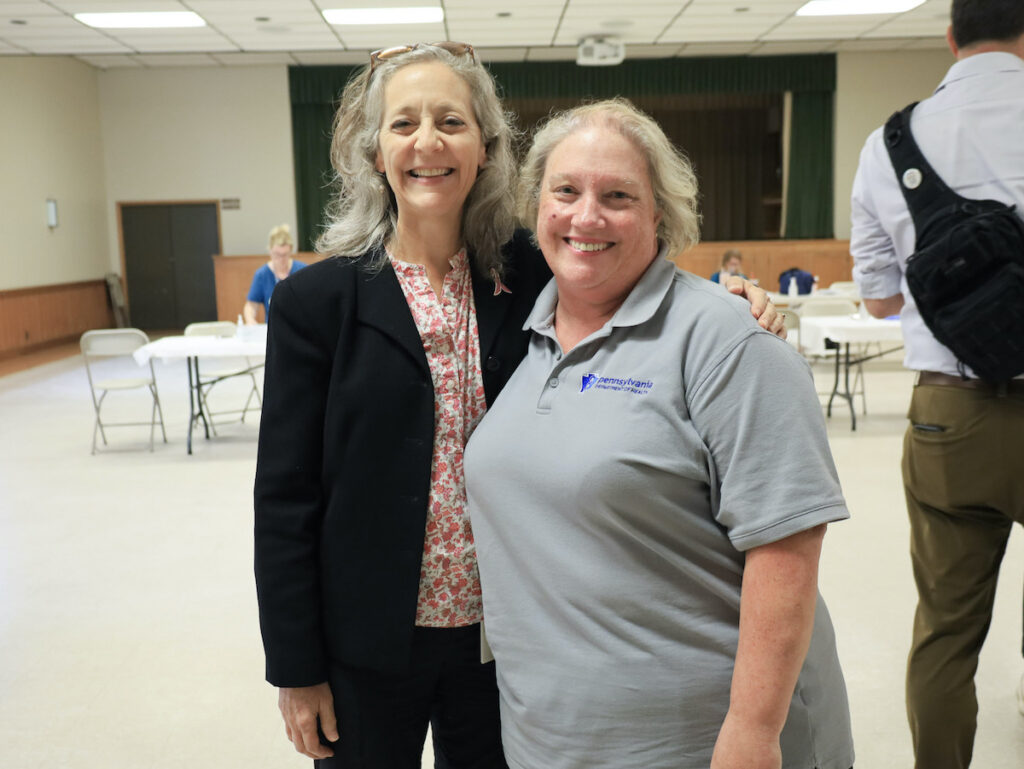
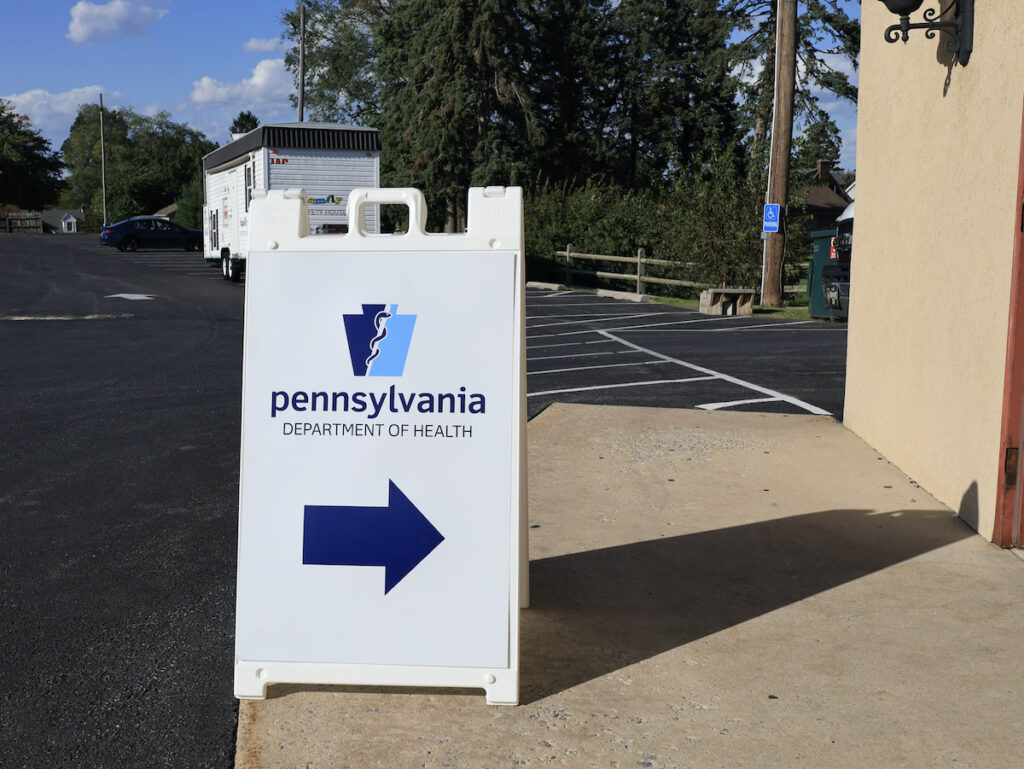
The small pop-up vaccination clinic was quietly held in the eastern part of Lancaster County with little fanfare or advertisement, save for a single sign right outside the fire hall entrance showing the state department’s insignia.
That’s by design. In their efforts to build trust and make people feel comfortable, the clinics are kept as small and private as possible, state officials said. Information about times and locations is mainly shared by word of mouth, local businesses and health care providers who live and work in town.
The state has hosted more than 200 of these small-venue clinics over the last five months. They’ve been held in communities across the commonwealth where measles has ripped through pockets of unvaccinated residents.
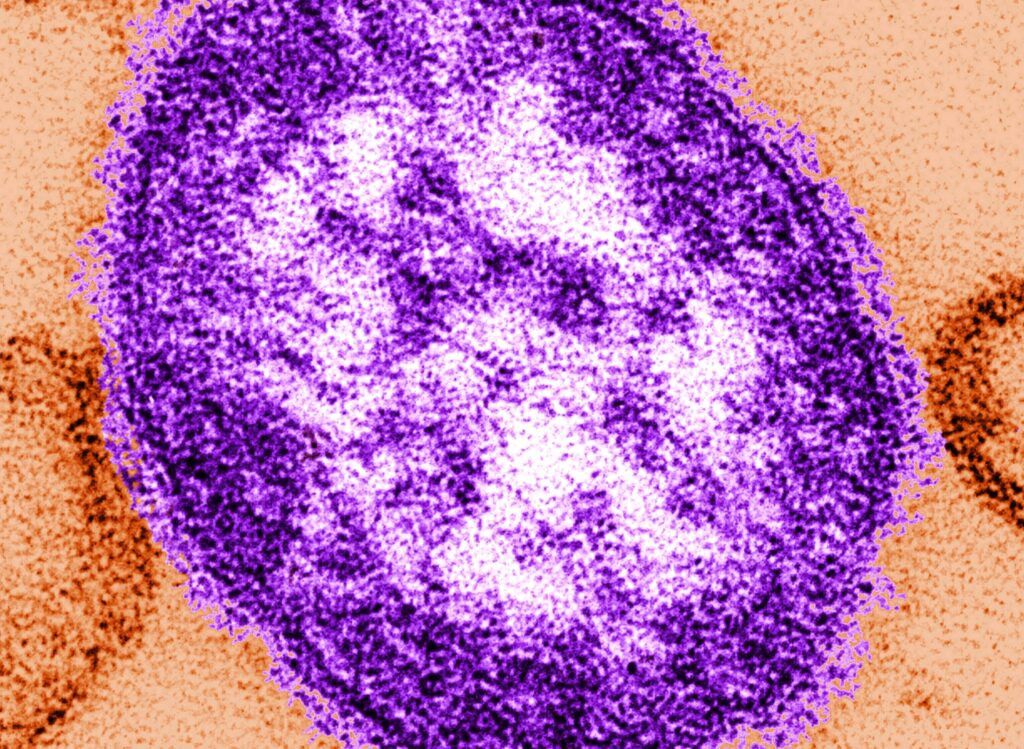
The highly contagious virus has infected more than 1,200 people in Pennsylvania since late April, nearly all cases in unvaccinated children and adults. The state has also reported five measles-associated deaths and is investigating a possible sixth.
As the statewide outbreak continues, public health experts say they’re hopeful that their approach in building trust, providing vaccine education and bringing shots directly into local communities will help raise immunization rates enough to slow down and stop the measles outbreak.
“Right now, they’re afraid. Measles is now real,” Wallace said. “You can put it in the back of your mind when it’s in another country thousands of miles away. You can’t put it in the back of your mind when it’s next door. And so, they are coming in because they know it’s in their community and they want to be protected and they’re making that proactive step.”
Related Content
Pa. declares 6th measles-associated death as cases reach nearly 1,500. Here’s what to know
The current measles outbreak dates back to April. Nearly all cases are among unvaccinated children and adults.
4 weeks ago
Small-scale vaccine approaches to reach at-risk communities
A majority of Pennsylvanians are vaccinated against measles, state data shows.
Two doses of the MMR vaccine provide 97% lifelong protection against the virus, and one dose is 93% protective, according to the Centers for Disease Control and Prevention.
Most people get the nationally recommended two-dose vaccination series as children, which is required by state law for kids to attend school unless they apply for an exemption.
Shots are typically available at pediatrician offices, primary care practices and public health centers, as well as some pharmacies and urgent cares.
However, immunization rates today are still lower than they were two decades ago, said pediatrician Dr. Debra Bogen, secretary of the state Department of Health. It’s part of a nationwide trend of declining childhood vaccination rates driven by increasing mistrust in scientific research and medical institutions and misinformation on social media, research shows.
“But we didn’t decline by huge numbers,” Bogen said. “We’re talking 3% and 4% decreases over a decade.”
Still, that’s left Pennsylvania communities with clusters of unvaccinated residents vulnerable to measles, which will infect about 9 in 10 unprotected people who are exposed to the virus, national data shows.
The free, state-sponsored pop-up vaccine clinics are part of a larger effort to reach families who’ve previously held off on getting the shots or been hesitant about immunizations in general. They’re also reaching people in Amish communities, where vaccination rates tend to be low for a number of reasons.
Most Pennsylvanians have never seen the measles virus, Bogen said.
“Families make decisions based on what they think is best for their family, right?” she said. “They didn’t see measles as a threat for 30 or 40 years. So, people said, ‘Well, if it’s not a threat, why am I giving my child this vaccine?’”
But during this statewide measles outbreak, Bogen said people are now witnessing just how serious, and deadly, the virus can be. About 1 in 5 residents who’ve been infected have been hospitalized, state data shows.
“They are thinking about what they’re seeing in their communities, they have questions, they’re getting their questions answered, and many of them are getting vaccinated,” Bogen said.
Related Content
It’s cold and flu season. Here’s which vaccines Philadelphians should get this fall
Everyone 6 months and older should get at least one shot for each respiratory viral disease, according to guidelines.
1 month ago
A ‘surge’ of interest in measles vaccination
About an hour before the pop-up vaccine clinic opened in New Holland, Pennsylvania, nurses from the state health center in Lancaster County were busy setting up white folding tables inside the fire station.
“Someone comes in, they’re greeted by our registration desk where they’re filling out forms,” registered nurse Beth Smith explained. “Then we have tables set up here so that it’s comfortable for them to sit down. Nurses will go over and ask if they have any questions.”
Smith, who wore green scrubs, snapped on purple gloves and set out vials of the MMR vaccine. She pulled out a syringe filled with some saline solution and prepared her immunization station with some alcohol wipes and Band-Aids.
“And we have stickers for the kids to make them happy,” she said. “We give them a record after the immunization is given so that they can show that to anyone else in the future [if] they have to prove that they had their MMR vaccine.”
State health workers have administered more than 5,900 measles vaccines across 202 pop-up clinics events like this one since April.
The state has administered another 3,000 vaccine doses at the health department’s 59 brick-and-mortar state health centers.
Those numbers represent just a small fraction of all measles vaccinations administered across Pennsylvania, Bogen said.
Private pediatric practices, doctor’s offices, pharmacies and other community health centers are also reporting surging interest in measles vaccination, state health leaders say.
More than 56,000 doses of the measles, mumps and rubella vaccine were administered in September across all health care providers and vaccinators in the commonwealth — more than double the average number of vaccines given in a typical month, historically, according to state officials.
“If you could have told me in May that that was what we were going to do, I would have been blown away,” Wallace said of the numbers. “Everybody from 6-month-olds all the way up to grandmas are coming in and are asking about the shot.”
Many people come to the pop-up clinics curious and looking for information, Wallace said. Most end up deciding at that moment to get vaccinated. Others leave, only to return later or at another clinic on a different day.
“We’ve even had some leave, go out, think about it and come back in 20 minutes later and go, ‘Yeah, I’m going to get vaccinated,’” she said. “I think the most important thing we can do is give them the information so that they can make an informed choice for themselves.”
Health teams are also making house calls and administering vaccine doses in people’s homes at the request of families and other residents, workers said.
To Wallace, it’s all evidence that this targeted, small-scale community approach is working and creating new opportunities to reach people with information and tools to protect themselves not only against measles, but other vaccine-preventable diseases.
“We’re actually hoping, after this outbreak is over, to keep these footholds in the community so that we can bring other vaccines into the community,” she said. “We’ve been asking a lot of people that come into the clinic, ‘What other vaccines would you like to have? What are you curious about? Can we answer any questions?’ So, we have some ideas of what they’re very open to getting at this point, and so this, I believe, is just the beginning.”

Get daily updates from WHYY News!
WHYY is your source for fact-based, in-depth journalism and information. As a nonprofit organization, we rely on financial support from readers like you. Please give today.
Pa. declares 6th measles-associated death as cases reach nearly 1,500. Here’s what to know
The current measles outbreak dates back to April. Nearly all cases are among unvaccinated children and adults.
4 weeks ago
In Pennsylvania, 943 measles cases have been reported so far this year, state data shows.
1 month ago
Bucks County health officials report new measles case, warn local residents of possible exposure
A local Bucks County adult tested positive for measles after returning from a trip to Texas, health officials said.
2 years ago
Listen 1:06