
Sorting fact from fear: ICE at the polls, DOJ election monitors in Pa. and other Election Day concerns
Philadelphia-area officials explain who’s allowed at your polling place, what counts as intimidation and what to do if something goes wrong.
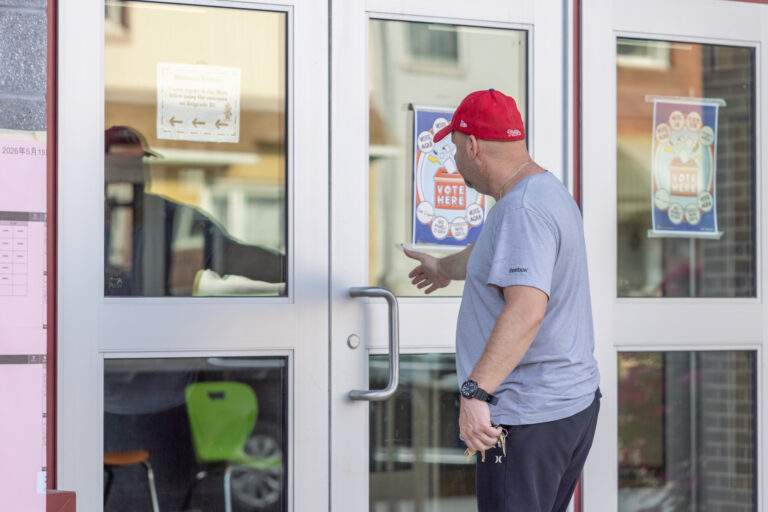
A voter heads into their polling place at Richmond Elementary on primary Election Day in Philadelphia, May 19, 2026. (Kimberly Paynter/WHYY)
What questions do you have about the 2026 elections? What major issues do you want candidates to address? Let us know.
With Election Day less than a week away, some voters worry they could encounter more than just poll workers when they cast their ballots. Partisan poll watchers and federal election monitors, a number of whom will be sent to four Pennsylvania counties, may be among them. Meanwhile, rumors have circulated about federal immigration authorities patrolling polling places.
“What we want is to ensure every voter has the right to vote independently and without interference,” said Seth Bluestein, a Philadelphia City Commissioner who also sits on the city’s election board.
Here’s what Pennsylvania voters should know about who is allowed at polling places, how election officials are preparing and what to do if they encounter problems.
What are poll watchers and federal election monitors allowed to do?
Political parties and candidates are allowed to appoint poll watchers, Bluestein said. Generally, these appointees must be registered voters who live in the county they’ll watch. Only one poll watcher from each party is permitted inside the polling place at any given time, and that individual must produce documentation proving their legitimacy when asked, according to guidance from the Pennsylvania Department of State, or PADOS.
Election monitors are appointed by the U.S. Department of Justice to ensure compliance with voting rights laws. On Nov. 3, federal monitors will “observe and take notes” in Philadelphia, Allegheny, Luzerne and Lehigh counties, according to a letter it sent to Pennsylvania officials
Pa. election 2026: What to know
- 🤔 Voter FAQs: WHYY News’ Pa. voter guide has the answers you need.
- 🗳️ Governor’s race: Here’s what to know about the race between Josh Shapiro and Stacy Garrity.
- 💰 On the issues: Here’s where Shapiro and Garrity stand on the economy, health care and more.
- 📬 Voting by mail: Here’s what to know about filling out and returning your ballot, plus how to fix a defective mail ballot.
- 📱 Your go-to coverage: As election developments unfold, follow WHYY News on WHYY.org and the WHYY App.
Can ICE agents be stationed at polling places?
Federal law has been clear since the Civil War: The government cannot deploy any person in the service of the United States to a polling place unless it is “necessary to repel armed enemies of the United States.”
Federal officials have denied they have any plans to send immigration enforcement agents to polling places. “ICE isn’t there to patrol the polling places. We’re there to enforce specific threats,” Markwayne Mullin, secretary of the Department of Homeland Security, told reporters in September. “The only reason why we would be at polling places is if there is a threat to that polling place or we’re serving a warrant on someone that we have been actively tracking down.”
Mullin recently threatened to imprison election officials who did not comply with DHS directives.
“While I appreciate people’s concern, I haven’t heard anything that’d make me nervous,” said Bluestein, a Republican.
Bucks County Sheriff Danny Ceisler, a Democrat, agreed. “I think ICE is the one that gets all the attention, but I’m concerned about the president messing with the mail,” he said.
“There’s things on the back end with the counting that I’m more concerned about than polling place intimidation,” Ceisler added. “We are prepared for whatever.”
With no reports of concrete plans for federal police deployments, Ceisler said, it’s safe to relax a bit.
“The Trump administration — he can’t have a Diet Coke without it getting leaked. For there to be a deployment of federal resources, this needs to get planned. … Operations orders, they would get leaked,” Ceisler said.
Related Content
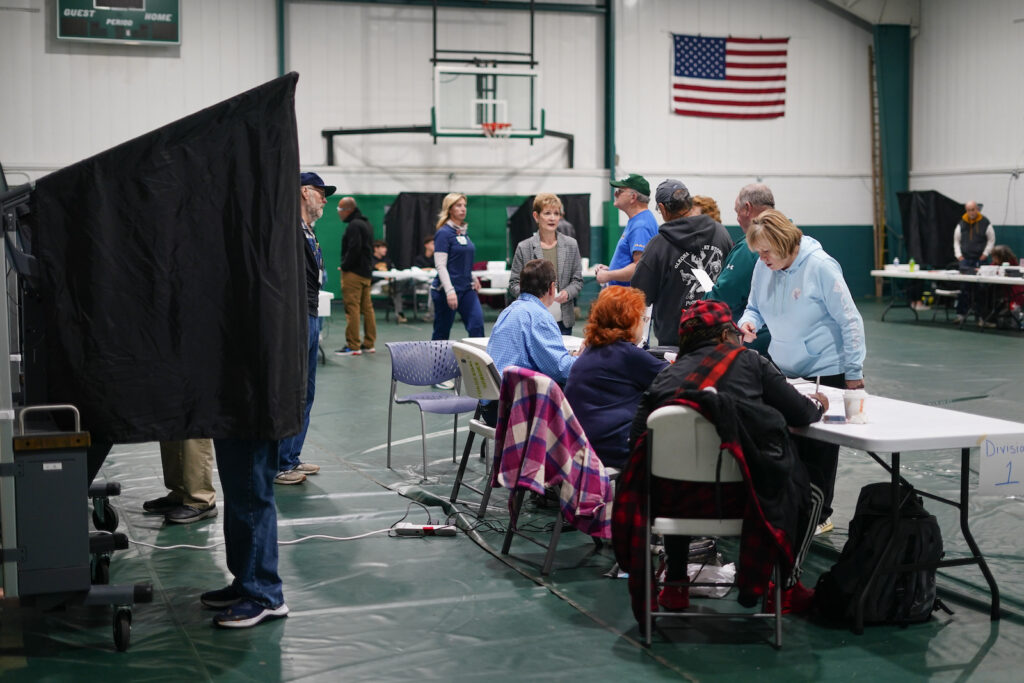
The Department of Justice has deployed election monitors for decades, but this year, concerns about voter intimidation have abounded.
3 weeks ago
Listen 0:54How are Philly-area officials preparing for Election Day?
“Leading up to 2024, we did major security prep,” Bluestein said. “Now, we’re mostly continuing the strategies we’ve developed.”
Poll workers undergo thorough training to ensure they’re equipped to keep voting safe and secure, he said.
“We are going to have teams activated throughout the county on Election Day to assist the Board of Elections with whatever they need,” said Ceisler.
The Bucks County Sheriff’s Office has trained with election protection professionals, lawyers and other administrative and law enforcement in the lead-up to Election Day, Ceisler said, adding that his department has “prepare[d] for every possible contingency, and our guys are going to be ready to go on Election Day.”
“Anything you can think of, we’ve run through and have a plan for and a backup plan for,” he said.
Related Content
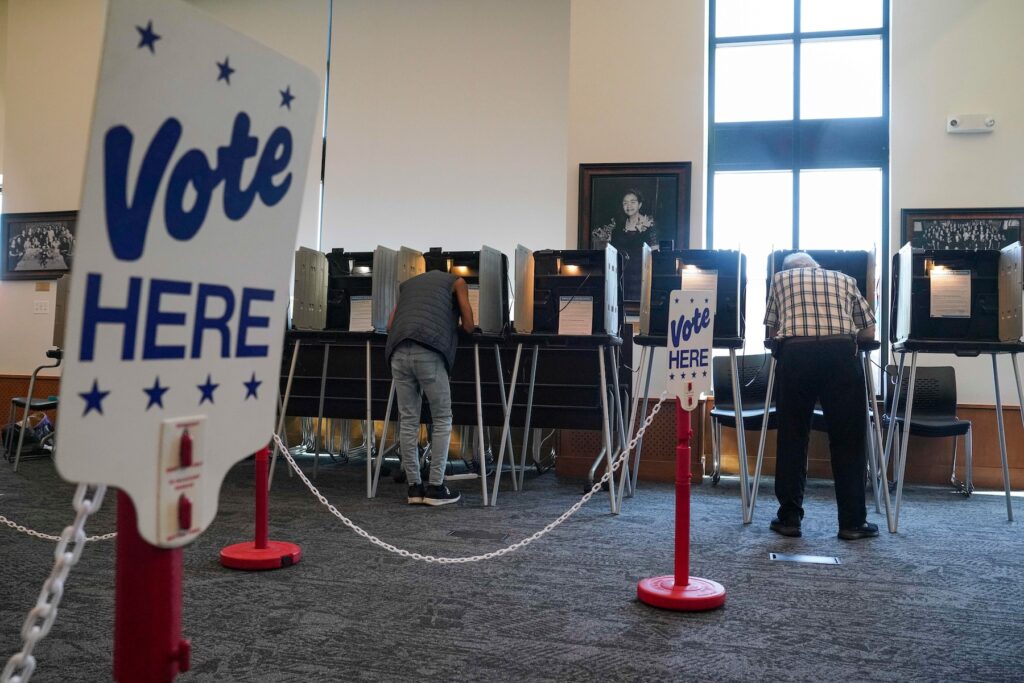
Why American elections are so complicated — and secure
Most Americans by now have probably heard stories about voter fraud. When these incidents happen, they are often caught and prosecuted.
4 months ago
What should I do if I encounter a problem at the polls?
Taking photos of voters, blocking entrances to polling places and spreading election disinformation to voters are all examples of intimidation, according to PADOS.
It is highly illegal to intimidate or coerce voters, Bluestein said. Anyone whose ability to vote “independently and without interference” is threatened should tell a poll worker immediately.
The judge of elections is the first person a voter should speak to if they feel they’ve been disenfranchised, Ceisler said. “So every polling place is going to have a judge of elections who can make a call, really, on the smaller things that are happening in that moment, and they should be trained to deal with problems,” he said.
Philadelphia voters can call 215-686-9641 for District Attorney Larry Krasner’s Election Task Force to report irregularities. Outside of the city, voters may contact their district attorneys or call 866-OUR-VOTE, the national Election Protection Hotline.
“If everything goes wrong, you can still vote via provisional ballot,” Bluestein said. If any questions remain about your eligibility to vote, a provisional ballot allows you to cast your vote while giving election officials more time to determine if you’re eligible.

Saturdays just got more interesting.
WHYY is your source for fact-based, in-depth journalism and information. As a nonprofit organization, we rely on financial support from readers like you. Please give today.
Part of the series
Trump’s Justice Department faces a new era of scrutiny under a Democratic-led Congress
Attorney General Todd Blanche says the department will cooperate with Congress but has also insisted that “we will not back down” from the Republican president's agenda.
2 days ago
Delaware district judge rejects Trump’s DOJ attempt to obtain the state’s voting data
The U.S. Department of Justice wanted the state’s unredacted voter list, including Social Security numbers and addresses.
4 days ago
Listen 0:58
Camden County residents agree to tax increase to reduce sewage spills, preserve nature
Millions of gallons of raw sewage spills into Camden’s waterways because of outdated sewer systems.
6 days ago
Listen 0:57