

U.S. Rep. Norcross promotes lithium-ion battery incentive bill at EMR as solution to fires
The bill would create a tax credit to help recycling companies buy battery detectors, tax battery makers and create a recycling program.

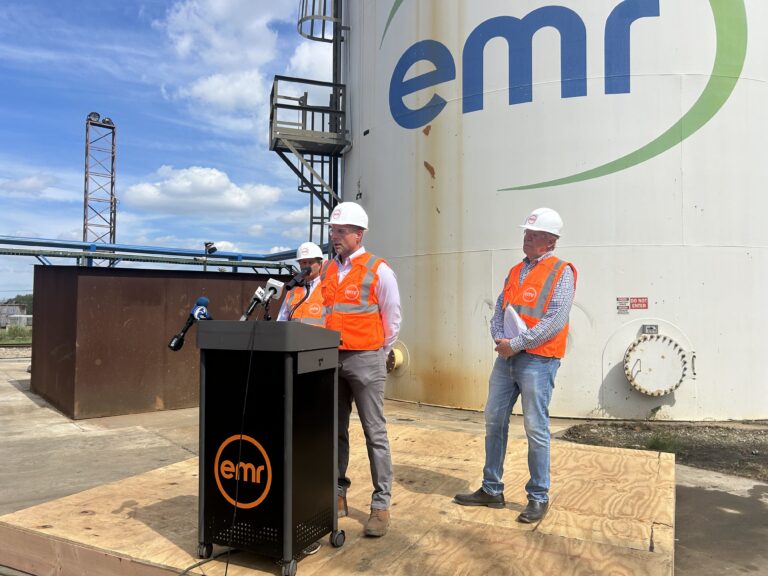
U.S. Rep. Donald Norcross promotes his bill at EMR in Camden. (Sophia Schmidt/WHYY)
From Camden and Cherry Hill to Trenton and the Jersey Shore, what about life in New Jersey do you want WHYY News to cover? Let us know.
U.S. Rep. Donald Norcross is pushing a bill he says could help stop the recurring fires at a scrap metal recycling company in Camden.
Norcross, a Democrat who represents the city in Congress, introduced a bill last fall that would incentivize the detection and recycling of highly flammable lithium-ion batteries.
EMR, a multinational scrap metal recycling company with its U.S. headquarters and several industrial sites in Camden, has blamed the batteries as the primary driver of fires at its junkyards.
“It certainly has become something that really doesn’t leave my mind, ever,” EMR USA CEO Joe Balzano said at a press conference promoting Norcross’ bill Thursday at EMR’s metal shredding facility in the Waterfront South neighborhood.
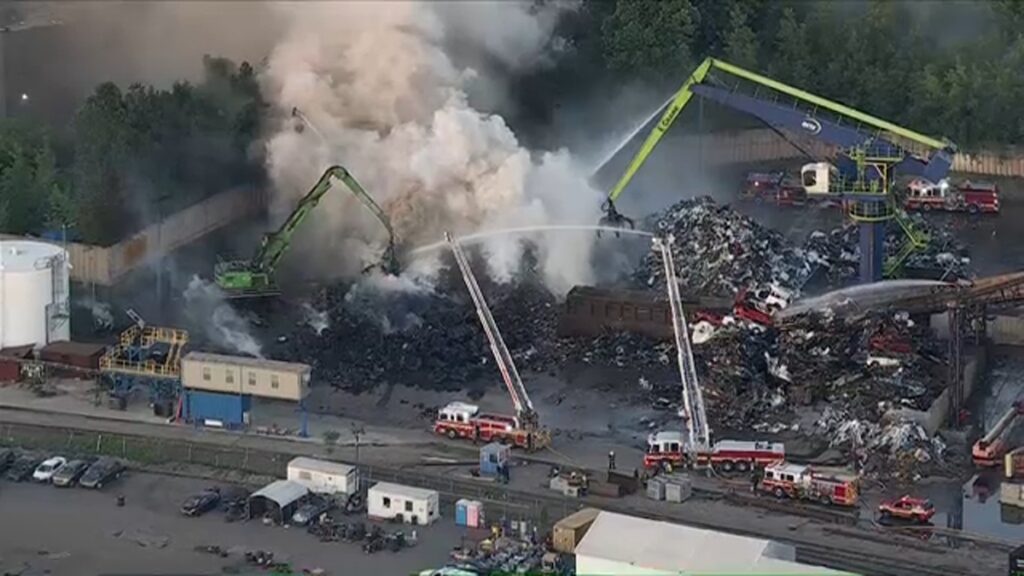
The company’s five facilities in Camden have been the site of 14 major fires since 2020, according to a lawsuit filed by the state against the company earlier this year. Some of these fires have sent dangerous pollution into Waterfront South, where the majority of residents are Black or Hispanic. Residents have evacuated their homes during the fires and been left with lingering psychological distress and concerns about their health.
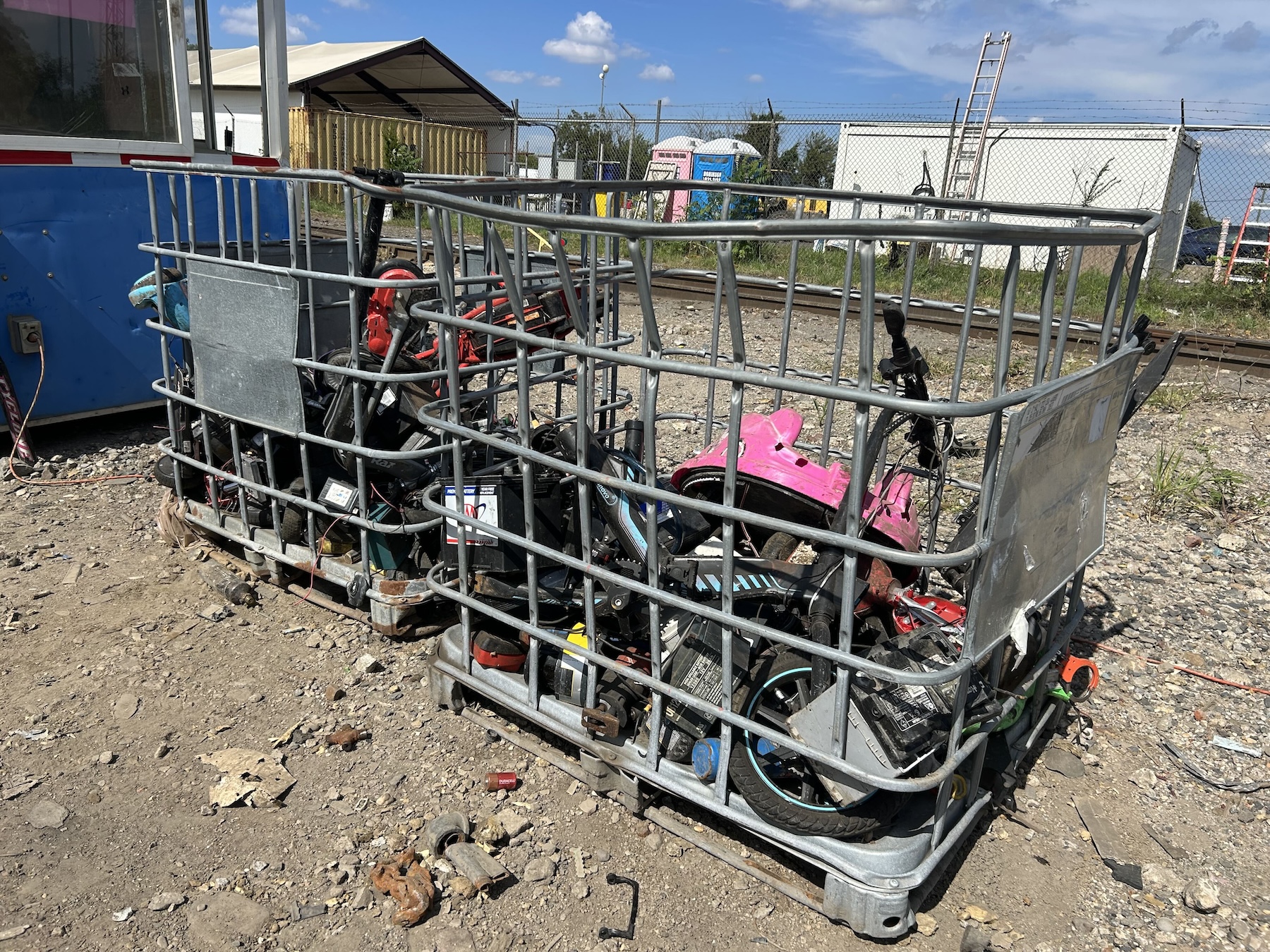
Lithium-ion batteries are present in consumer products such as smartphones and electric bikes. They are banned at EMR’s junkyards, but the company says they are often delivered anyway and are difficult to detect.
The tax credit would partially reimburse recycling companies for the cost of battery detectors and would tax battery manufacturers. It would also create a lithium battery recycling grant program that would give funds to facilities that collect and recycle the batteries.
Norcross’ bill has not moved or been heard in committee since it was introduced last October. Norcross said that if Democrats win control of the House of Representatives after the midterm elections, and U.S. Rep. Frank Pallone, D-N.J., becomes chair of the House Committee on Energy and Commerce, Pallone will ensure that the bill progresses.
“Frank needs to be my chairman,” Norcross said. “The Republicans refuse to take up that bill, and that’s where the problem is.”
Related Content
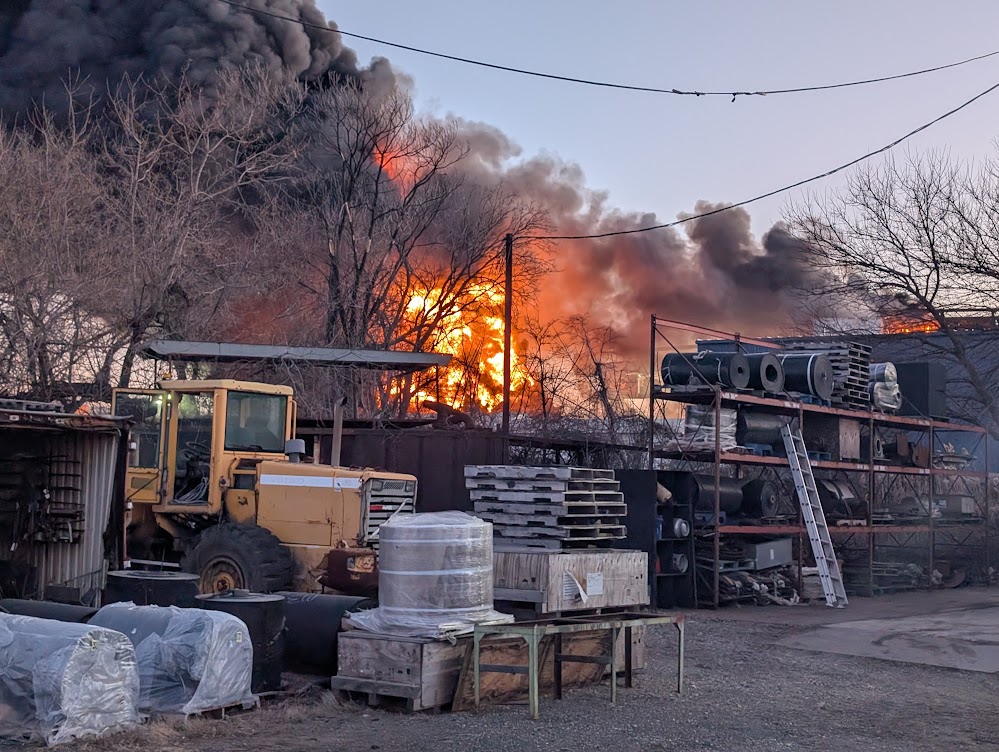
“Their actions caused the … 4-story building to be fully engulfed in flames,” one first responder wrote in a report obtained by WHYY News.
2 years ago
Lithium-ion batteries: ‘Excuse’ or ‘existential threat’?
Portia Simmons, a resident of Waterfront South who worries about air pollution in her neighborhood because she has congestive heart failure, told WHYY News in an interview this spring that she sees EMR as using the batteries as an “excuse.”
“They’re in almost everything now, but that’s your job,” she said. “You’re a recycler. You should know how to do that.”
Three incident reports for fires on EMR property, including one on a barge, obtained through public records requests by WHYY News and The Margin show the probable cause of all three fires was undetermined.
Norcross framed lithium-ion battery fires as a national problem, pointing to recent fires in Texas, Minnesota and North Carolina.
In an interview this spring, David Wagger, chief scientist at the Recycled Materials Association, called lithium-ion batteries an “existential threat” for the recycling industry. EMR is a member of the Recycled Materials Association.
“It’s not just our industry that is challenged by lithium-ion batteries. They’re in everything,” Wagger said. “No one wants to have not only their reputation ruined, but their facility become damaged and perhaps burn down.”
Related Content

WHYY News and The Margin host community event in Camden to discuss in-depth reporting on EMR fires
Independent journalist Katrina Janco and WHYY’s Sophia Schmidt and Kimberly Paynter discussed their investigative work.
1 month ago
Technology not ready yet, EMR USA CEO says
The technology to detect lithium-ion batteries inside a pile of scrap metal and to recycle them at facilities like EMR’s is not yet commercially available, Balzano said. Because of this, the company would not be able to immediately take advantage of the tax incentives outlined in the bill if it passed today.
“I think there are solutions that are being developed,” Balzano said. “I don’t think that there’s anything that’s ready to be used in the industry yet.”
Norcross said these technologies are currently being researched and developed.
“We’re here to create a better disposal, a better recycling process,” Norcross said. “How do you literally find that needle in the haystack? That … is a national problem.”
EMR institutes new fire safety procedures after shutdown
Balzano said EMR’s Camden facilities have had no fires since the shredder restarted in July. The company was allowed to reopen its facilities after a judge temporarily stopped the city from enforcing a cease operations order issued after the latest fire at EMR’s Camden metal shredder in late May.
The facility reopened with new fire safety precautions mandated by the court, including handheld thermal imaging cameras to detect hotspots in incoming materials and procedures for separating incoming material. The company unveiled a fire safety framework that also includes a 24/7 fire watch, changes to the metal shredding schedule to reduce material piling up and raising standards for its recycled material suppliers.
Balzano said Thursday that the automatic fire suppression system undergoes a test every three hours.
A large fire burned at a junkyard operated by EMR in Delaware County, Pennsylvania, in July.

Get daily updates from WHYY News!
WHYY is your source for fact-based, in-depth journalism and information. As a nonprofit organization, we rely on financial support from readers like you. Please give today.
Part of the series


Camden plans to revoke an EMR business license after latest fire, city councilman says
The statement comes days after a fire at one of EMR’s scrap metal facilities — one of more than a dozen over the past five years.
4 months ago
Camden scrapyard to pause operations after 2-alarm fire. County officials want it shut down
The company’s statement came after city and county officials called on EMR to “fully cease” operating due to the latest fire.
5 months ago
Listen 1:09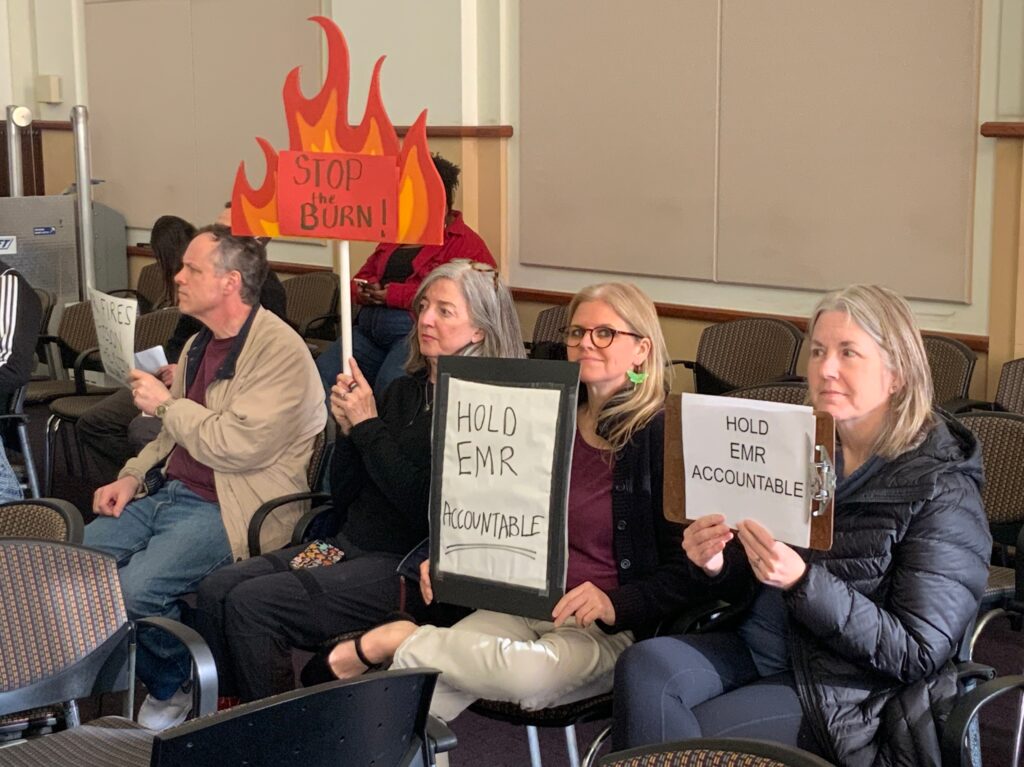
Camden City Council approves regulating lithium-ion batteries after massive EMR fire
EMR says lithium-ion batteries at their scrapyard caused a four-alarm blaze. Residents are skeptical it will hold the yard operator accountable.
2 years ago