

Philadelphia releases toolkit to help neighbors talk about climate change
The digital toolkit is meant to help residents get to know each other and prepare their neighborhoods for extreme heat, flooding and more.

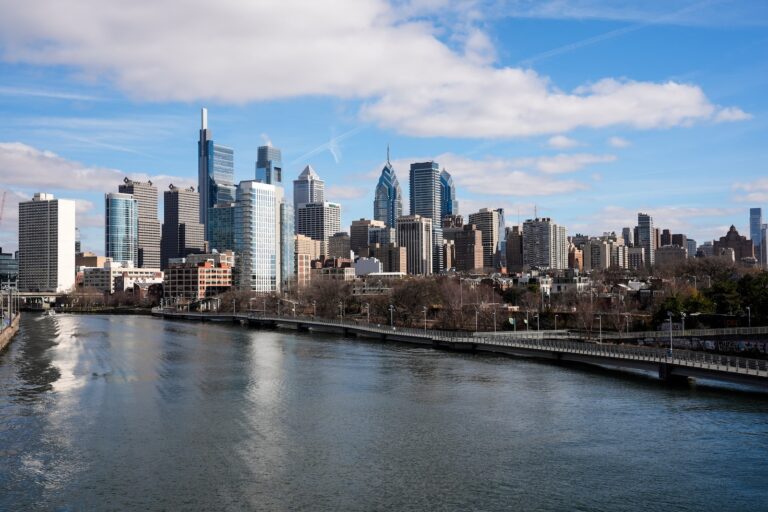
File: The skyline in Philadelphia is seen on Feb. 21, 2024. (AP Photo/Matt Rourke, File)
This story is part of the WHYY News Climate Desk, bringing you news and solutions for our changing region.
From the Poconos to the Jersey Shore to the mouth of the Delaware Bay, what do you want to know about climate change? What would you like us to cover? Get in touch.
Do you want to make your neighborhood more resilient to extreme heat and flooding, but don’t know where to start? The city of Philadelphia has a guide for that.
A new community climate resilience toolkit released by the city’s Office of Sustainability is designed to help residents gather with neighbors to discuss growing hazards such as flooding, extreme heat and poor air quality, and what they can do to prepare.
“Climate change is having an impact on how intense and how frequently we’re experiencing those hazards, and they pose a real risk to our public health and safety,” said Jordan Parés-Kane, a climate resilience specialist with the Office of Sustainability. “We want people to have hope, and we want people to understand that there’s a lot that they can do.”
The toolkit is part of the city’s process of creating a new climate resilience plan. The office expects to release the plan next year, assessing the city’s vulnerability to climate-driven hazards and making recommendations for how to address them. The city held a series of workshops with around 400 residents to inform the plan and the toolkit.
What’s in Philadelphia’s climate resilience toolkit?
The toolkit includes slideshows that summarize how climate-driven threats such as extreme heat, flooding and poor air quality are projected to impact Philadelphia in the coming decades. It also includes sample meeting agendas and ice breakers for neighborhood gatherings.
City officials envision gatherings where neighbors discuss how extreme weather affects their blocks and what they can do together to address it. The toolkit includes prompts for residents to discuss things they love about their neighborhoods and resources they wish they had, as well as a prompt to exchange contact information with a neighbor.
Desiree Riley, founder of the nonprofit Mastermind Cooperative, helped the city run the workshops and said participants expressed a need for more educational resources about climate change.
“Many times people don’t even know the correct term for what they’re living through and what their families are being challenged with,” Riley said. “Helping to eliminate a lot of those blind spots is something that the toolkit can do.”
Parés-Kane said residents can use Philadelphia’s toolkit as a starting point to advocate for policy change or more resources from their elected officials. She hopes the neighborhood gatherings result in more residents taking advantage of resources that already exist.
“I’d like to see more people signed up for ReadyPhiladelphia alerts, for example, more people clicking on links for utility assistance, for housing assistance,” Parés-Kane said. “Maybe people also are accessing more resources in … their own community organization.”
Related Content
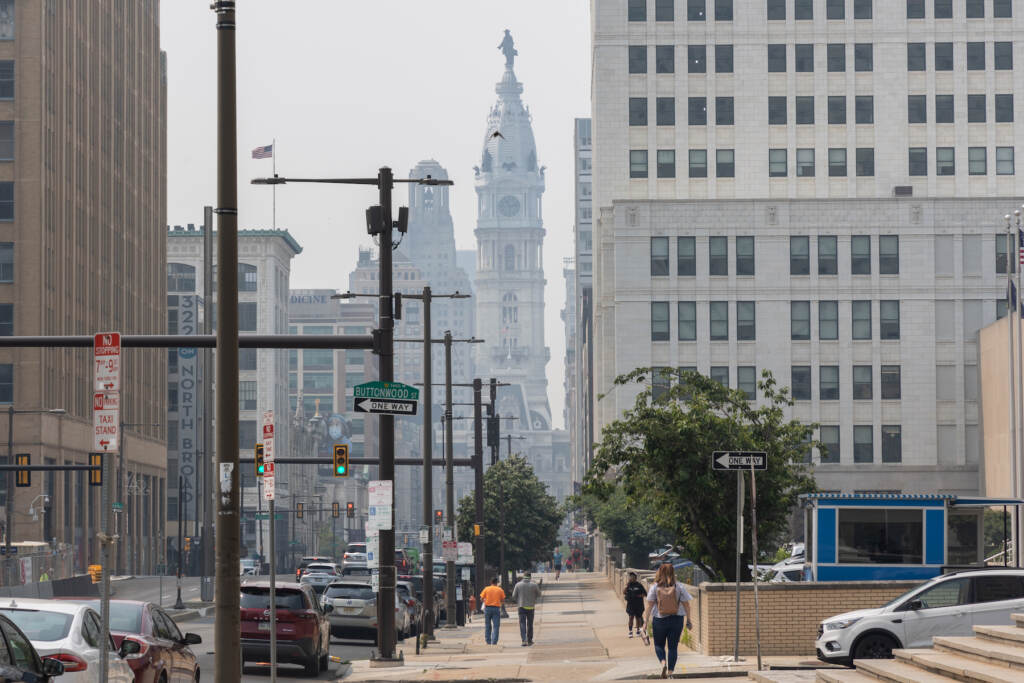
New network of 76 air monitors throughout Philadelphia provides detailed look at air quality
The network will offer hourly air quality index updates posted to a new website, Breathe Philly.
9 months ago
Listen 0:59Why talk with neighbors about extreme weather?
Riley said it’s important for neighbors to know one another in order to respond to disasters. She said without these connections, conflicts can arise over issues such as a saved parking spot during a snowstorm.
“If people … don’t even know each other, it’s hard to act on one accord when things happen like that overnight,” Riley said.
Take, for example, a storm that brings flooding to a Philadelphia block. Riley said that if the residents get to know each other and create a plan before disaster strikes, they can form a WhatsApp group to share weather updates, practice emergency drills or coordinate acquiring sand bags or generators. They could also become aware of neighbors with special medical needs or plan for residents to temporarily stay with neighbors if their homes flood.
“There’s so many different things that you can do and prepare for when you’re collaborating — not just communication, but also your resources,” she said.
Community connections are considered a key element of disaster resilience and recovery. After Superstorm Sandy in 2012, an analysis found that social resources were critical to the recovery of communities in New York and New Jersey, with social-network connectedness facilitating the exchange of information. One study found that after Hurricane Maria in 2017, communities in Puerto Rico with better social cohesion were more likely to recover quickly in the immediate aftermath of the disaster.
“It takes a village,” Parés-Kane said. “Everybody has a little bit of something that they can share or help out with. When you can pull people’s resources together in a time of need like that, I think it really helps.”
Parés-Kane acknowledged that the toolkit is just one part of Philadelphia’s resilience efforts, since there’s a limit to the change that residents can make without the city’s support.
“When it comes to some of the systemic changes we’re going to have to see moving forward as a city, it can’t just be from a top-down perspective,” she said.

Never miss a moment with the WHYY Listen App!


WHYY is your source for fact-based, in-depth journalism and information. As a nonprofit organization, we rely on financial support from readers like you. Please give today.
Part of the series
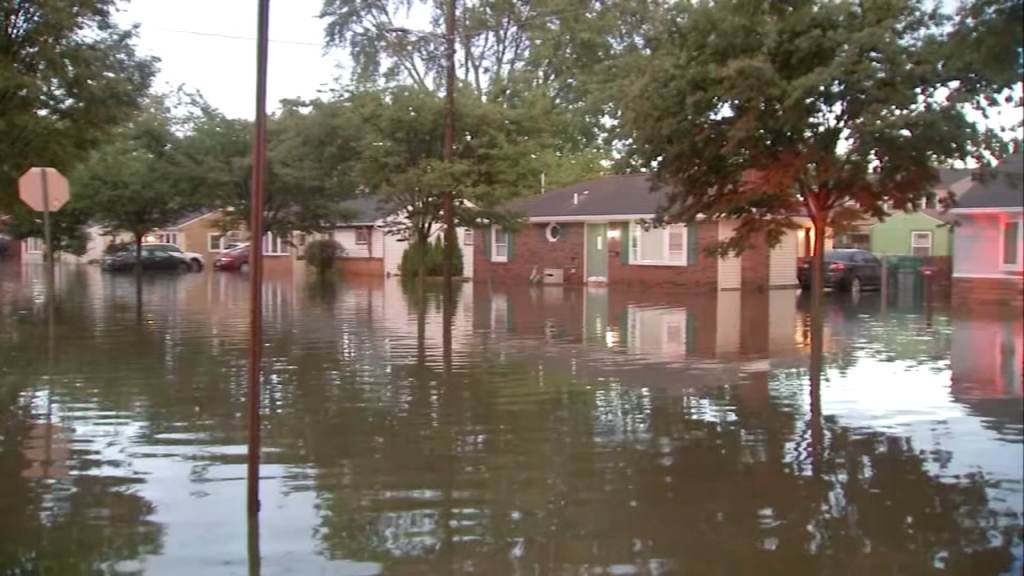
Gov. Shapiro signs law requiring home sellers to disclose more about a home’s flood risk
Sellers will now be required to reveal whether a home has flooded and whether they’ve filed a flood insurance claim.
1 week ago
Listen 0:58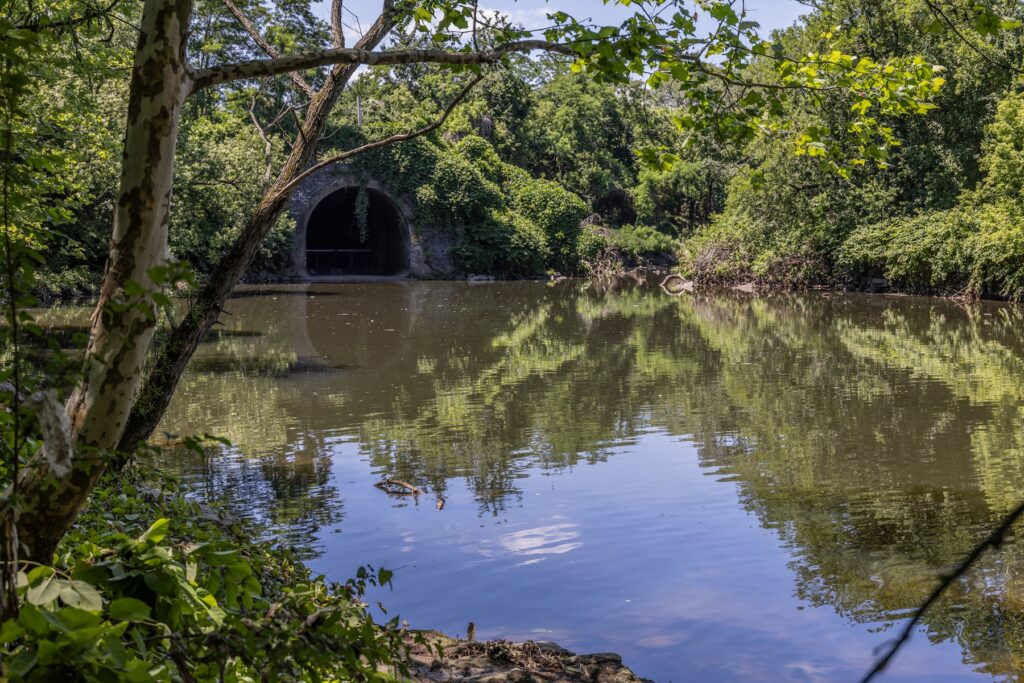
For years, Philadelphia has built rain gardens to prevent stormwater and sewage from entering waterways. Are those efforts enough?
2 weeks ago
Listen 5:54
The new technology aims to prevent microplastics from entering the Atlantic Ocean.
2 weeks ago
Listen 1:07