
The youth wave behind Chris Rabb’s win in Philadelphia
Young people, some as young as 14, helped power Rabb’s primary win. Now they’re watching to see what he does in Congress.
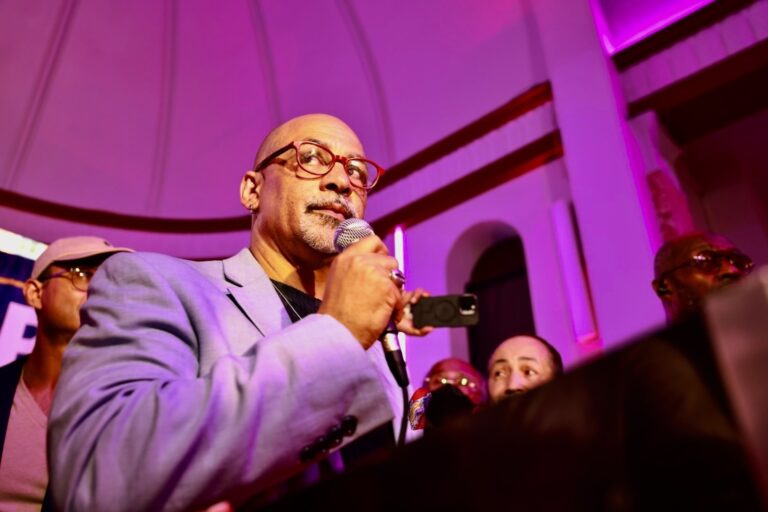
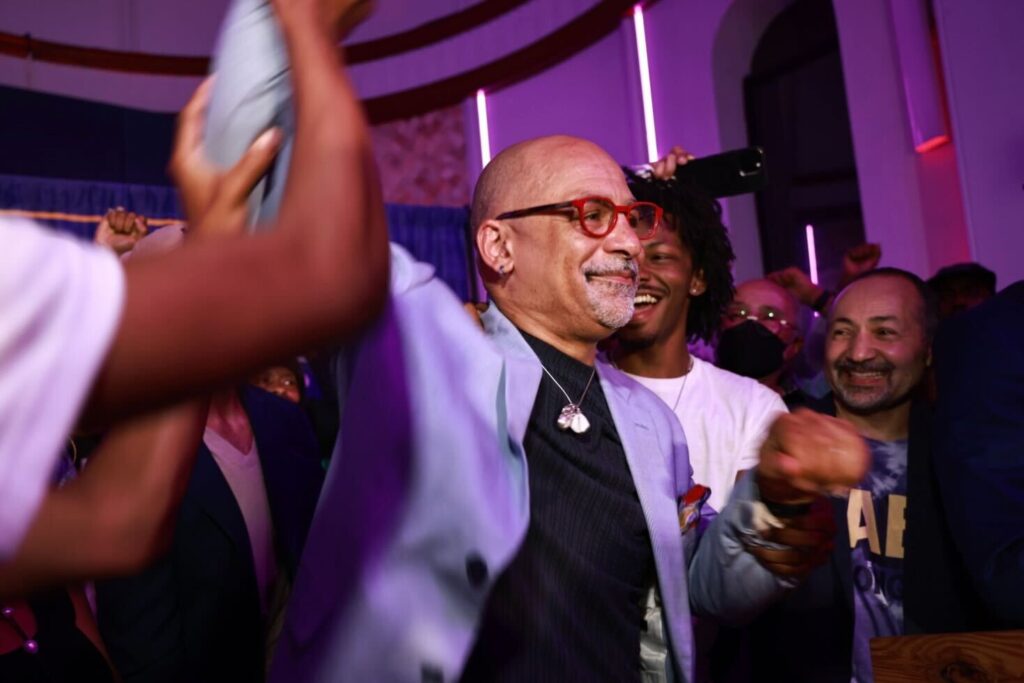
Chris Rabb delivers his victory speech on primary Election Day in Philadelphia, May 19, 2026. (Kimberly Paynter/WHYY)
From Philly and the Pa. suburbs to South Jersey and Delaware, what would you like WHYY News to cover? Let us know!
Sixteen-year-old Andreo Bono couldn’t vote for state Rep. Chris Rabb in the Democratic primary race for Pennsylvania’s 3rd Congressional District seat in Congress in May. He could, however, knock on doors and tell people about the candidate he believed best represented the change he wants to see in office.
Bono, like hundreds of other young people, spent the spring canvassing for Rabb, who is set to replace outgoing Rep. Dwight Evans in Congress come the general election in November.
In the race, Rabb drew hundreds of young people like Bono to the campaign trail. Rabb garnered about 45% of the vote defeating his nearest opponent, state Sen. Sharif Street, who took less than 30%.
Young people are not Philadelphia’s largest constituency, with 18–24 year olds representing only 9% of voters, according to state data. But on Rabb’s campaign trail, they were hard to miss.
They were a prominent part of the grassroots organizing that Rabb’s campaign centred on. While many volunteered to be a part of the campaign, Rabb said his team also hired young people under the voting age, some as young as 14, to “let them know they had power.”
Related Content
Progressive Rabb wins 3rd District race with boosts from ‘the squad’ and local grassroots activism
Rabb’s victory is an upset to the Democratic establishment and may provide a glimpse into the direction of the party.
5 months ago
Listen 1:20Feeling inspired for the first time
Rabb’s campaign brought volunteers who had never participated in political campaigns before to canvas. For many of them, this was the first time they felt truly inspired and empowered by a political candidate.
Melvin Romero-Tobar, a 20-year-old member of Reclaim Philadelphia, said this was the first time that he felt “energized to participate” in a political campaign. Bono, too, had not been involved in electoral politics until this year, but found that Rabb’s campaign gave him hope for the future.
-
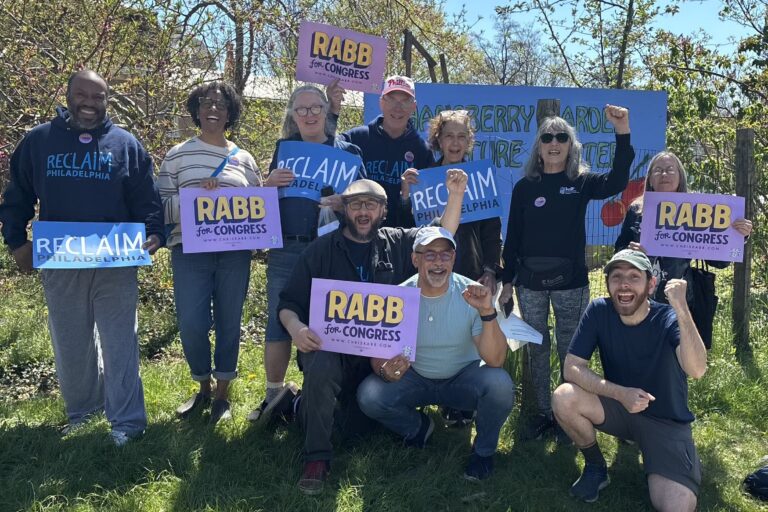
Reclaim Philadelphia members canvassing for Chris Rabb (Seth Anderson-Oberman, executive director of Reclaim Philadelphia) -
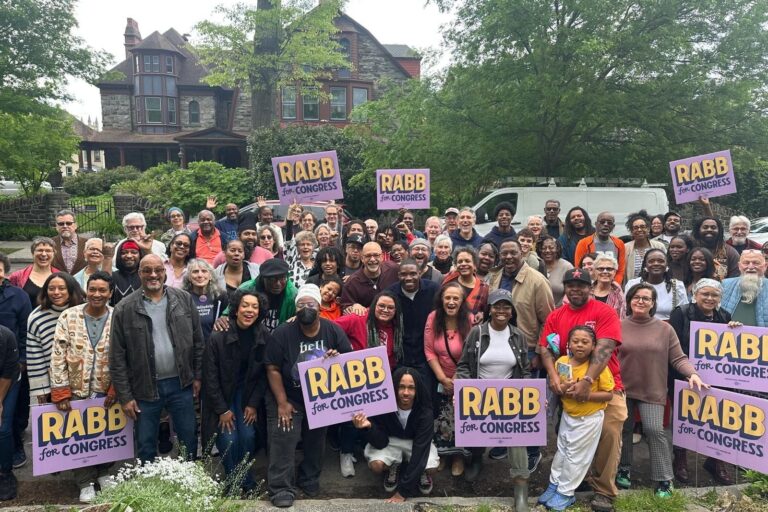
Reclaim Philadelphia members canvassing for Chris Rabb (Seth Anderson-Oberman, executive director of Reclaim Philadelphia) -
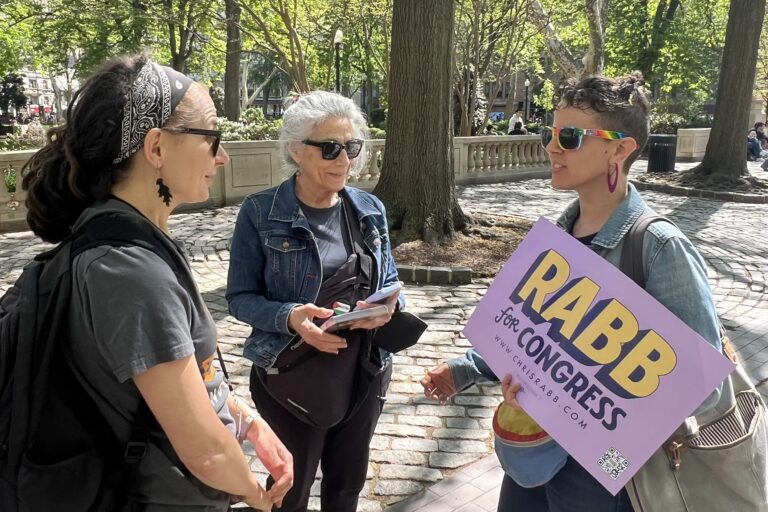
Reclaim Philadelphia members canvassing for Chris Rabb (Seth Anderson-Oberman, executive director of Reclaim Philadelphia) -
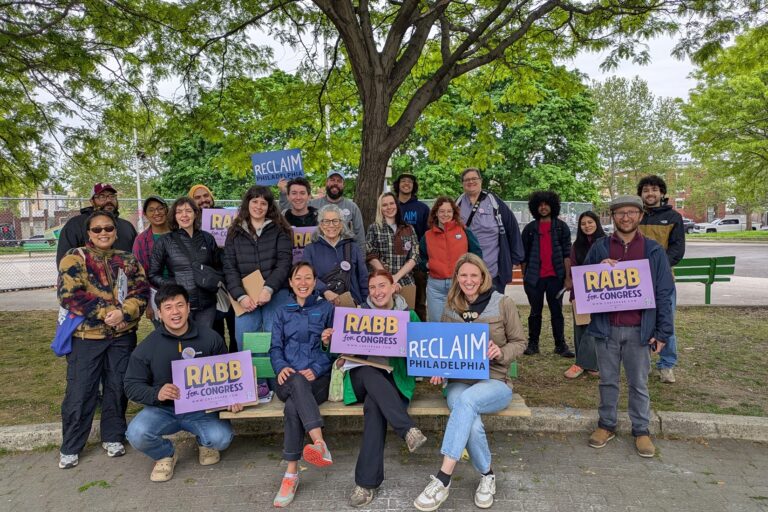
Reclaim Philadelphia members canvassing for Chris Rabb (Seth Anderson-Oberman, executive director of Reclaim Philadelphia)
Saleem Fiason, a 21-year-old college student who is part of One PA’s canvassing program, said he wasn’t putting himself in other people’s shoes before now.
“I didn’t care about other perspectives, I didn’t think things were going to change,” he said. “But I had to realize things weren’t going to change overnight. I know that things are changing now, especially in our city.”
For many young people hope in politics is dwindling. According to the Harvard Youth Poll, only 26% of young Americans feel hopeful about the future of their nation, a stark contrast to the 55% in 2021. Half of those polled strongly agreed that they don’t have a say in what the government does.
Justin Lewis, a member of Reclaim Philadelphia, felt that Rabb’s campaign successfully mended how young people felt about politics.
“I know personally there are a lot of times when I’m a little nihilistic or down about how the future is going to unfold,” he said. “But when I hear people who are actually going to be in positions of power talking about how we can change that, it’s encouraging.”
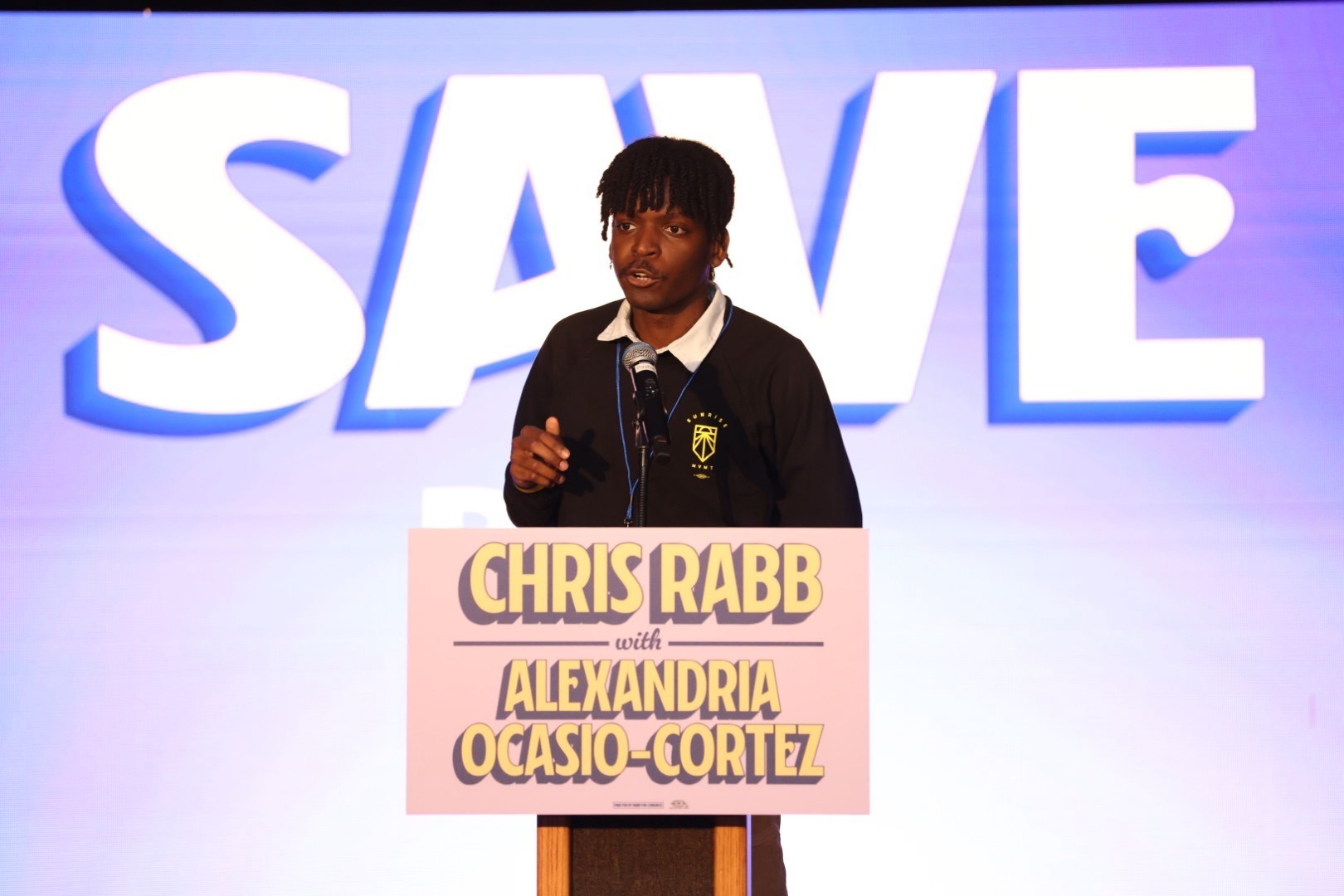
Sultan Smalley volunteered for the campaign and is a member of the Sunrise movement, a youth-led organization dedicated to combating climate change. He told WHYY News that the groups canvassing for Rabb were full of young people who felt they had found a community. He remembers knocking on the door of a resident in Cobbs Creek who had lost faith in the voting system.
“We just vented for a second … I think that [made her] feel empowered to use her vote again because she had someone who was from her community, a young person volunteering his time, to knock on doors for this candidate that he believes in,” he said.
Related Content
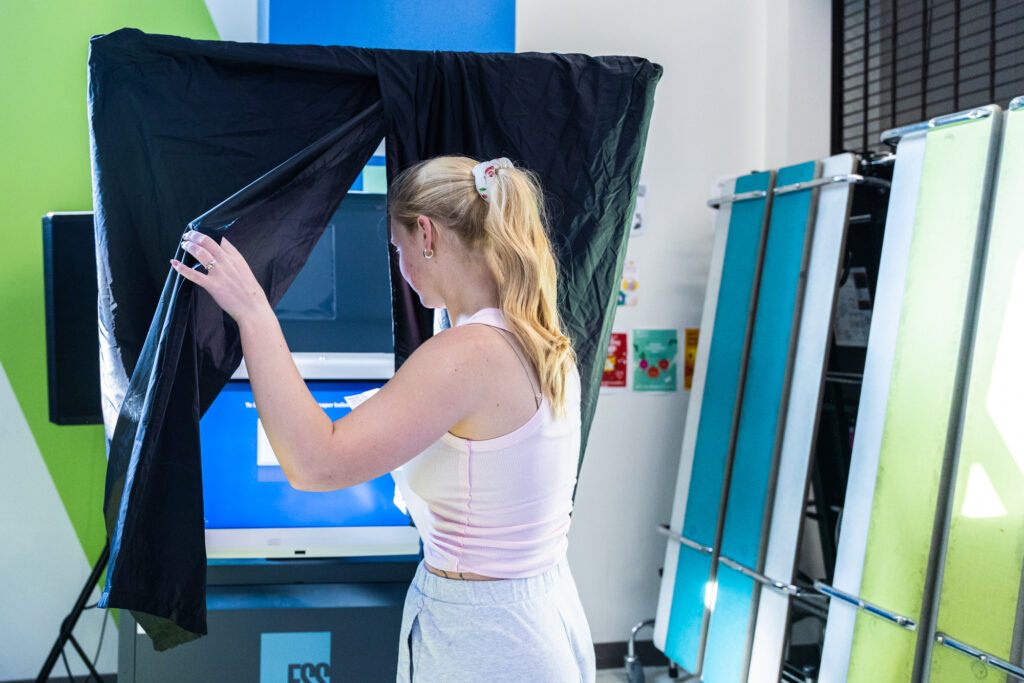
Pennsylvania may not have a youth voter apathy problem. Registration is the hurdle, experts say
Once registered, Pennsylvania’s youngest voters turn out at rates similar to older voters. Philly groups are working to get more young people into the process.
1 month ago
The issues that mattered
Disillusioned by the state of politics and facing historical economic hardships, young people “want change,” said Daniel Bard, a 25-year-old who canvassed for Rabb. For some young voters, hearing candidates directly address their problems and concerns can matter more than party loyalty when deciding how to vote.
Studies from Harvard and Yale found that the most important issue facing young voters in 2026 is the affordability crisis, followed by corruption, democracy, health care and housing. Data from Gallup reaffirms the notion that millennial and Gen Z voters are straying further away from identifying as Democrats or Republicans, instead registering as independent.
Bono was particularly concerned with the cost of living crisis during this primary.
“In West Philly, there’s a lot of poverty and food insecurity, and when politicians are bought by corporate money or special interests … it feels like they’re not with the people,” he said.
“Once there’s a candidate like Rabb who appeals to those things, it’s a no-brainer for me that young people are able to coalesce,” Romero-Tobar said.
Adam Erickson, the founder of Princeton Strategies, the political consulting firm who ran the fundraising program for Cherelle Parker’s mayoral campaign, told WHYY News that young people care most about tangible solutions to their problems.
“Young voters are not interested in slogans and ideas … If ‘rent is too high’ then hearing a candidate say, ‘I’ll freeze the rent,’ motivates young adults not only to vote, but also to volunteer and mobilize more voters,” he said.
Related Content
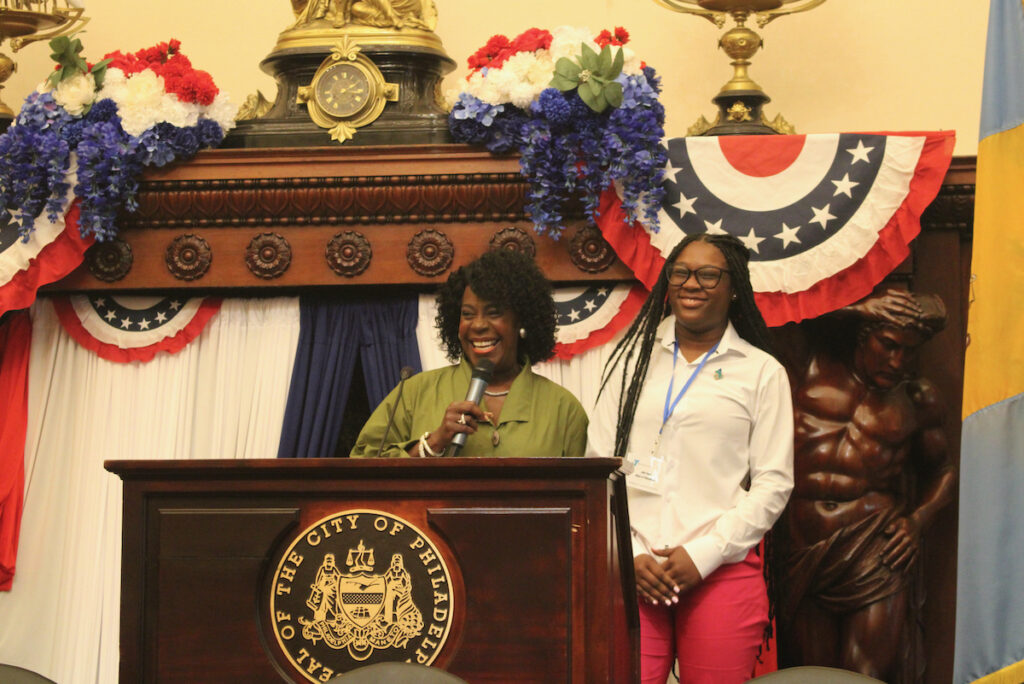
Philadelphia students step into City Hall simulation to tackle World Cup investment, city challenges
Mayor Cherelle Parker urged the YMCA youth summit to be “architects of solutions,” with teens acting as mayor, council members, reporters and advocates.
4 months ago
Rabb as a progressive candidate
Rabb’s campaign was often described as progressive. Though he ran as a Democratic candidate, his support of “Medicare for All” and ending aid to Israel garnered the support of left-wing activists and the Philadelphia chapter of the Democratic Socialists of America.
Lindo Yes, a spoken word poet from Philadelphia and member of Reclaim Philadelphia, believes that Rabb’s dedication to progressive issues are, in fact, mainstream issues.
“When he leaned into [those issues], he was not really just stepping in front of us, but he was walking with us because this is where we have always been at,” he said.
Yes also contended that progressive and left-leaning politics are not new issues uniquely important to young voters. To him, they are “multigenerational.”
“I think a lot of times we’re getting these ideas from our parents, our grandparents, and we’re just saying we want that and more because the struggle has just amplified in years,” he said.
As much as affordability, health care and housing were pressing issues for young voters in this race, Rabb said that young voters are, above all, committed to “fairness,” regardless of their political leanings. All of the candidates in the race for this deep blue seat ran on Democratic policies, but what mattered most to young people interviewed by WHYY News was transparency and commitment, not a political party.
“I don’t think [fairness is] an inherently left perspective. I think that the more fair, the more opportunities are created for young people and others, the more you’re going to get young people involved in politics, which will allow our society to move forward, irrespective of what political party is in power,” Raab said.
Bard echoed this sentiment, saying, “I’m knocking on doors with Republicans and independents. We all share the exact same values. It’s just how we want to get those values solved.”
Related Content
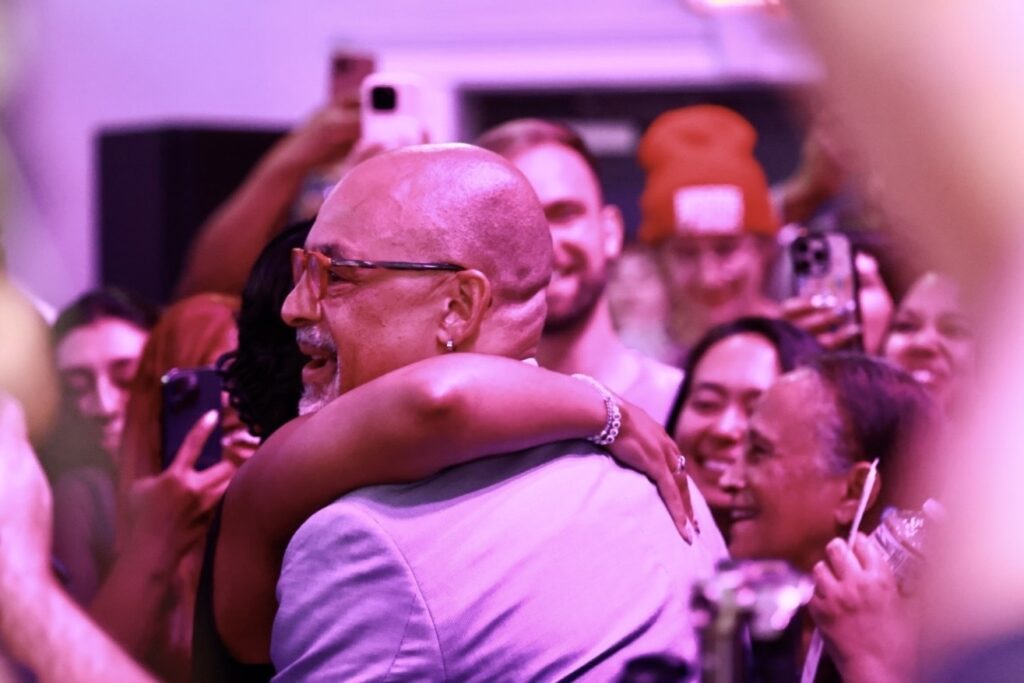
The groundwork for Rabb’s success may have been laid over the last several years as progressives fought for control over local Democratic committees.
5 months ago
Listen 1:09Organized money versus organized people
For Bono, Rabb represented an honesty about campaign funding that he feels has been absent from politics.
“People don’t like corporate politicians who are going to sell them out the first chance they get,” he said.
Rabb rejected all donations from corporate political action committees and was consistently vocal about his commitment to keep money out of politics. For the young people and students interviewed by WHYY News, that stance was a significant part of Rabb’s appeal.
“I see establishment politicians, I ask them a question, they ignore me because we know who’s funding their campaign. And when they have these relationships, they serve the powers that be and not the people that are disaffected with politics, the people who are struggling across every neighborhood,” Bono said.
Instead of accepting corporate PAC money, Rabb’s campaign funds were mostly made up of small individual donations, including from the young people volunteering for him.
“Organized people beat organized money every time,” Rabb said. “Can you imagine how powerful it is for a 14-year-old on my campaign to have beaten back moneyed interests?”
Related Content
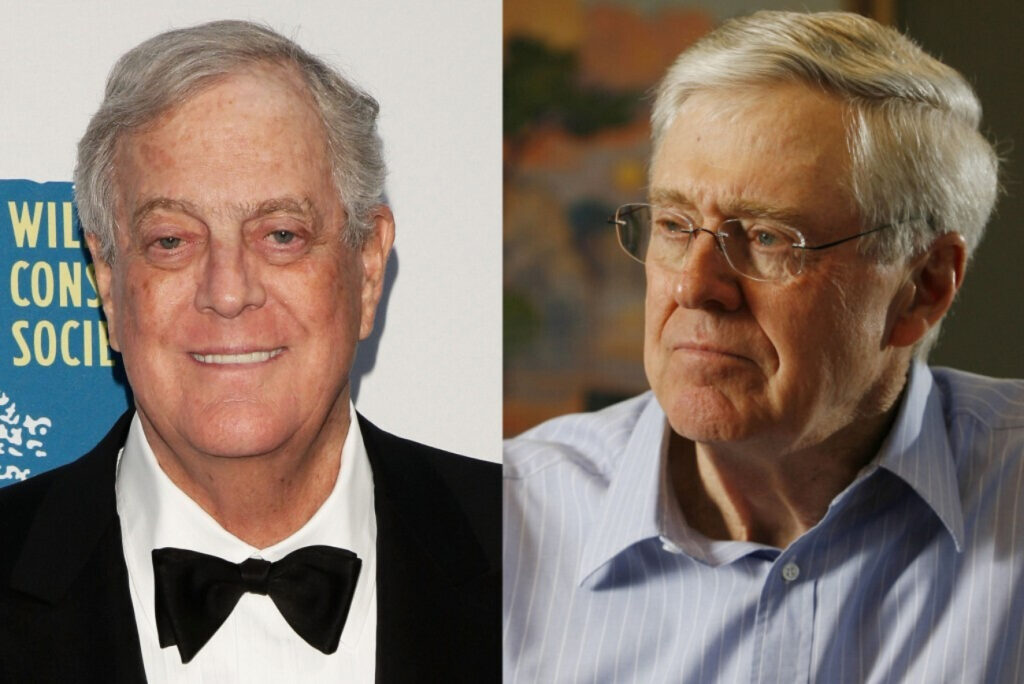
The federal lawsuit charges that the 2012 law serves to “chill free speech," but a state official says the plaintiffs are “trying to keep dark money dark.”
5 months ago
Listen 2:12Young people and political futures
For the young people who volunteered for Rabb, the campaign offered an alternative to a political system they felt had failed to represent them. They said they want a say in their futures.
For Rabb, too, winning the Democratic primary in May without the support of young voters would have been a “very shallow victory.”
As they celebrate the win, they added that they are eager to see what Rabb does in Congress. The young people who helped elect Rabb aren’t simply celebrating him, they’re watching to see whether he delivers.
“We’ll have to see when it comes past November what he does,” Bard said. “I think also we should look at the people that he hires for his staff in Philadelphia and in [Washington,] D.C. If they’re institutional Democrats, or if he’s hiring outright Democrat socialists from the D.C. area or Philadelphia area.”
Rabb said that accountability is a crucial part of young people’s involvement in his campaign.
“They could provide a perspective about their own lived experiences and priorities instead of asking people outside of their generation to opine about what they cared about. They can speak on their own behalf,” he said.
If there is a world where candidates can win elections without the support of young voters, Rabb is simply not interested.
“Why would we want to win without young people?” he asked.
Rabb will face Independent Party candidate Dennis Mahoney in the November general election.
Related Content
Can democratic socialists go mainstream?
Democratic socialists are on a winning streak in Pennsylvania, New York and Colorado but will the movement help or hurt Democrats chances in November?
Air Date: July 6, 2026 12:00 pm
Listen 51:14Editor’s Note: This story has been updated to clarify that Saleem Fiason is part of One PA’s canvassing program.
Editor’s Note: This story is part of a series on Youth Civic Engagement funded by the William Penn Foundation. WHYY News produces independent, fact-based news content for audiences in Greater Philadelphia, Delaware and South Jersey.

Get daily updates from WHYY News!
WHYY is your source for fact-based, in-depth journalism and information. As a nonprofit organization, we rely on financial support from readers like you. Please give today.
Part of the series
Youth voting
WHYY News explores stories about youth voting as part of its civic dialogue work and to elevate awareness for our future generations.
Funded by William Penn Foundation.
Part of the series
Montgomery County launches voter services chatbot ‘Mo’
The generative AI-powered chatbot uses information from Montgomery County’s voter services website to answer basic election questions.
2 days ago
Listen 0:48
New Jersey election 2026: What to know about the 3rd Congressional District race
Democratic incumbent Herb Conaway faces three challengers: Republican Michael McGuire, the Green Party’s Steven Welzer and Independent Ryan Michael Kelly.
7 days ago
Expungement of past convictions and first dibs for minority dispensary owners top legislators’ cannabis agenda.
1 week ago
Listen 1:26