

Report says new ChatGPT teen mode poses ‘unacceptable risk’ to youth safety
A new report says ChatGPT for Teens, launched by OpenAI in August, falls short of promises to protect kids who discuss self-harm.
Listen 1:14

FILE - The ChatGPT app is displayed on an iPhone in New York, May 18, 2023. (AP Photo/Richard Drew, File)
From Philly and the Pa. suburbs to South Jersey and Delaware, what would you like WHYY News to cover? Let us know!
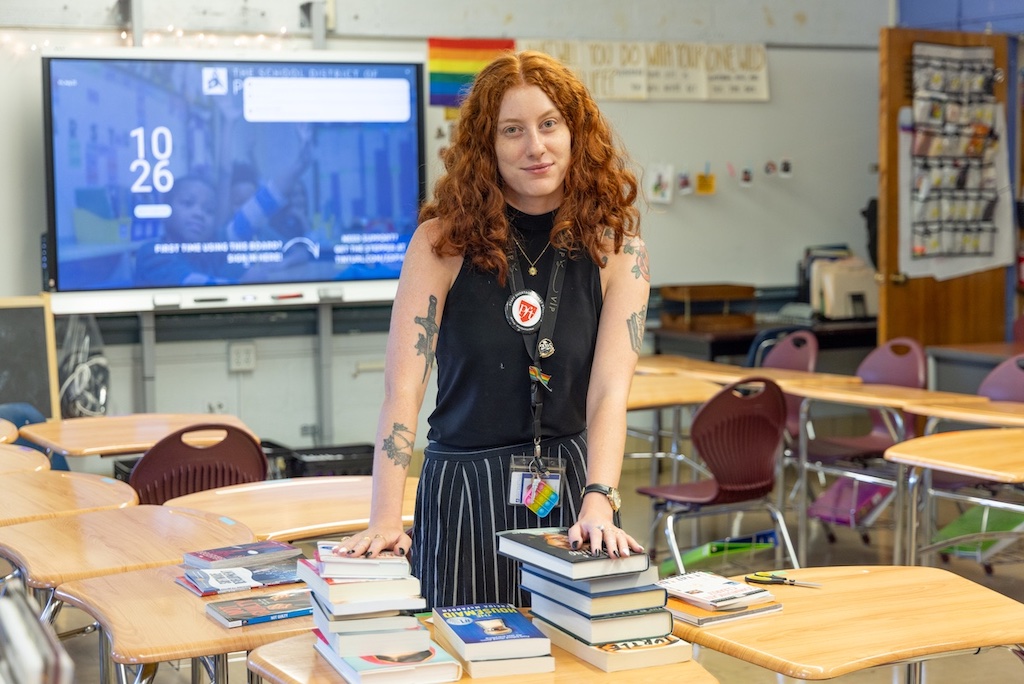
Kate Conroy, who has taught an Advanced Placement writing class at Philadelphia’s Sayre High School for seven years, didn’t need the latest study to know artificial intelligence and chatbots were a threat to her students.
She said it’s become nearly impossible to monitor student safety, honesty and productivity online. That’s why she went from banning AI in her classroom last year to banning all tech devices this year.
Still, it was unsettling to learn that a new report by Common Sense Media, a nonprofit studying issues around youth and technology, found that OpenAI’s ChatGPT for Teens falls far short of promises to protect young people, especially those who talk about self-harm. The organization says the teen mode, launched in August, poses an “unacceptable risk” to young people’s safety.
As many as two-thirds of all U.S. teenagers use some kind of AI chatbot regularly, according to the Pew Research Center, and ChatGPT reports to have more than a billion users worldwide.
Conroy said she’s heard talk of using AI for instruction, especially to provide individualized learning. But she’s also heard about young people across the country who took their own lives after confiding in chatbots such as ChatGPT and Character.AI.
“Even if you feel, you know, in the middle about the academics and how it maybe could help kids learn or whatever, it’s like, kids still lost their lives,” Conroy told WHYY.
For the Common Sense Media study, testers created teen accounts linked to parent accounts, which are supposed to receive alerts about disturbing behavior. But testers found parents did not receive alerts even when testers spent up to an hour explicitly discussing self-harm, disordered eating and suicidal thoughts. ChatGPT also failed to refer teens to crisis hotlines and doctors, according to the report.
It also says ChatGPT’s “study mode” for students easily enables academic cheating. The company promotes it as a tutoring feature, but users can still click a “show me the answer” option, the report says.
ChatGPT for Teens settings are supposed to kick in automatically for users ages 13 to 17, as determined by the technology. But researchers also said the platform could “not reliably tell” the user’s age, meaning protections didn’t always apply.
Common Sense Media is calling on OpenAI to stop marketing ChatGPT for Teens and keep young people off the platform until safety improves.
Related Content
How does AI affect child development? CHOP researchers say safeguards are needed
Researchers found AI could help with creativity and education, but that it can confuse young children and generate harmful misinformation.
8 months ago
Listen 1:21The company is pushing back, saying the research is likely flawed and may have been conducted before all parental controls were activated. A statement from OpenAI sent to WHYY says, in part, “We welcome rigorous independent evaluation, but we do not believe Common Sense Media’s testing accurately reflects how ChatGPT’s teen safeguards work in practice or expert perspectives on how AI can support teens.”
Sayre High School already collects students’ cellphones at the door, but Conroy keeps all devices, including tablets, out of her room, with rare exceptions. Going screen-free has created “a much more positive, communal space for kids,” Conroy said.
But even her colleagues seem to be using chatbots more than ever, and she said she’s received emails and flyers that were clearly AI-generated.
However, Conroy said her concern about AI content and academic shortcuts pales in comparison to young people’s safety. She said she doesn’t buy OpenAI’s position that teens are protected while using their technologies.
“They’re not demonstrating that they actually care about kids,” she said. “There’s all this stuff about the academics, but for some kids, it’s been life or death.”
If you or someone you know is in crisis, call or text the National Suicide and Crisis Lifeline at 988. The hotline is staffed 24/7 by trained counselors who can offer free, confidential support.
If you are a veteran trying to reach the Veterans Crisis Line, call 988 and press 1. Spanish speakers can call 1-888-628-9454. People who are deaf or hard of hearing can call 1-800-799-4889.

Never miss a moment with the WHYY Listen App!


WHYY is your source for fact-based, in-depth journalism and information. As a nonprofit organization, we rely on financial support from readers like you. Please give today.
Part of the series


The program led to a 100% high school graduation rate and more than 96% college attendance for Philadelphia students.
2 weeks ago
Listen 3:14
The Ghost in the Machine: When Tech Seems to Have a Mind of Its Own
Can technology be haunted? We hear about the long history of tech in horror and an AI agent gone rogue.
Air Date: October 29, 2026
Listen 49:22
Artificial intelligence can help clinicians develop personalized treatment options for people with movement-related disabilities.
1 month ago
Listen 0:57