

From turning ordinary metal to gold to chemistry: New Philadelphia exhibit explores the fiery origins of science
A new permanent exhibit at Philadelphia’s Science History Institute looks at the contributions of alchemists from the 15th to 19th centuries.
Listen 1:44
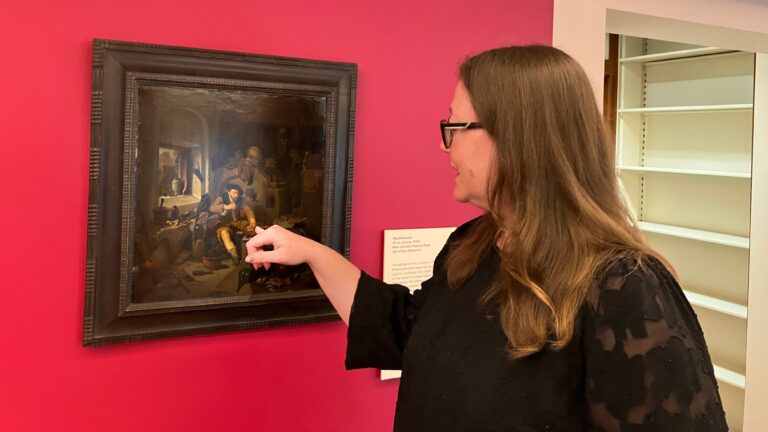
Exhibit curator Elisabeth Berry Drago examining "The Alchemist," a painting from the 1800s by artist Cornelis Pietersz Bega (Maiken Scott/WHYY)
From Philly and the Pa. suburbs to South Jersey and Delaware, what would you like WHYY News to cover? Let us know!
The painting is simply titled “The Alchemist.”
In this work from the 1800s by artist Cornelis Pietersz Bega, a disheveled man sits in a dimly lit workshop. Broken vessels and chards of glass litter the floor. The man stares at a handful of bright red powder, likely pigments for color he created through a complicated process.
It gives insights into the life and work of alchemists, knowledge seekers who laid the groundwork for modern science through experimentation, and lots of trial and error. A new permanent exhibit at the Science History Institute in Philadelphia sheds light on their contributions.
“Fire and Gold: The Art of Alchemy (1450-1850)” offers a detailed look into how alchemists manipulated substances and created new materials, tinctures, medicines and colors.
“Famously, the color vermilion, which is this beautiful, powerful, potent red, yes, it’s made by alchemy,” said art historian Elisabeth Berry Drago, who curated the exhibit. “It’s found in nature as the mineral cinnabar, but if you combine mercury and sulfide in a jar, if you superheat it, it sublimes and it becomes vermilion.”
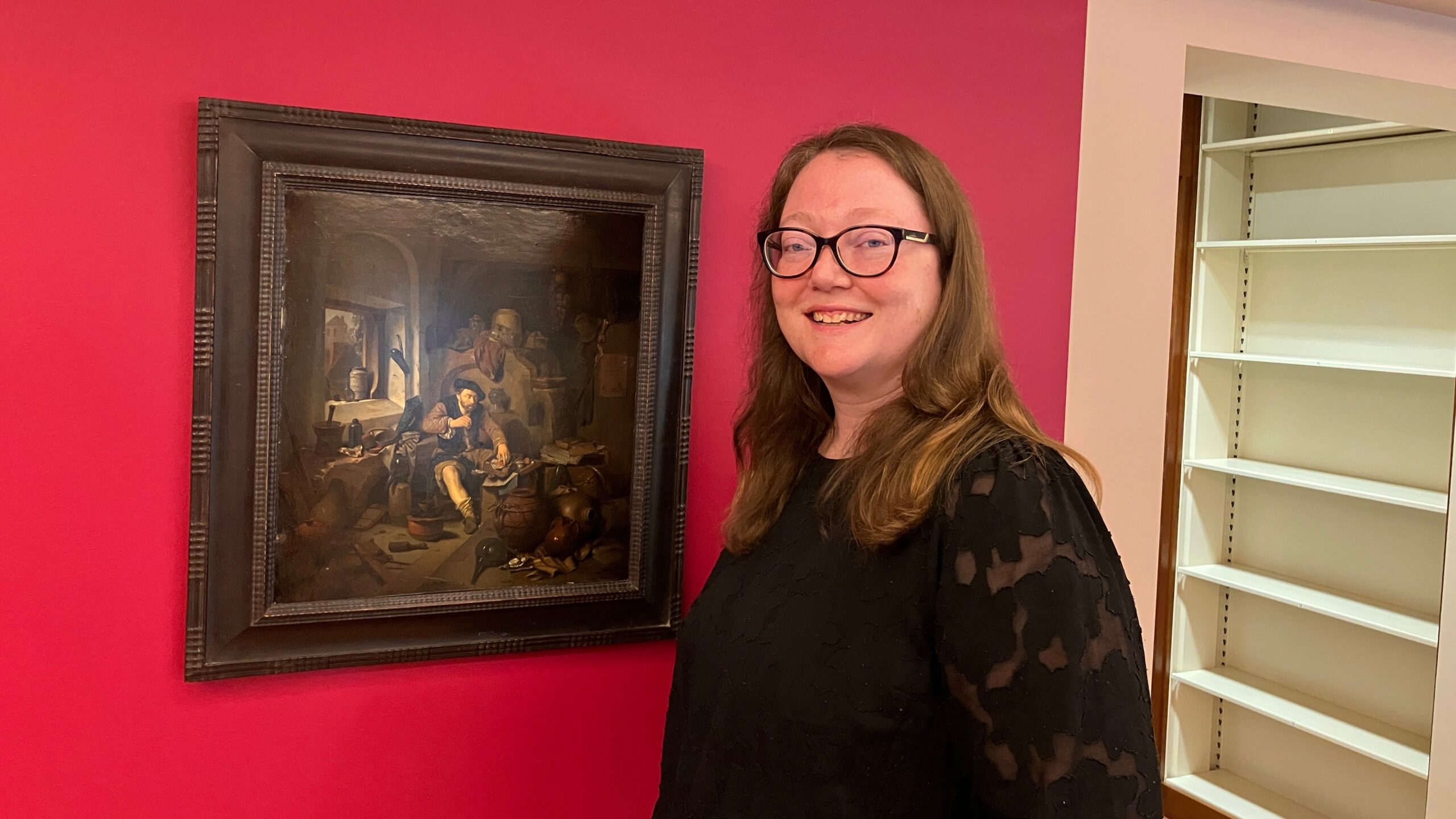
She believes that this is what is shown in the painting.
“This could be what success looks like, in the alchemical world, you set fire to things, you break your equipment, you use up your material and you get there, in the end,” she said.
Alchemy is often misunderstood as the quest to create gold out of ordinary metal, and the goal of the exhibit is to show that it was much more than that.
“Alchemy is, essentially, early modern chemistry. It’s searching for an understanding of matter,” Berry Drago said. “So they’re building our understanding of, you have a thesis, you conduct experiments, you repeat your experiments, someone else repeats your experiments.”
Related Content
“There was a big push to not be known as the dinosaur museum,” said one laid-off worker. That shift came with a cost, ex-staffers say.
1 month ago
Listen 6:45“Fire and Gold” draws from the institute’s trove of alchemical paintings and rare books, and makes these items accessible to audiences.
One of the books on exhibit is a German mining manual from the 16th century, titled “De Re Metallica,” Latin for “on the nature of metals.” It explains how to extract silver from a near depleted mine. This was valuable to miners in the German Harz region, a mountain range in Central Germany, at the time.
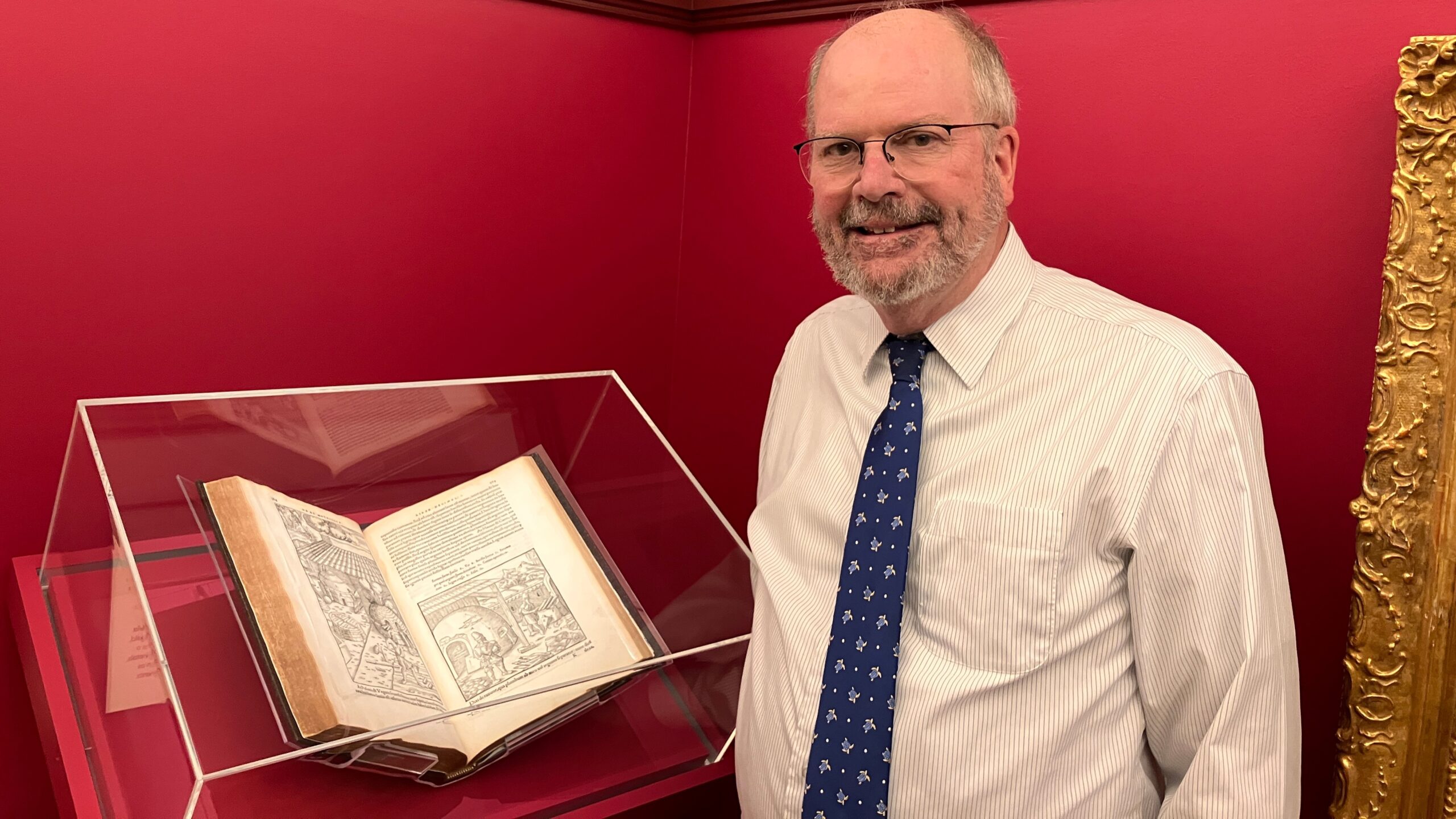
“They were losing money badly because of silver coming in from the New World and so they needed to increase the production scale,” said James Voelkel, curator of rare books at the Science History Institute. “They had been mining there for so long what was left was very low quality of ore and so they had to extract the silver chemically, so a large section of the book is on alchemy on making mineral acids that you can use to extract the silver from the low-quality ore that they were forced to use.”
“We often think of alchemy as something distinct from science, but as historians of science, we’re really interested in the continuities and to think about the generation of knowledge more broadly,” said Jesse Smith, who directs the museum at the Science History Institute.
To Berry Drago, the connection from the oil paintings and manuals is clear.
“I always come back to lab-created diamonds, right?” she said. “And I sort of think, ‘By gosh, we did it. We made a diamond in the laboratory.’”
Berry Drago said this is the original goal of alchemy.
“Can we just superheat something to the point that it does what it does underground here in the laboratory? And the answer is yes, if you have the technology, you can lab create diamonds,” she said.
“Fire and Gold: The Art of Alchemy (1450–1850)” is the first permanent exhibition in the Fisher Gallery, a space overlooking the library at the institution.

Never miss a moment with the WHYY Listen App!


WHYY is your source for fact-based, in-depth journalism and information. As a nonprofit organization, we rely on financial support from readers like you. Please give today.

Conservationists launch plan to protect Wissahickon Valley Park and Creek
During the aftermath of Hurricane Ida in 2021, water rushed down the creek, flooding Forbidden Drive.
6 months ago
Listen 1:26
The traveling exhibit uses preserved human specimens to give a deeper look at how everyday choices impact the body.
2 years ago
Listen 1:08
New Philly exhibit celebrates lives, contributions of scientists with disabilities
A new exhibit at the Science History Institute in Philadelphia tells the stories of scientists with disabilities — and shows how they overcame prejudice and marginalization.
7 years ago